





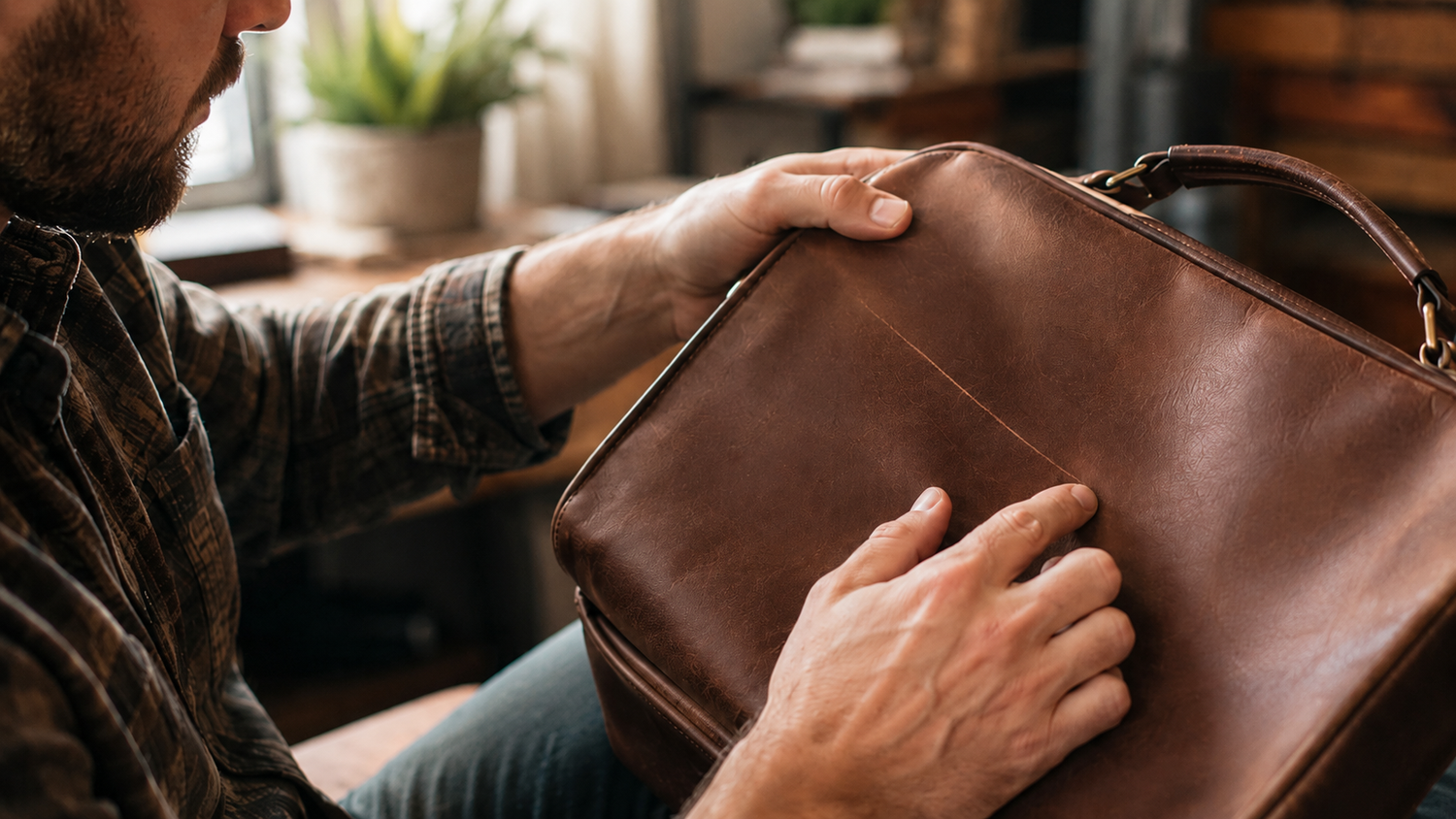

There's a particular sinking feeling that comes with spotting a fresh scratch on a leather bag you actually care about. A pale line where there wasn't one yesterday, usually right where the light catches it. The good news, after fifteen years of handling hides and watching customers panic over marks that turned out to be nothing: most of those scratches are far more fixable than they look, and a good number of them aren't even real damage.
The trick is knowing which kind of scratch you're dealing with before you reach for anything. Treat a surface scuff like a deep gouge and you'll waste product. Treat a deep gouge like a surface scuff and you'll smear it around and make it worse. So let's sort that out first, then walk through exactly what to do for each.

For a light surface scratch, warm the leather with a hairdryer, then massage the mark with your finger and a little conditioner until it blends back in. For a deep scratch that catches your fingernail, fill the groove with leather filler, recolor with a matched dye, and seal with conditioner.
First, figure out how deep the scratch really is
Every leather repair decision comes down to one question: did the scratch just disturb the surface, or did it remove material? You can answer it in about thirty seconds, and it costs nothing.
The fingernail test
Run a clean fingernail gently across the scratch, perpendicular to the line. You're feeling for depth, not looking at color.
If your nail glides over it with no catch, it's a surface scratch — the grain has been disturbed but nothing is missing. This is the easy category, and it's where most leather bag scratches land. If your nail drops into a distinct groove, and especially if you can see a lighter shade of leather sitting at the bottom of that line, it's a deep scratch. The finish, and sometimes the dye beneath it, has actually been displaced. That lighter color is raw leather showing through, and it tells you a conditioner alone won't be enough.

Good to know
A fresh scratch almost always looks worse than it is. The pale, alarming line is often just raised fibers catching the light — settle them back down and it can disappear entirely. Don't judge the damage in the first ten minutes.
Light scratches: the heat-and-massage method
Surface scratches respond to one thing better than any product: gentle warmth combined with friction. Quality leather holds natural oils and waxes in its grain layer, and warming them lets those oils migrate back into the disturbed fibers, pulling the scratch closed. This is the same principle behind the old habit of rubbing a scratch with your thumb — body heat does real work here.
Here's the method that actually works on a leather bag, in order:
- Clean first. Wipe the area with a barely damp, lint-free cloth to lift any dust or grit. Skipping this grinds dirt into the grain while you work.
- Add gentle heat. Hold a hairdryer on low, about six inches away, and warm the scratch for ten to fifteen seconds. Use the hand test: if the leather feels too hot for the back of your hand, it's too hot for the hide.
- Massage the mark. Using the pad of your finger — no nails — rub the warmed scratch in slow circles. You'll often watch the line fade as the oils redistribute.
- Condition to finish. Apply a small amount of neutral leather conditioner with a soft cloth over the area to lock in the result and restore suppleness.
For a very light scuff you can often skip straight to step three with a dab of conditioner and skip the heat altogether. Many marks on a well-made bag come out this way, no kit required.

Deeper scratches: filler, dye, and patience
When your fingernail catches and raw leather shows through, conditioner has nothing to work with — the material is physically gone from the groove, so it has to be rebuilt before any color goes back on. This is more involved, but it's still very doable at home on a leather bag with a basic repair kit.
-
1Clean and dryUse a pH-balanced leather cleaner and let the area dry fully, around fifteen minutes. Filler needs a clean surface to bond.
-
2Fill in thin layersPress flexible leather filler into the groove with the edge of a card. Thin coats beat one thick one — build up gradually until it sits level, letting each layer dry.
-
3Smooth lightlyOnce dry, skim the filler with a fine sanding sponge using almost no pressure. You're leveling the filler, not abrading the leather around it.
-
4Recolor and sealApply a matched leather dye or recoloring cream in thin layers until it blends, then finish with conditioner over the whole area to seal and unify the finish.

Watch out
Color matching is where most home repairs go wrong. A dye that's even slightly off makes the repair more visible than the original scratch. Always spot test on a hidden area — the underside of a flap, inside a seam — and wait for it to dry before committing, because leather dye almost always looks different wet.
Why the leather type changes everything
Here's what most scratch guides skip: the same scratch behaves completely differently depending on what kind of leather your bag is made from. Knowing your leather tells you how much you can expect to fix at home.

A natural, uncoated leather is the most forgiving precisely because its grain is intact and full of its own oils — which is also why those small marks gradually fold into the patina it builds over time rather than standing out as flaws. A heavily coated, pigmented leather is the opposite: the scratch disrupts a colored topcoat, so it reads as a sharp line and almost always needs recoloring to disappear. Same scratch, two completely different repair paths.
 Leather backpacks
Leather chosen to wear in, not wear out — the kind where small scratches settle into the grain.
 Leather briefcases
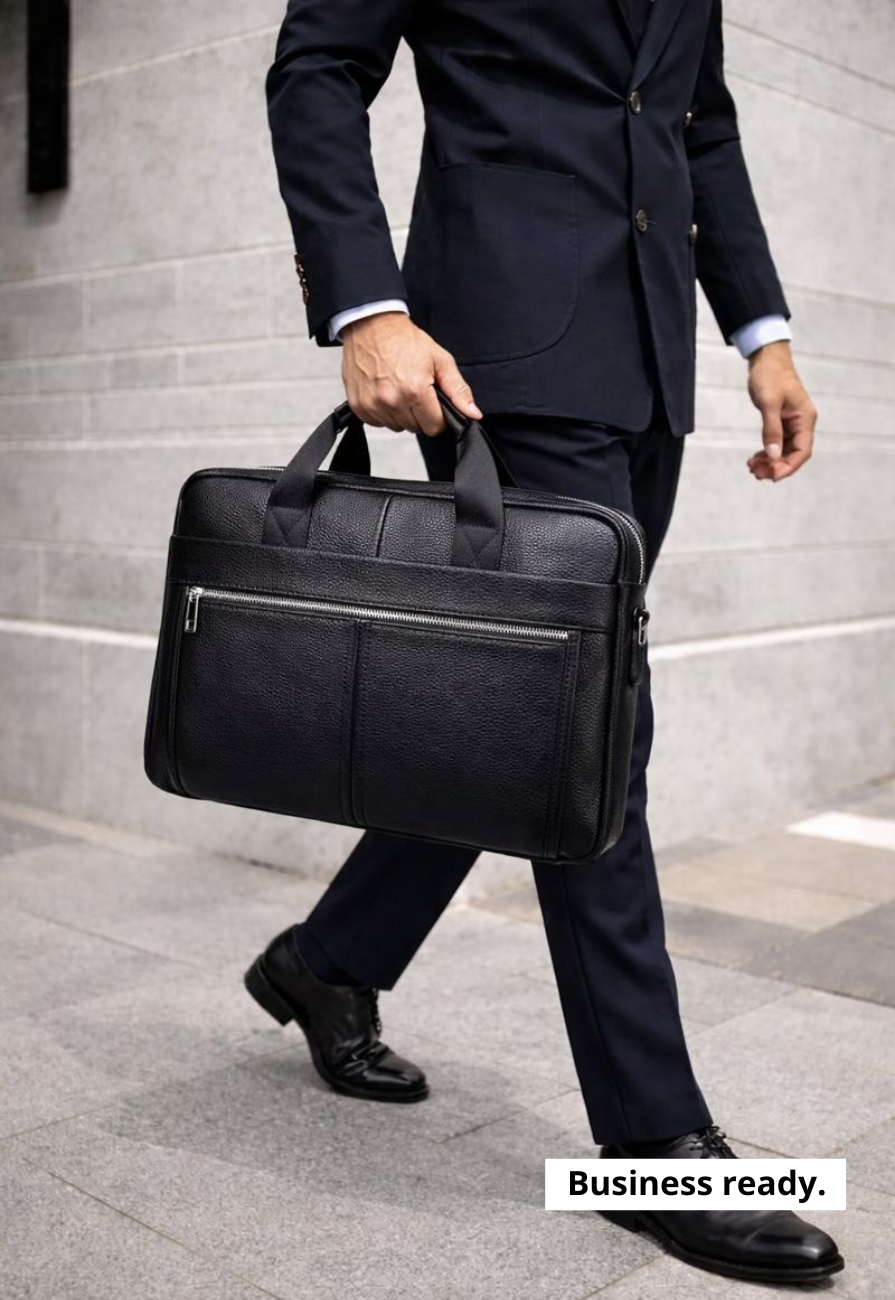
Structured genuine-leather work bags built to take a daily commute and look better for it.
The mistakes that make scratches worse
Most of the damage I see from DIY repairs comes from good intentions and bad advice. A few worth flagging before you start.
The olive oil and Vaseline myth. The internet loves telling people to rub kitchen oil or petroleum jelly into a scratch. It works for about a week — the oil darkens the leather so the mark blends in — and then it backfires. Olive oil goes rancid in the hide, attracts dirt, and over time degrades the fibers it's supposed to protect. There's a reason no leatherworker keeps a bottle in the shop. Use a product made for leather.
Over-conditioning. Conditioner is good; drowning the leather in it is not. Too much oil leaves the hide limp, darkens it unevenly, and can clog the grain. A thin coat, worked in and buffed off, does more than a heavy one.
Harsh chemicals on quality leather. Alcohol wipes, all-purpose cleaners, and abrasive sponges strip the natural oils that keep good leather supple. Hartley's own care guidance on its bags says it plainly — clean light marks with a damp cloth and clean water, skip the harsh stuff. That advice exists because the cleaner is often what causes the lasting damage, not the scratch.
Bags built to age, not to scar
Part of why scratches stress people out is that, on a cheap bag, a scratch really is permanent damage — there's nothing underneath to recover. On a well-made leather bag, a scratch is usually just a stage the leather passes through on its way to looking better. We source bags with that in mind: leather chosen to develop character, where everyday marks settle into the surface instead of ruining it.


Men's Leather Business Briefcase
A structured 15-inch briefcase built for real workdays — meetings, commuting, the knocks that come with both. Made from genuine cowhide leather that develops a subtle patina over time, so daily wear reads as character, not damage.

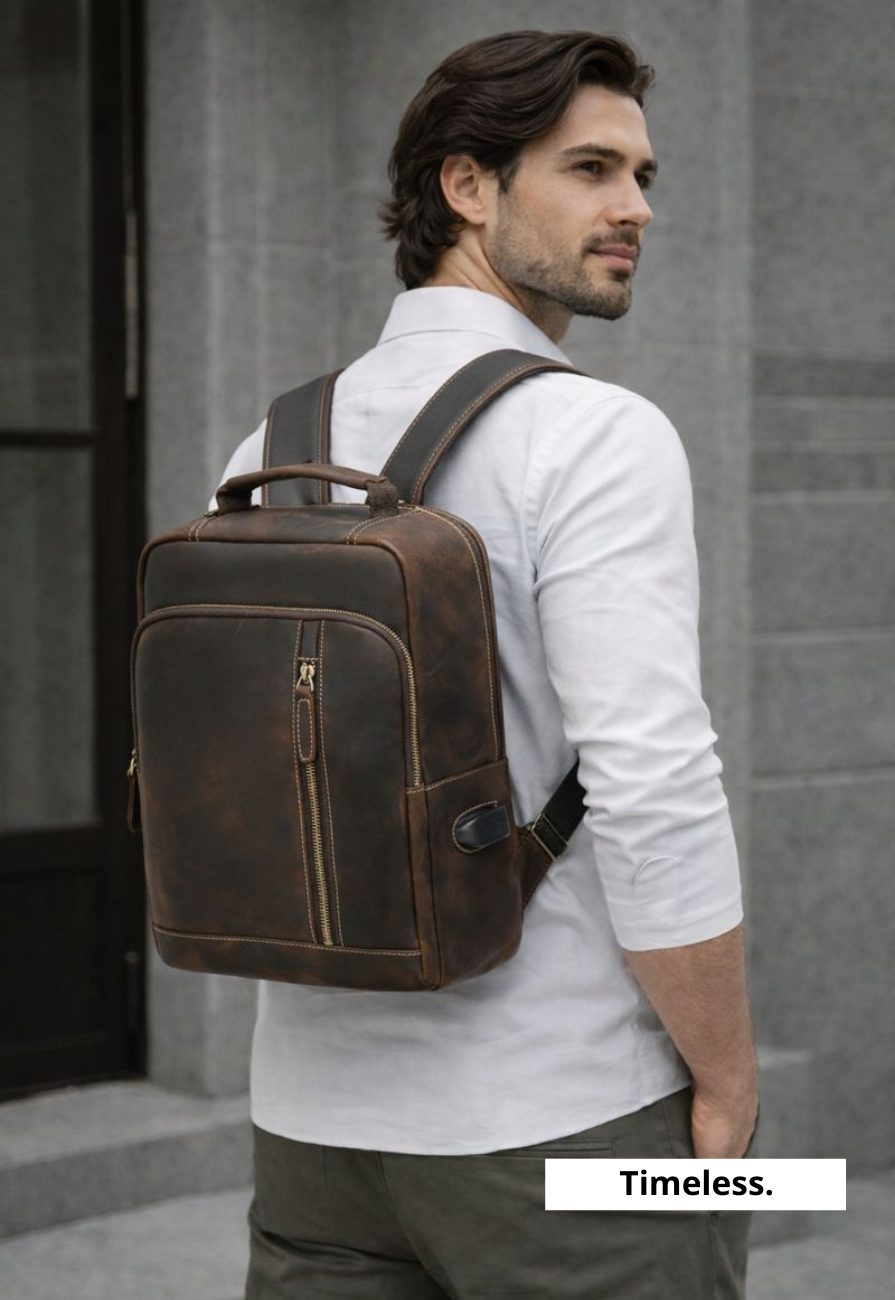
Brown Leather Backpack
A slim, semi-rigid backpack with a luggage sleeve for travel. The kind of bag that takes daily city wear and looks the better for it — exactly the leather where small scratches tend to vanish on their own.

Crazy Horse Leather Briefcase
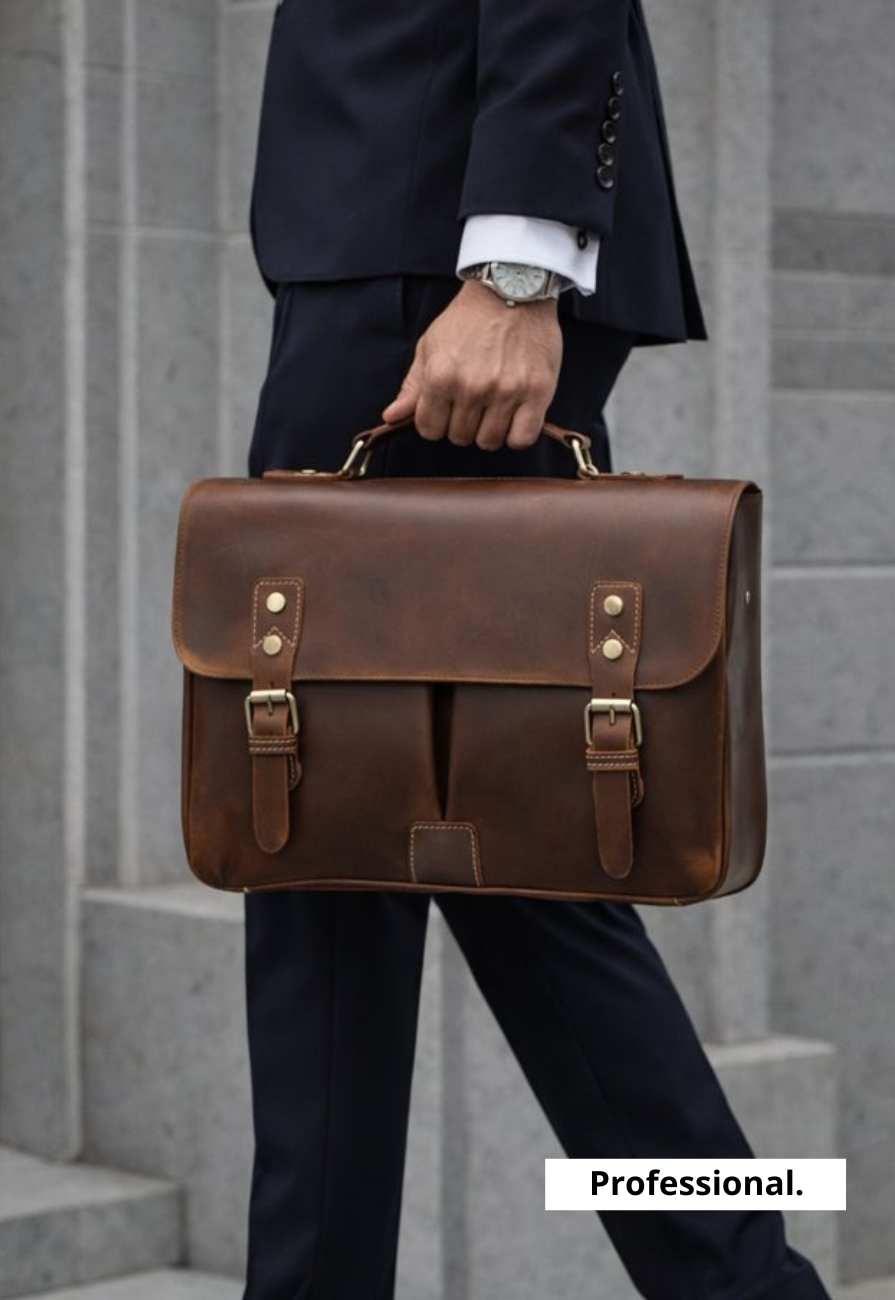
Crazy horse leather is built to show its history — it's waxed so that scuffs and scratches darken and blend into a deepening patina rather than standing out. Genuine cowhide, double compartment, fits a 14" laptop. The bag that gets better the more it's marked.
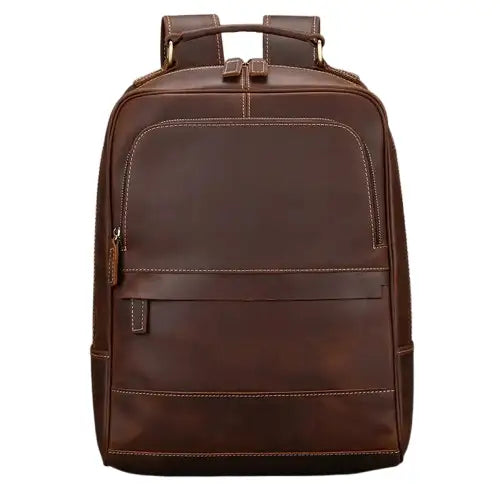
Refined Brown Leather Backpack
A clean, understated leather backpack with contrast stitching and a dedicated 15.6" laptop compartment. Genuine leather chosen to age gracefully, so the daily knocks of a commute settle in as character instead of damage.
How to keep new scratches from happening
The cheapest scratch repair is the one you never have to do. A few habits cut the odds dramatically.
Daily habits that protect leather
Mind what shares the space. Keys, a loose charger, a watch with a metal clasp — anything hard and sharp rattling against the lining is what causes most interior scratches. Give them their own pocket.
Condition before it's dry, not after it's scratched. A conditioned hide is more flexible and resists marking. A neutral conditioner every couple of months keeps the grain supple.
Store it standing, not stacked. Bags crushed under other things pick up press marks and creases that read like scratches. Let leather keep its shape.
If you're shopping for something that'll hold up to a real commute, our leather backpacks and leather briefcases are both chosen for exactly that kind of daily use.

When to stop and call a professional
Knowing when not to DIY is part of doing it well. Take the bag to a leather repair specialist when:
The leather is split or torn, not just scratched — a cut all the way through needs structural repair, not filler. There's significant dye loss over a large area, where color matching across a big patch is too easy to get visibly wrong at home. The bag is vintage or high-value, and the risk of a botched home repair outweighs the cost of a pro. Or the leather is aniline or otherwise uncoated and delicate, where filler tends to leave visible repair lines that a specialist's airbrush and color mixing can avoid.
Good to know
A professional doesn't reverse a deep scratch — they rebuild and conceal it so well it disappears. The physical groove is still being filled, just with better color-matching tools than you can buy. For a treasured bag, that precision is often worth the price.
For everything else — the everyday scuff, the fingernail line, the faint mark that catches the morning light — you now have what you need. Start with the least invasive method, give the leather a chance to recover on its own, and escalate only if it doesn't. More often than not, a scratch on a leather bag is just the bag earning its character.
Frequently asked questions
Can you remove scratches from a leather bag?+
Most surface scratches can be removed or made nearly invisible at home using heat, friction and conditioner. Deeper scratches that expose lighter leather underneath can be filled and recolored, but rarely vanish completely. The earlier you treat a scratch, the better the result — exposed fibers dry out and collect dirt over time.
Does leather conditioner fix scratches?+
Conditioner fixes light surface scuffs by re-feeding oils into the grain so the mark blends back in. It cannot fix a deep scratch where material is physically missing from the groove, because there's nothing for the conditioner to soften back into place. Deep marks need filler first, then color.
Is leather easy to scratch?+
Quality leather scratches more easily than people expect, but it also hides those scratches far better than coated or synthetic materials. A natural grain layer absorbs surface marks and lets many of them blend away, which is exactly why a good leather bag ages well instead of looking damaged.
How do I fix a deep scratch on a leather bag?+
Clean the area, press leather filler into the groove in thin layers until it sits level, let each layer dry, lightly smooth it, then recolor with a dye or recoloring cream matched to the bag and seal with conditioner. Always spot test the color on a hidden area first.
Will the scratch come back?+
A surface scratch treated with heat and conditioner can reappear faintly if the leather dries out, so regular conditioning keeps it settled. A filled and recolored deep scratch is permanent unless the bag takes another hard knock in the same spot.
Do cat scratches on leather come out?+
Light cat scratches, which tend to be fine parallel lines, usually respond well to the heat-and-massage method. Deeper claw marks that catch a fingernail need filler and recoloring. The thinner and more delicate the leather, the harder pet damage is to hide.
Does olive oil really fix leather scratches?+
Olive oil can temporarily darken a light scratch so it blends in, which is why the trick spreads online. But it's not a real repair: over time it attracts dirt, leaves a greasy residue and can degrade the leather. A dedicated leather conditioner does the same job without the long-term damage.



Leave a comment
This site is protected by hCaptcha and the hCaptcha Privacy Policy and Terms of Service apply.