


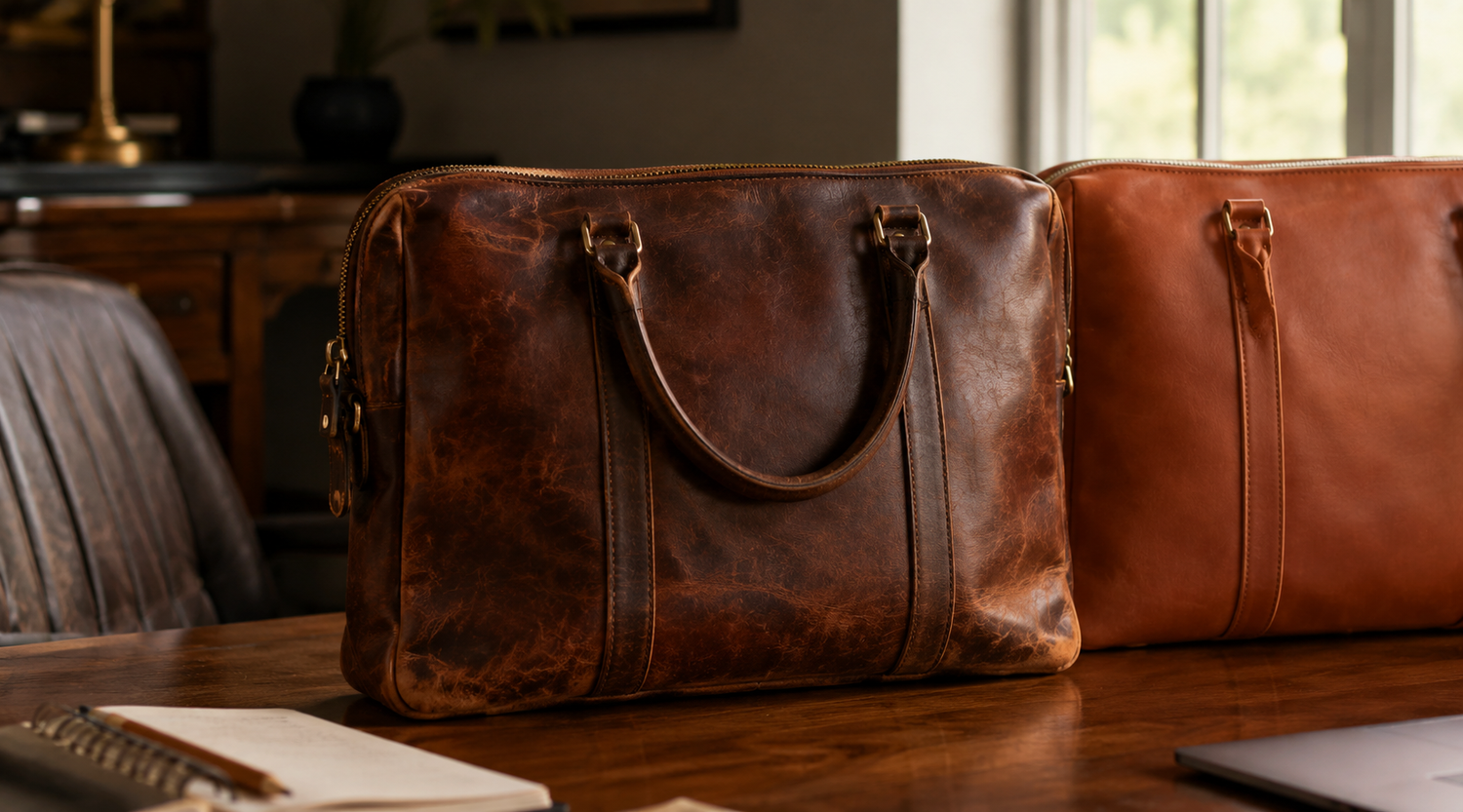

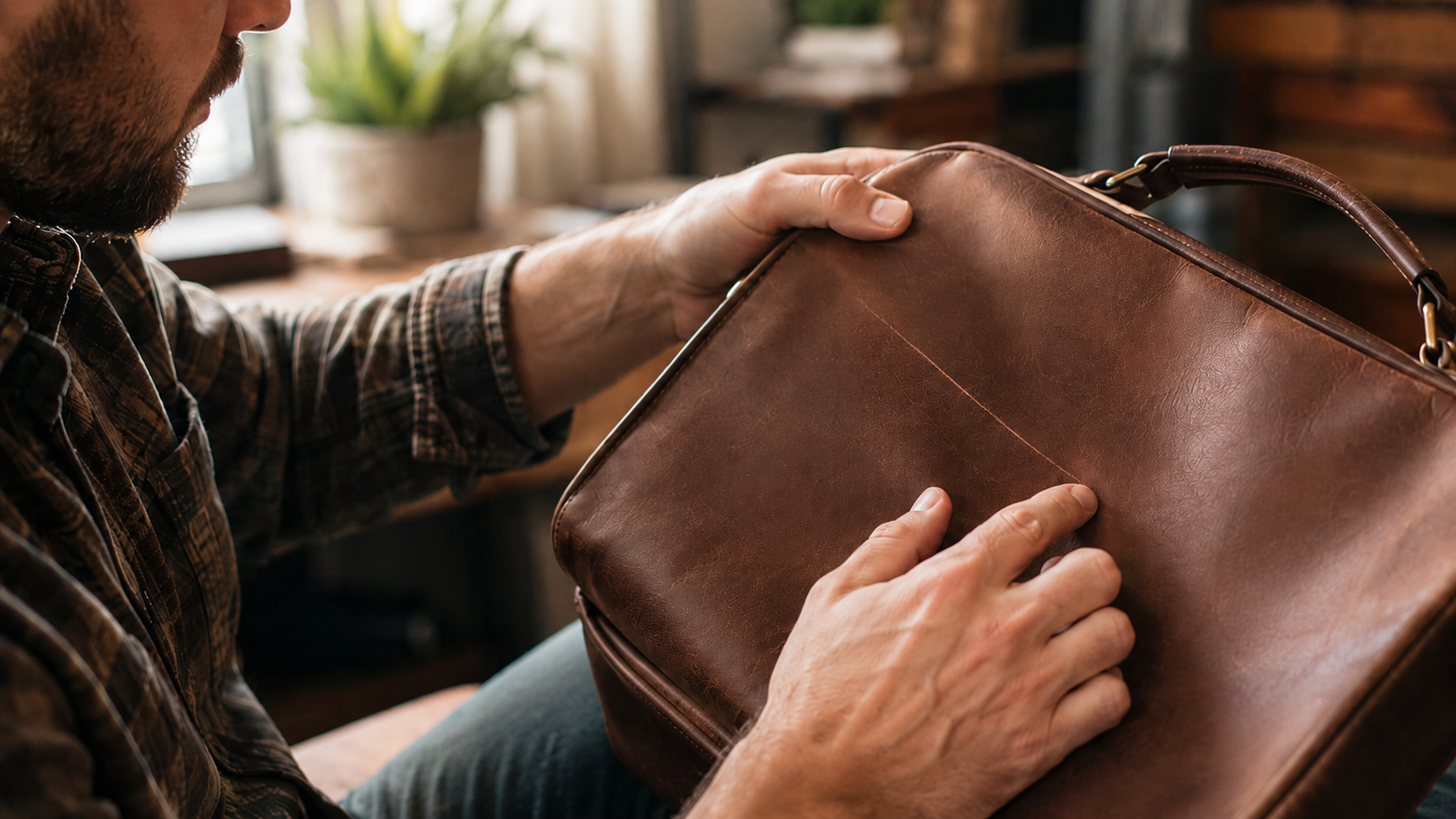
There's a moment — usually a few months into carrying a new leather bag — when you notice the surface has shifted. The color has deepened in some areas, softened in others. Small marks have settled into something that looks less like damage and more like character. That moment has a name: leather patina. And it's one of the most misunderstood qualities in leather goods.
At Hartley, we select leather bags specifically chosen for hides that develop character over time. We've spent years sourcing full-grain material that ages beautifully, and we've watched thousands of customers discover that their pieces actually improve with use. The color deepens. The surface softens. The grain becomes more expressive. These aren't signs of wear — they're signs that your bag is doing exactly what quality leather is supposed to do.
Understanding leather patina changes how you see your bag. Instead of worrying about minor darkening or softness, you'll appreciate it. Your piece is becoming more personal, more refined, more genuinely yours.

Leather patina is the natural evolution of a hide as it responds to time, use, touch, and light. It creates deeper color, softer texture, a subtle shine, and character marks that make a bag uniquely yours — without compromising durability or function.
What is leather patina?
Leather patina is the gradual surface transformation that occurs when quality leather interacts with regular use. It manifests as richer color, improved softness, enhanced grain visibility, and a subtle surface sheen in high-contact areas. Unlike wear, this aging process adds visual depth and character while maintaining the bag's structural integrity.
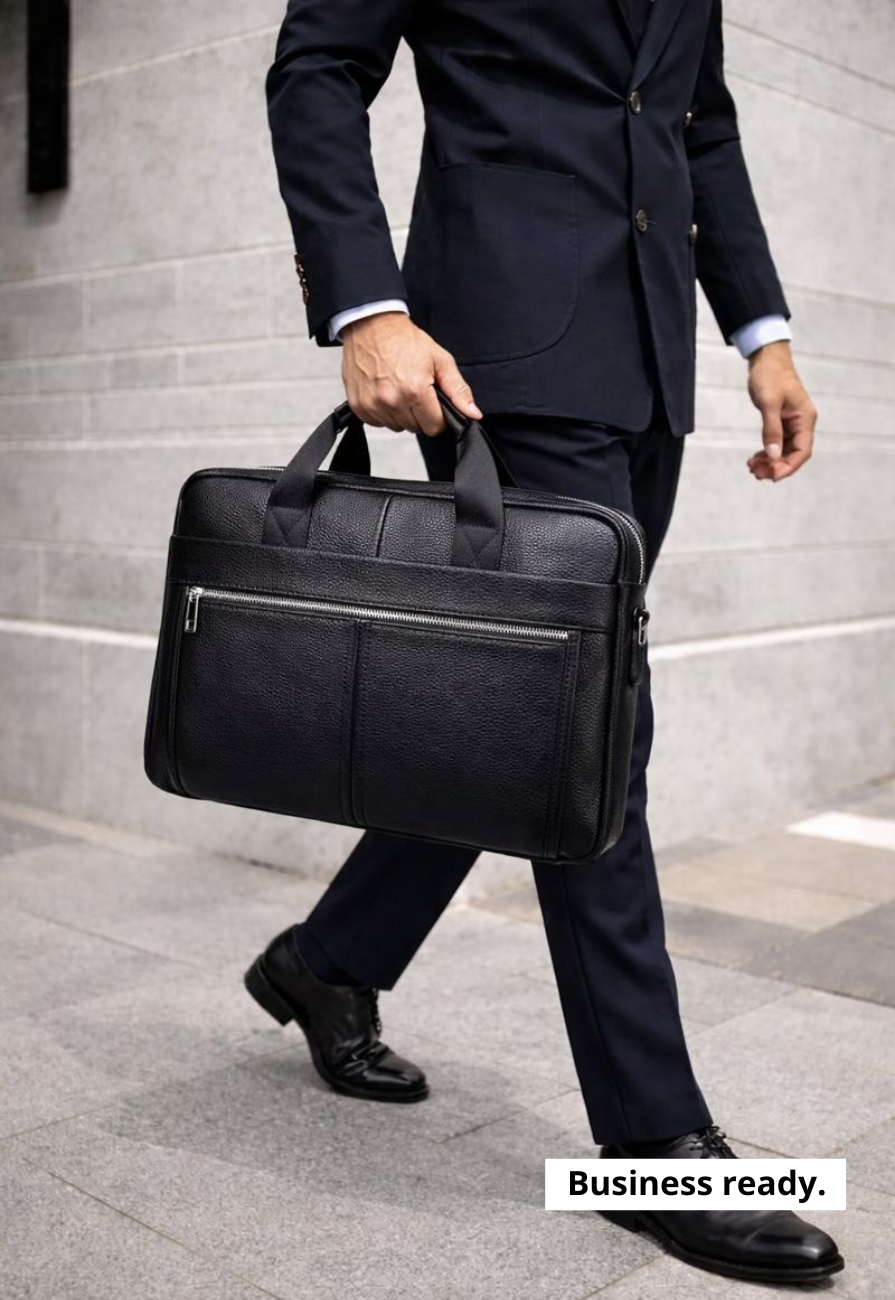
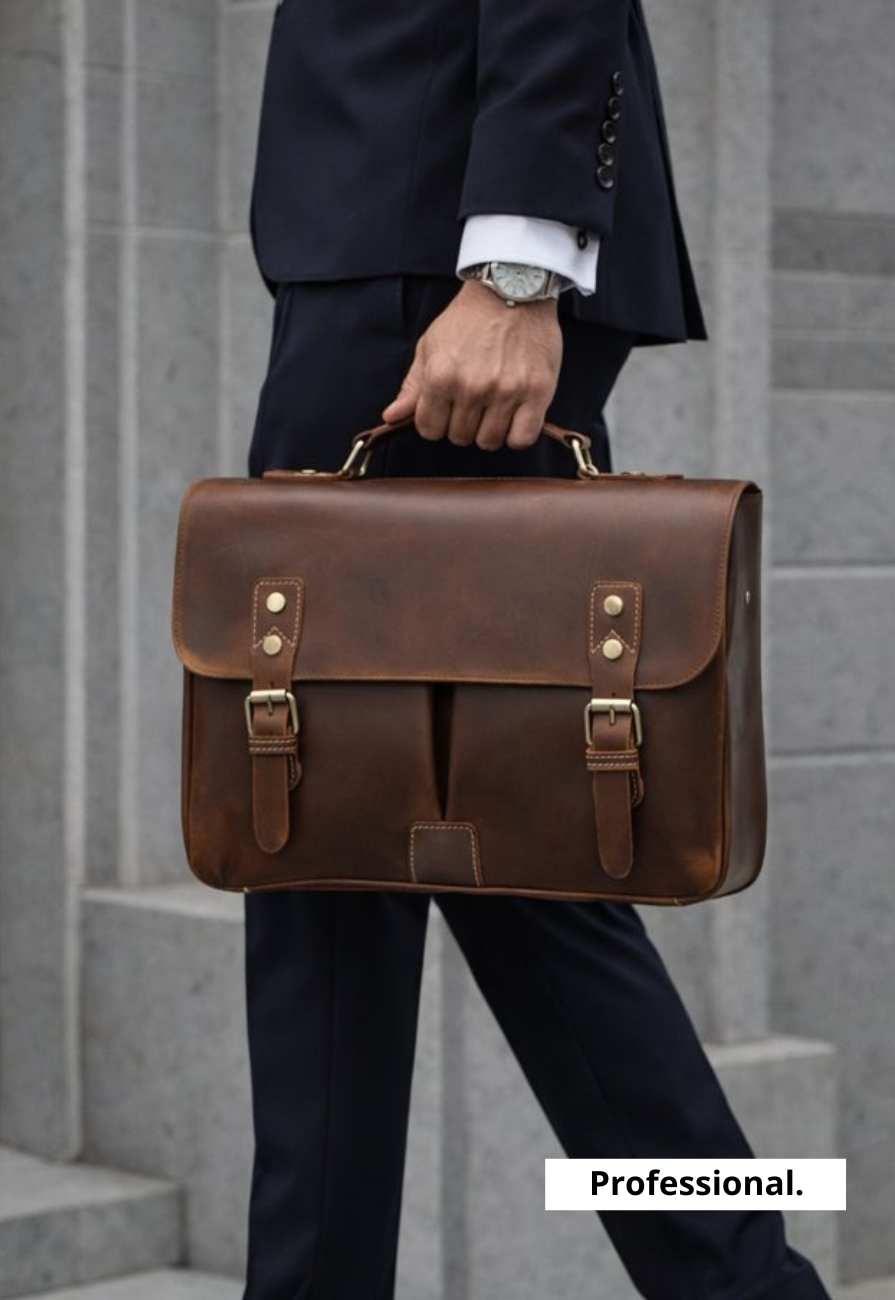
Think about the difference between a brand-new leather briefcase and one that's been carried through five years of meetings, commutes, and workdays. The new piece looks pristine but impersonal. The five-year-old one carries marks of your routine — a slightly darkened handle, softened edges, a richer tone across the body. Those changes are patina. They make the bag distinctly yours.
Good to know
Not all leather develops patina. Corrected-grain and bonded leathers have a sealed surface that prevents natural absorption. Only full-grain leather — the highest quality grade — develops genuine patina over time.
Why patina looks different on every bag
Patina development depends on leather type, finish, original color, owner habits, climate, and usage frequency. A bag carried five days a week changes faster than one used twice a month. Brown, tan, and cognac leather reveal patina most visibly — the tones shift from pale honey to warm amber over months of carry. Black leather develops character through soft shine and smoother surfaces rather than dramatic color shifts.
What causes leather patina over time?
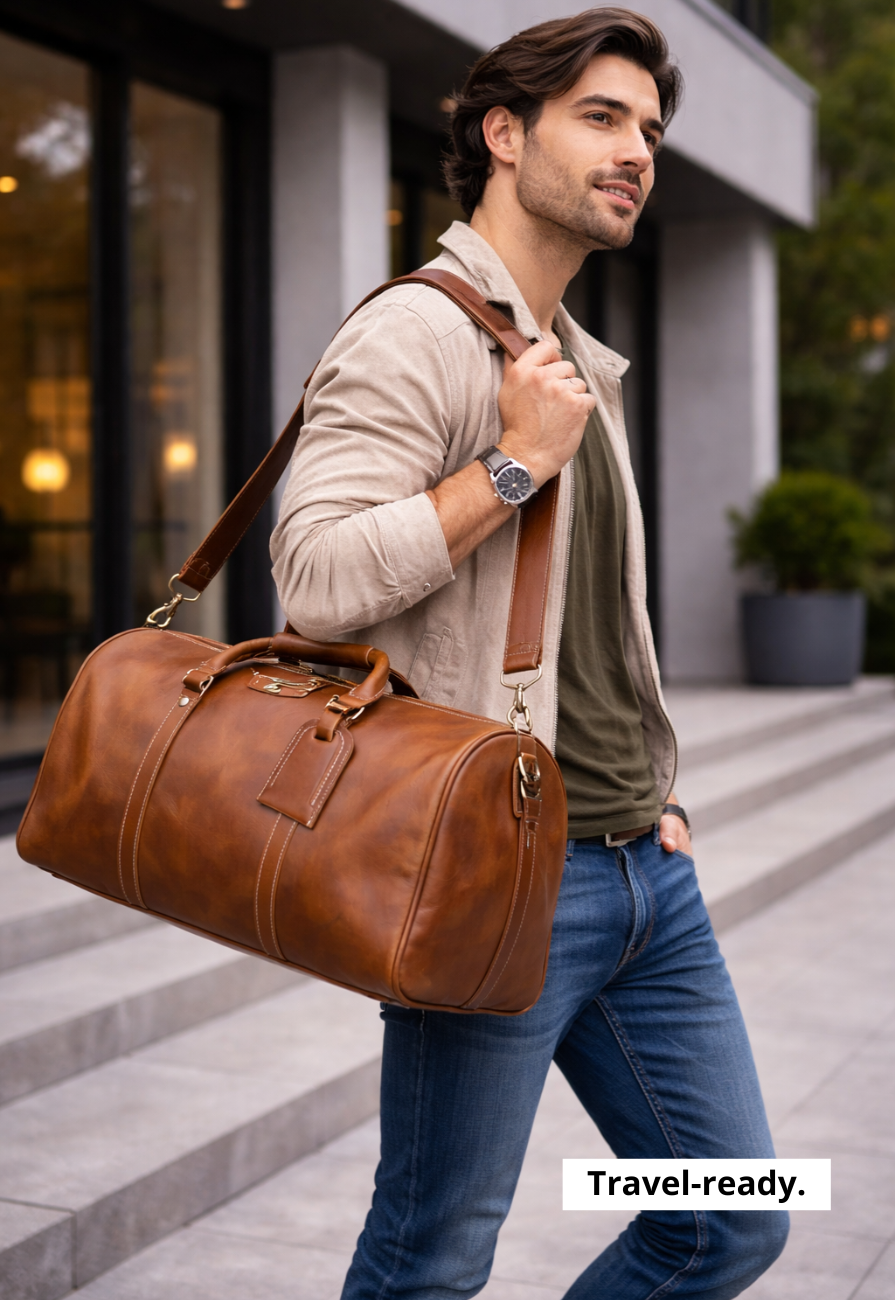
Leather patina develops because a hide is a living, reactive natural material. Handling, friction, light, air, and moisture collectively drive the transformation. When you carry a bag by the handle, natural oils from your hands gradually interact with the surface. UV exposure causes the tannins in the material to oxidize, deepening the color from pale tan to rich amber or tobacco over time. A shoulder strap rubbing against a jacket, a flap repeatedly opening and closing, a corner brushing a desk — these movements explain why patina appears first on handles, edges, corners, straps, and closure points.
Here's a rough timeline of what to expect with regular daily use:
-
1Weeks 1–4 — Break-inThe material softens slightly from handling. Light surface marks appear where the bag contacts your clothing or surfaces. These settle rather than deepen — the beginning of the aging process, not damage.
-
2Months 1–3 — First tone shiftThe overall color deepens and becomes more even. Handles, corners, and flap edges begin to show a noticeably richer tone. The contrast between used and untouched areas creates early character.
-
3Months 3–12 — Character developsNatural tan hides shift from pale honey to warm amber or tobacco. Dark leather develops a deeper luster. The surface acquires a subtle sheen without being polished — an effect that no factory finish can replicate.
-
4Year 1–3 — Full patinaThe bag has a settled, rich character entirely its own. The hide has become more water-resistant as it ages, and holds its shape better. This is the stage that makes people stop and ask where you got it.
-
53+ years — Heirloom characterThe surface has developed a complex, lived-in depth that simply cannot be manufactured or rushed. Each mark, tone shift, and softened edge is a usage signature unique to you — the visual record of where this bag has been.

Our advice
Look first at the areas that work hardest: handles, edges, straps, corners, flaps, and closure points. If these areas show darkening or softening, it's almost certainly leather patina — not damage.
Why patina is a feature, not a defect
Patina matters because it transforms a piece from anonymous to personal. A well-used leather bag maintains its quality while gaining something more meaningful — a presence that reflects its owner's actual life.
Natural leather doesn't require remaining untouched to be valuable. Often, it becomes more interesting precisely because it responds authentically to real use. A five-year-old bag can look more refined than a one-year-old one when the material and aging are genuine.
Our perspective
The bags most prized at vintage markets and leather auctions are almost never pristine — they're deeply patinated. That richness is what buyers are paying for, because it cannot be manufactured or rushed.
It can only be lived.
A bag becomes more personal with every carry
The way you carry it — by hand, cross-body, or over your shoulder — shapes how the hide ages. These habits gradually shape the material to your needs, making this aging process more meaningful than perfection.
Which leathers develop the best patina?
Not all materials age equally. Full-grain leather is strongly associated with superior patina because its natural grain layer remains intact. Since the surface hasn't been heavily corrected or coated, it develops depth, variation, and character more visibly than any other grade.
Tanning method matters too. Vegetable-tanned leather — processed using natural tannins from oak bark, chestnut, and other plant sources — develops the most dramatic aging of all. Because it carries no synthetic coating, the material is fully reactive to oils, UV exposure, and use. A vegetable-tanned bag can transform from pale tan to deep tobacco over a few years of daily carry. It's the reason heritage leather houses have always favored this method.
Pull-up leather is another type worth knowing. It's saturated with oils and waxes during tanning, which creates a distinctive effect: the material lightens where it's stretched or creased, then darkens again with use. Over time, this back-and-forth creates a beautiful two-tone depth that looks intentional — because it is, in a way. It's the hide recording exactly how you've used it.
Leather grades and tanning compared
Full-grain vegetable-tanned leather → natural grain intact, no synthetic coating. The most reactive surface. Develops the richest, most complex patina over years of carry.
Full-grain chrome-tanned leather → more supple and water-resistant than veg-tanned, but the tanning process uses chromium salts and often a heavier finish. Character development is real but more subtle.
Top-grain / corrected leather → surface sanded and coated to remove imperfections. Patina possible but slower and less visible.
Bonded / synthetic leather → no genuine patina. Cracks, peels, or deteriorates instead of improving.

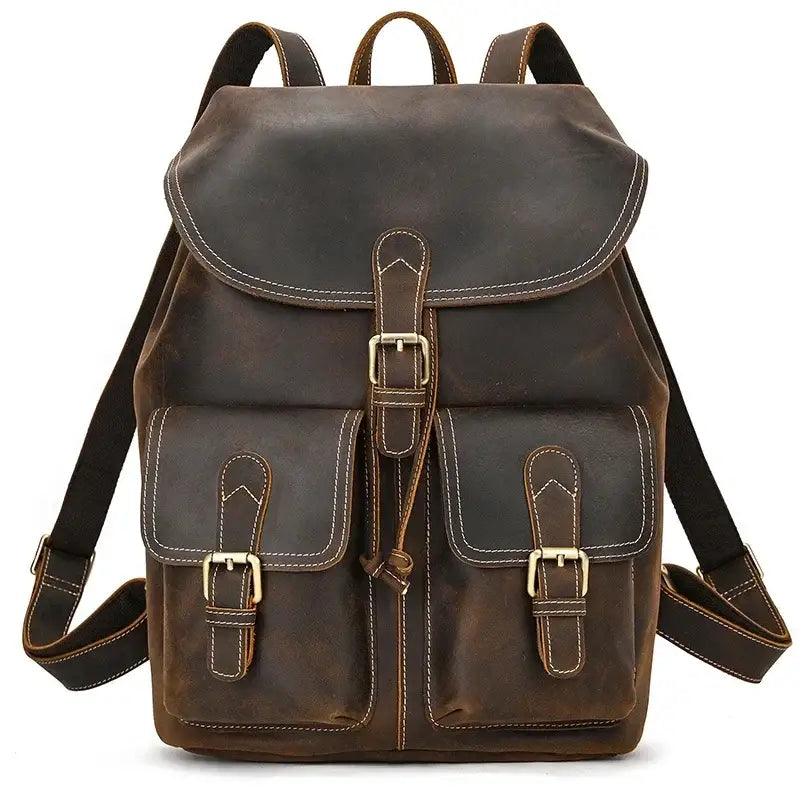
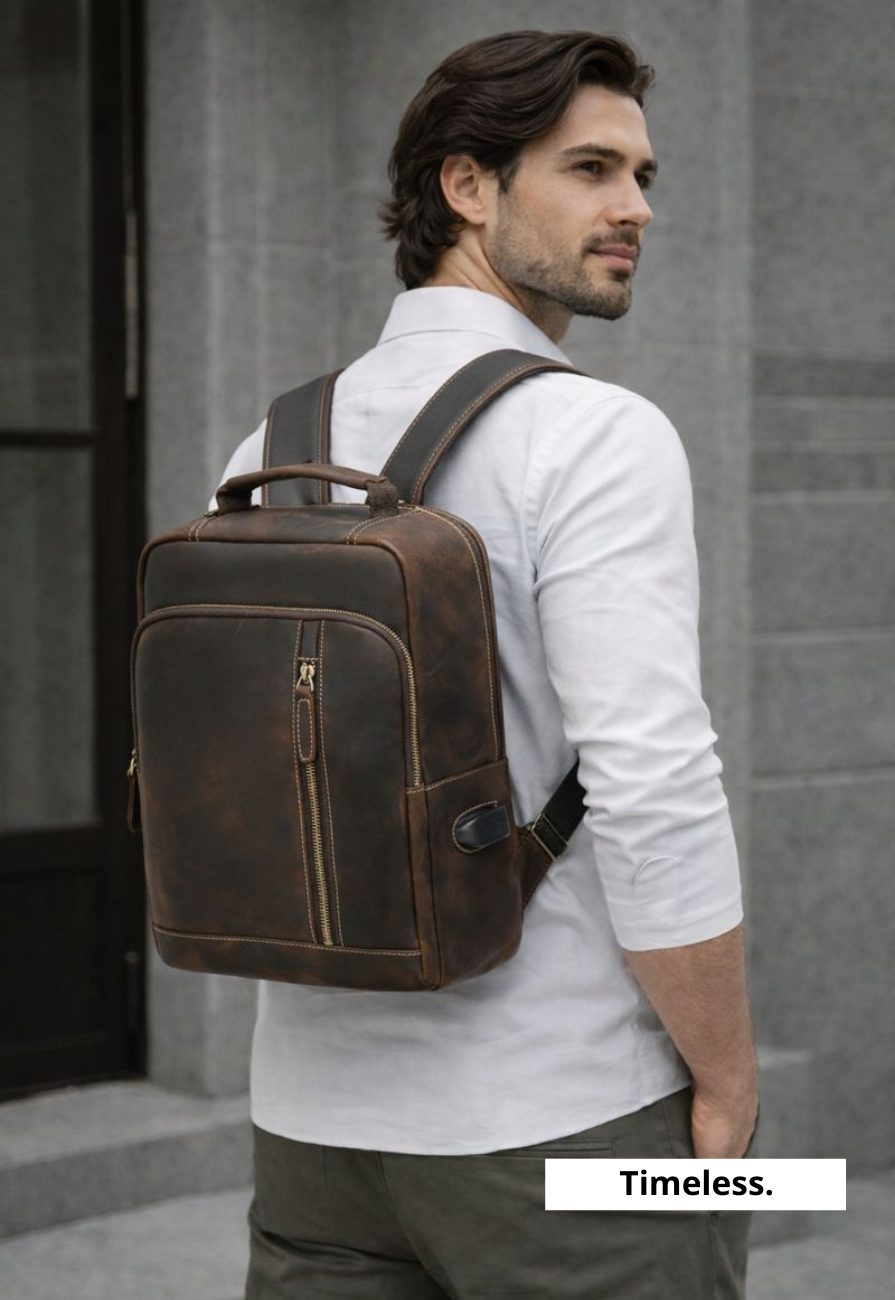
Heritage Walker
A vintage-inspired full-grain leather backpack built for daily carry. Soft structure, triple front flap pockets, brass hardware — and a hide that develops richer character with every year of use.
Good to know
Brown, tan, and cognac leather display patina more dramatically — the honey-to-amber shift becomes visible within months. Black leather develops character more discreetly through shine and softened surfaces.
How to encourage beautiful leather patina
The best approach is simple: use your bag regularly and care for it thoughtfully. This aging process shouldn't be forced — it should emerge from consistent use, sensible handling, and a care routine that protects the material without overdoing it.
Use your bag regularly
Real use creates patina. A leather briefcase carried to work every day becomes shaped by your routine. A leather messenger bag softens where it moves against your body. A leather backpack develops character at every strap and handle. A bag sitting in a closet develops nothing. Patina requires life.
Clean and condition with restraint
Leather care requires moderation. Too little leaves the hide dry, which can lead to cracking. Too much darkens the surface unevenly or creates sticky residue. Over-conditioning is one of the easiest ways to ruin how a bag ages. Use a soft cloth for regular dusting. Apply conditioner only when the material actually feels dry — not on a schedule.
What to avoid
Never use household cleaning products, alcohol wipes, or acetone near natural leather. These strip the natural oils from the fibers and actively prevent the aging process from developing as it should. For surface cleaning, a slightly damp cloth and a small amount of saddle soap is the right approach.
Store properly between uses
Keep your bag in a dry location away from direct heat and prolonged sunlight. For extended storage, lightly stuff the piece to maintain its shape and cover it with a breathable dust bag. Avoid sealing leather in plastic for long periods — in humid conditions, this creates mold, which is actual damage, not patina.
Remember
Attempting to speed up patina with heavy oiling, direct sun exposure, or heat produces uneven darkening that looks nothing like natural aging. The best character comes from normal use and careful maintenance — there is no shortcut.
Leather patina vs damage: know the difference
Patina and damage are fundamentally different. Healthy leather patina looks gradual and intentional — the material remains supple, flexible, and structurally sound. Damage looks abrupt, deep, or structurally concerning.
Warning signs that need attention
Deep cracks suggest dryness that has progressed beyond normal aging. Mold indicates a storage problem. Peeling usually points to surface finish or material issues — often a sign the leather was lower grade than advertised. When you notice these signs, don't attempt to mask them with heavy conditioner — that makes things worse. Sometimes professional repair is the only real solution.
Leather patina development in work bags
The real value of this aging process emerges through actual routines. Different bag types develop character differently, based on how they're used day to day.

 Leather briefcases
Character most visible on handles and closure points. After five years of daily work, a briefcase carries a presence no new piece can match.
 Messenger bags
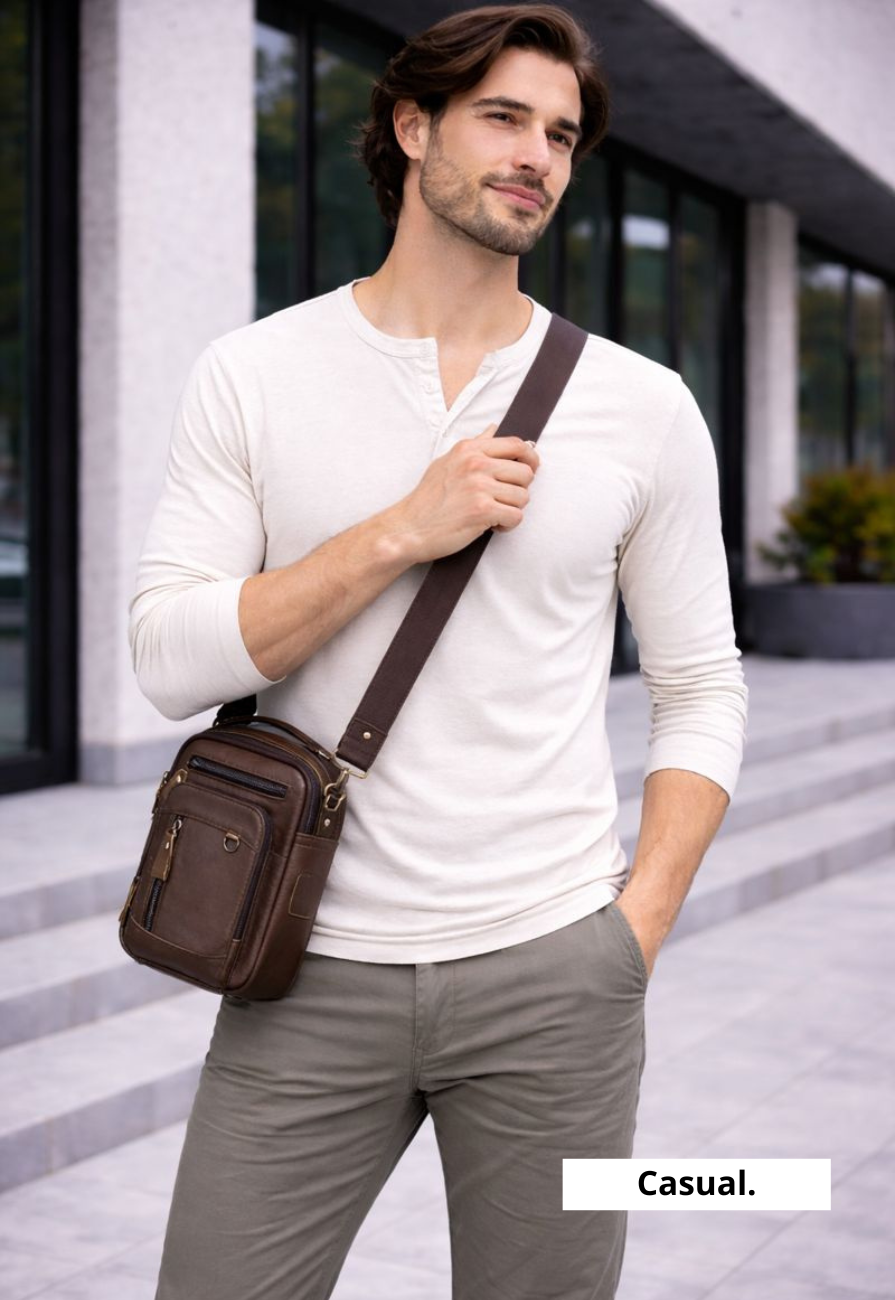
Character develops where the strap crosses your body daily. The flap, opened constantly, develops a subtle shine from friction.
 Leather backpacks
Patina first on shoulder straps and top handle. After a year of commuting, a full-grain backpack has a usage signature that distinguishes it from everything else.
 Travel duffles
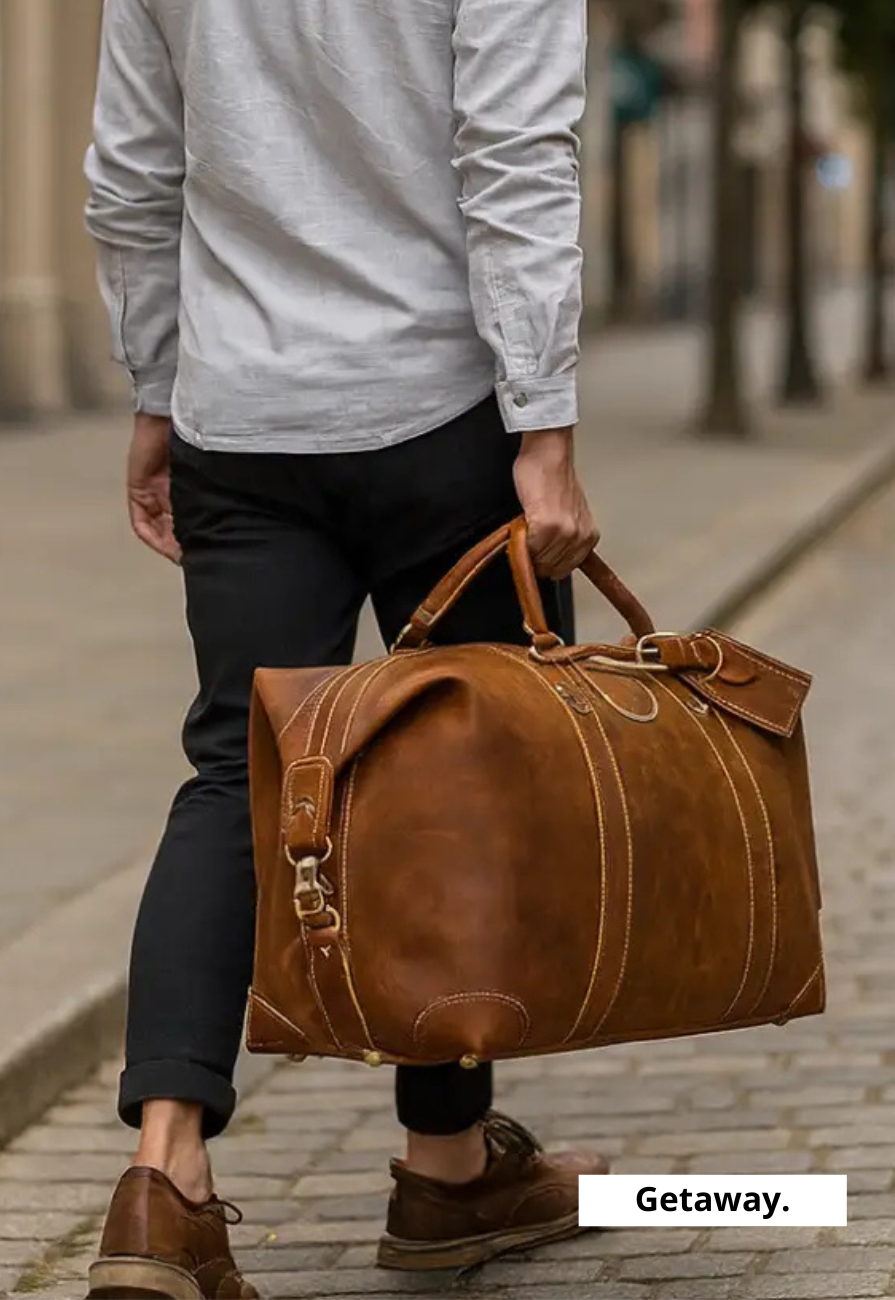
Most obvious character around corners, handles, and the base — all the points that absorb impact during packing and unpacking.
The right piece depends on how you live and work. Here are the Hartley bags built to develop the richest character over years of daily use.
The Harrington Briefcase
Structured cowhide with brass hardware and vintage detailing. A briefcase designed to be carried for decades — and to show it beautifully.

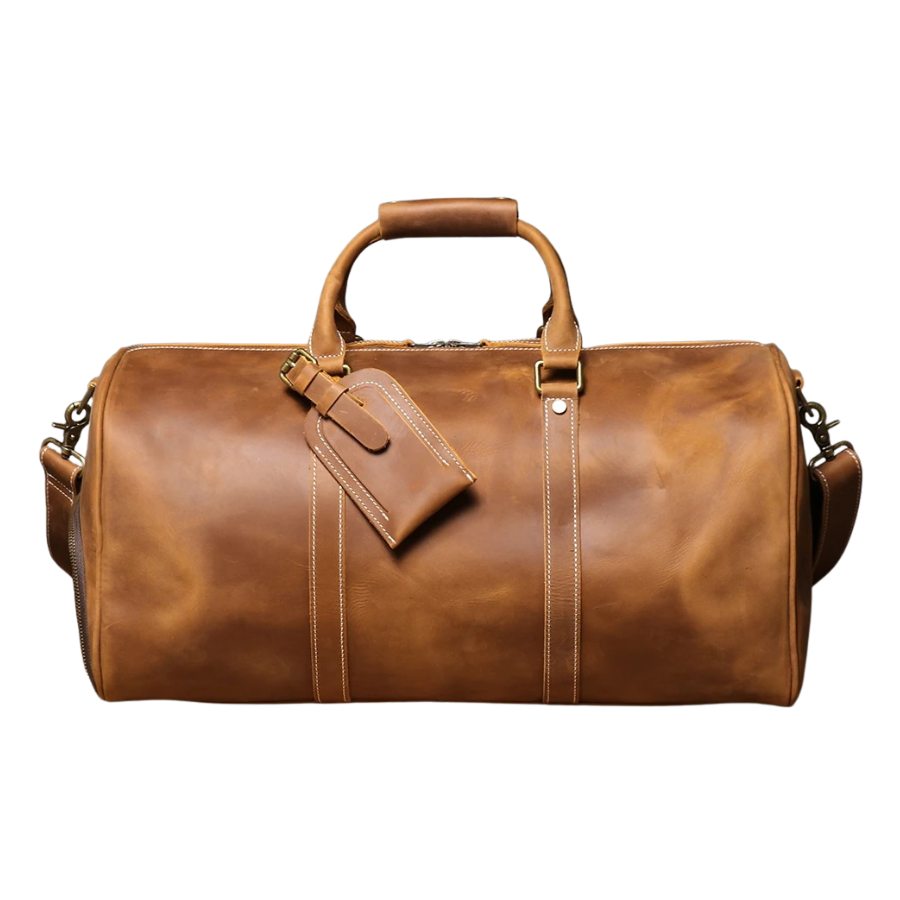
Leather Travel Duffle
A vintage-inspired weekender with dedicated shoe compartment and natural hide that ages beautifully — the more it travels, the better it looks.
Frequently asked questions
Leather patina results from handling, natural oils, friction, light, air, movement, and time. UV exposure causes the tannins in the hide to oxidize, gradually deepening the color. High-contact areas — handles, straps, corners, flaps, and edges — change first because they work harder and accumulate more exposure over time.
Yes — patina is one of the most desirable qualities in genuine leather goods. It makes pieces look richer, softer, and more personal over time. The key distinction: healthy aging differs from damage. Cracks, mold, peeling, and broken stitching are not desirable signs.
With regular daily use, the first noticeable changes appear within one to three months. More significant character develops over six to twelve months. A full, even patina across the entire piece typically takes one to three years. After three or more years, the material reaches a depth and complexity that cannot be replicated artificially.
Full-grain leather — especially vegetable-tanned full-grain — develops the most visible and complex patina because its natural surface is preserved. The tannins in the material react with UV exposure and handling, creating depth that builds over years. When you run your hand across it after years of use, you can feel it becoming softer and more supple.
Yes, black leather develops patina, but more subtly than brown, tan, or cognac. Rather than strong color shifts, black leather character shows through soft shine, smoother surfaces, and visible grain in high-contact areas.
Yes, if over-applied. Excess conditioner darkens surfaces unevenly, creates sticky patches, and interferes with the natural aging process. Use conditioner sparingly and only when the material actually feels dry. If it doesn't feel dry, it probably doesn't need conditioning yet.
Wipe dust regularly with a soft cloth, avoid soaking the material, keep bags away from direct heat, and store them in dry conditions when not in use. Avoid aggressive cleaners or DIY treatments. Good character development requires regular use, sensible care, and time — not heavy intervention.
Why leather patina makes a bag worth keeping
Leather patina represents one of the strongest reasons to invest in quality leather goods. It transforms daily use into character. It makes a piece feel more personal without reducing functionality — and unlike virtually every other material, it makes the object more valuable over time, not less.
The key is distinguishing healthy aging from real damage. Darker handles, softer surfaces, honey-to-amber tone shifts, and richer grain all represent beautiful leather patina. Deep cracks, mold, peeling, and structural issues require a different response entirely.
Use it naturally. Care for it thoughtfully. Your bag will improve with time. Most products simply can't say that.



Leave a comment
This site is protected by hCaptcha and the hCaptcha Privacy Policy and Terms of Service apply.