


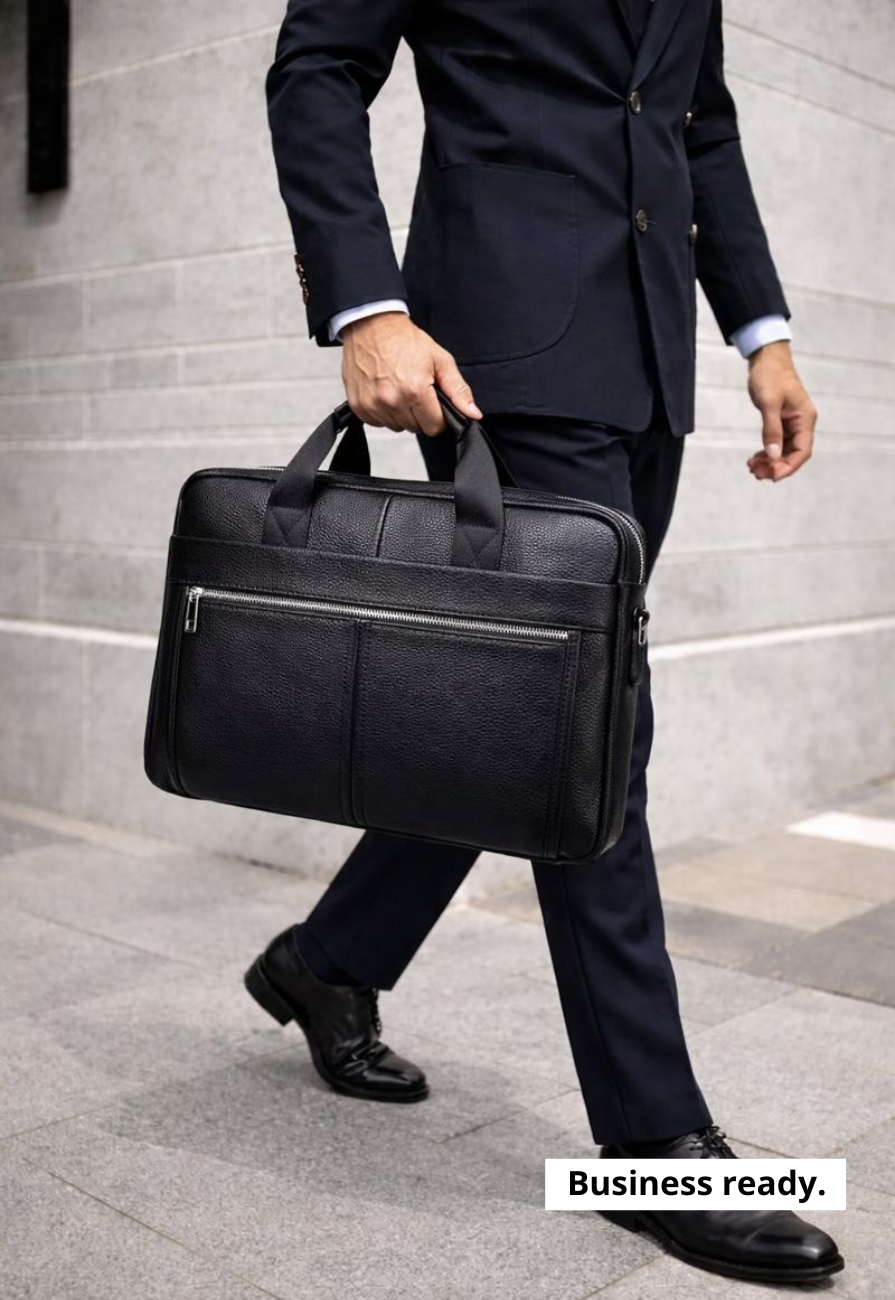

Most men buy a leather briefcase once and then carry it for a decade without thinking about it again. That's the point of the object. But the first purchase is where people get it wrong, usually by picking on looks alone and finding out six months later that the leather is peeling at the corners or the laptop sleeve is a half inch too tight for the machine they actually own.
I've spent enough years around tanneries and workshops to know that a briefcase's real quality lives in details you can't see in a product photo: how the leather was tanned, how the panels were cut, whether the stitching was done under tension or left to sag. This guide walks through what actually separates a briefcase that lasts from one that doesn't, and which build fits the way you actually work.
The best leather briefcase is full-grain or top-grain cowhide, sized to your laptop with real padding in the sleeve, and structured enough to hold its shape empty. Beyond that, the right pick depends on whether you need a formal client-facing bag, a slim commuter build, or a heavier organizer with multiple compartments.

What actually separates a good leather briefcase from a bad one
Almost every listing you'll find online says "genuine leather," which is close to meaningless. Genuine leather just means it isn't plastic. It says nothing about which layer of the hide was used or how it was tanned, and that's what actually determines whether the bag will still look good in year five.
Full-grain leather keeps the outermost layer of the hide, including its natural grain and minor imperfections. Nothing is sanded off. That's why it develops a real patina, the surface darkening and softening slightly wherever your hand or arm makes contact. Top-grain leather has that outer layer sanded and refinished for a more uniform, often glossier look. It's lighter and a touch more water-resistant, but it won't age the same way, and once the finish wears through at a corner, it shows.

The expert read
Ask how the leather was tanned, not just what "grade" it is. Vegetable-tanned leather (cured with tree bark extracts) ages into deep, warm browns and holds structure well, which is why it shows up on serious briefcases and saddlery alike. Chrome-tanned leather is softer out of the box and more consistent in color, but it patinas less dramatically. Neither is wrong. They're just built for different things, and a listing that never mentions the tanning process usually hasn't thought about it either.
Six things to check before you buy
Once the leather grade is settled, the rest comes down to construction. These are the details I check on every briefcase before I'd put my name behind it.

-
1Laptop sleeve dimensions, not bag sizeA briefcase can look large and still fit a 14 inch sleeve. Check the interior measurement against your actual laptop, with its case on if you use one.
-
2Stitch density and thread typeTight, even stitching with no visible slack means the panels were sewn under tension. Loose or uneven stitching is one of the first places a cheap briefcase fails.
-
3Hardware weightPick up the bag and feel the zipper pulls and buckles. Solid brass or antique-finish hardware has real heft. Light, hollow-feeling hardware is usually the first thing to fail.
-
4Structure when emptyA good briefcase should hold its shape even with nothing inside it. If it collapses flat, the base and side panels aren't reinforced enough for daily use.
-
5Carry optionsA top handle alone is fine for short walks to a car. If you commute on foot or by transit, a detachable, adjustable shoulder strap matters more than it looks like it should on day one.
-
6Interior organizationA separate laptop compartment away from loose items protects the screen from keys and pens. Slip pockets for a phone and cards save you from digging in a meeting.
Match the briefcase to how you actually work
The "best" briefcase changes depending on your actual week. A litigator walking into court needs something different from a sales rep who lives out of an airport lounge three days a month.
If you're weighing a briefcase against a backpack for the same job, we've broken down that decision in more depth, including which one actually reads as more professional by industry, in our briefcase vs backpack comparison. And if your priority is specifically laptop protection over document capacity, our guide on what to look for in a leather laptop bag goes deeper on that angle.
A briefcase built around real daily use
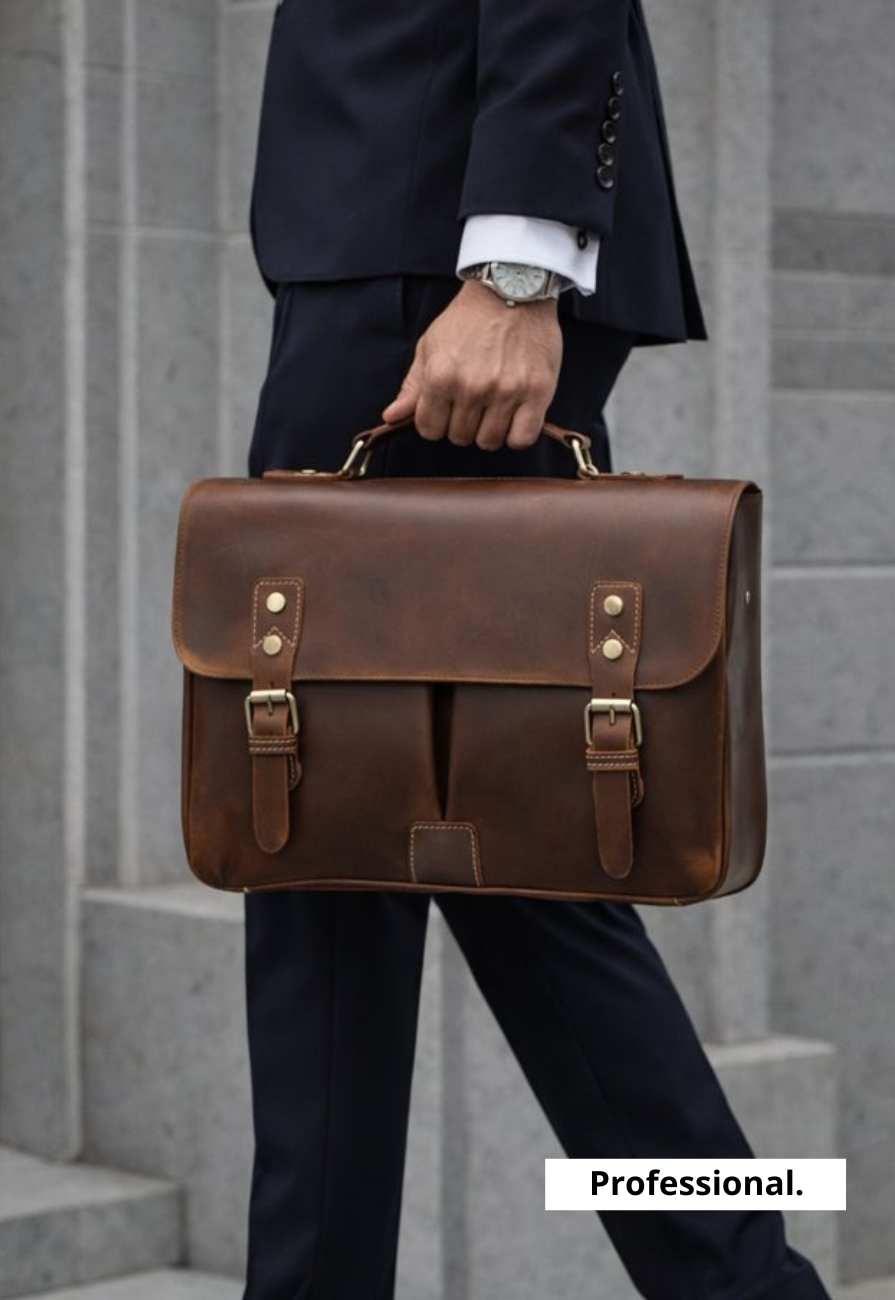
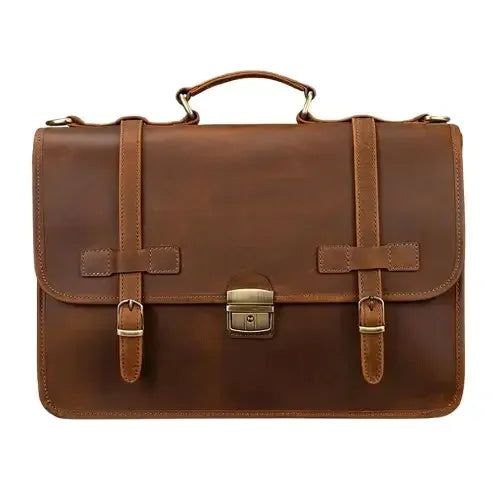
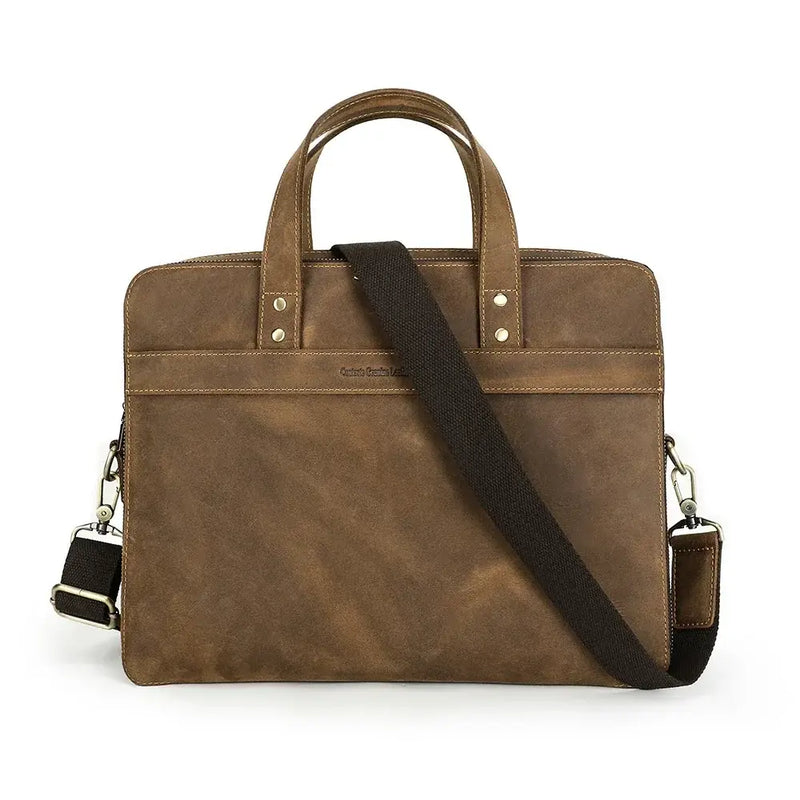
Our Ridgeway Case is the build I point people to when they want a briefcase that visibly earns its keep. It's built in crazy horse leather, a pull-up finish that lightens where it flexes and darkens where it doesn't, so the bag reads more distinctly used, in a good way, the longer you carry it.

Ridgeway Case
Crazy horse leather with a double-compartment layout, sized for a 14 inch laptop. Structured enough to hold its shape on a crowded train, casual enough to skip the tie.
If you want to see how crazy horse leather ages compared to smoother finishes, and why the marking that shows up when you press a fingernail into it isn't a defect, we cover that in detail in what is crazy horse leather.
A few other formats worth a look
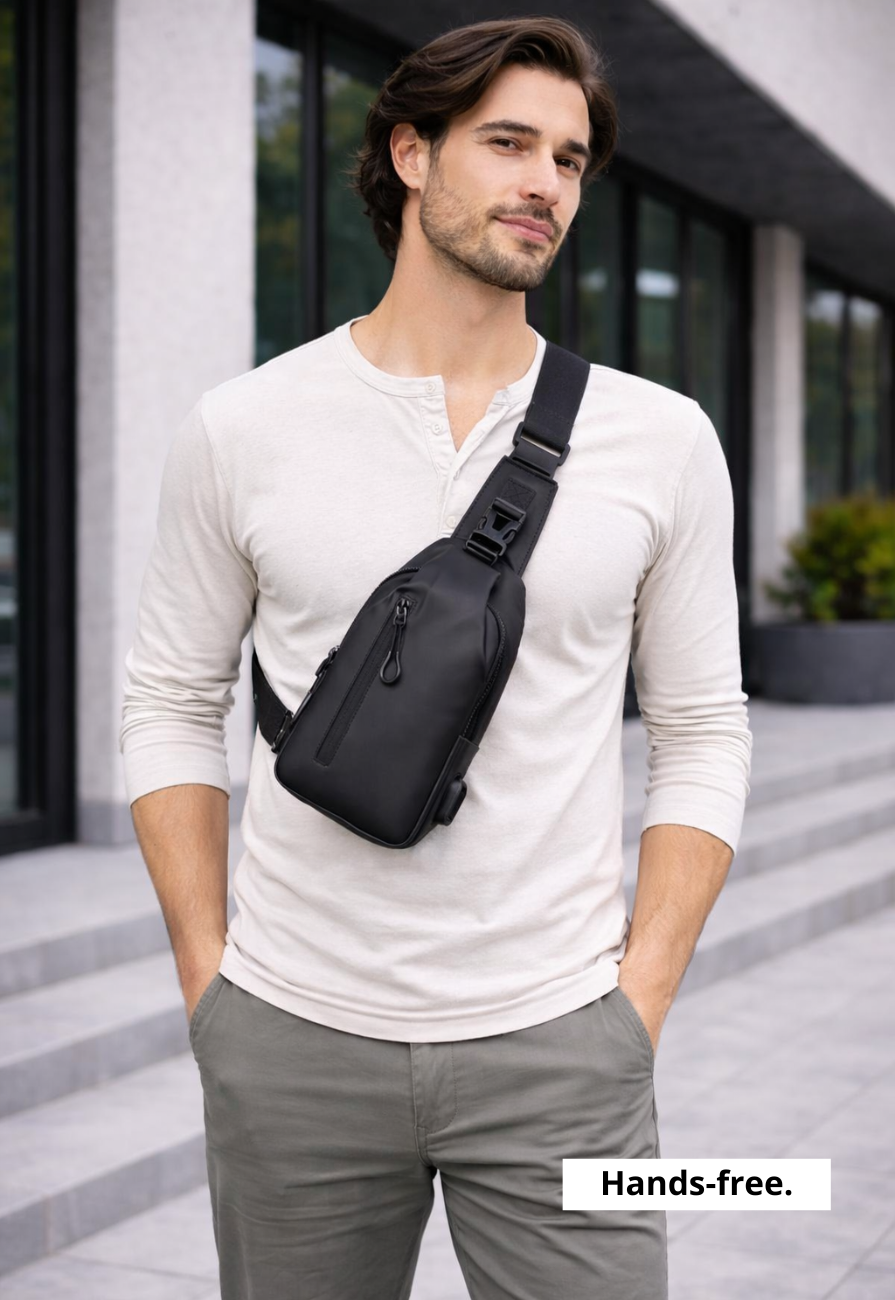
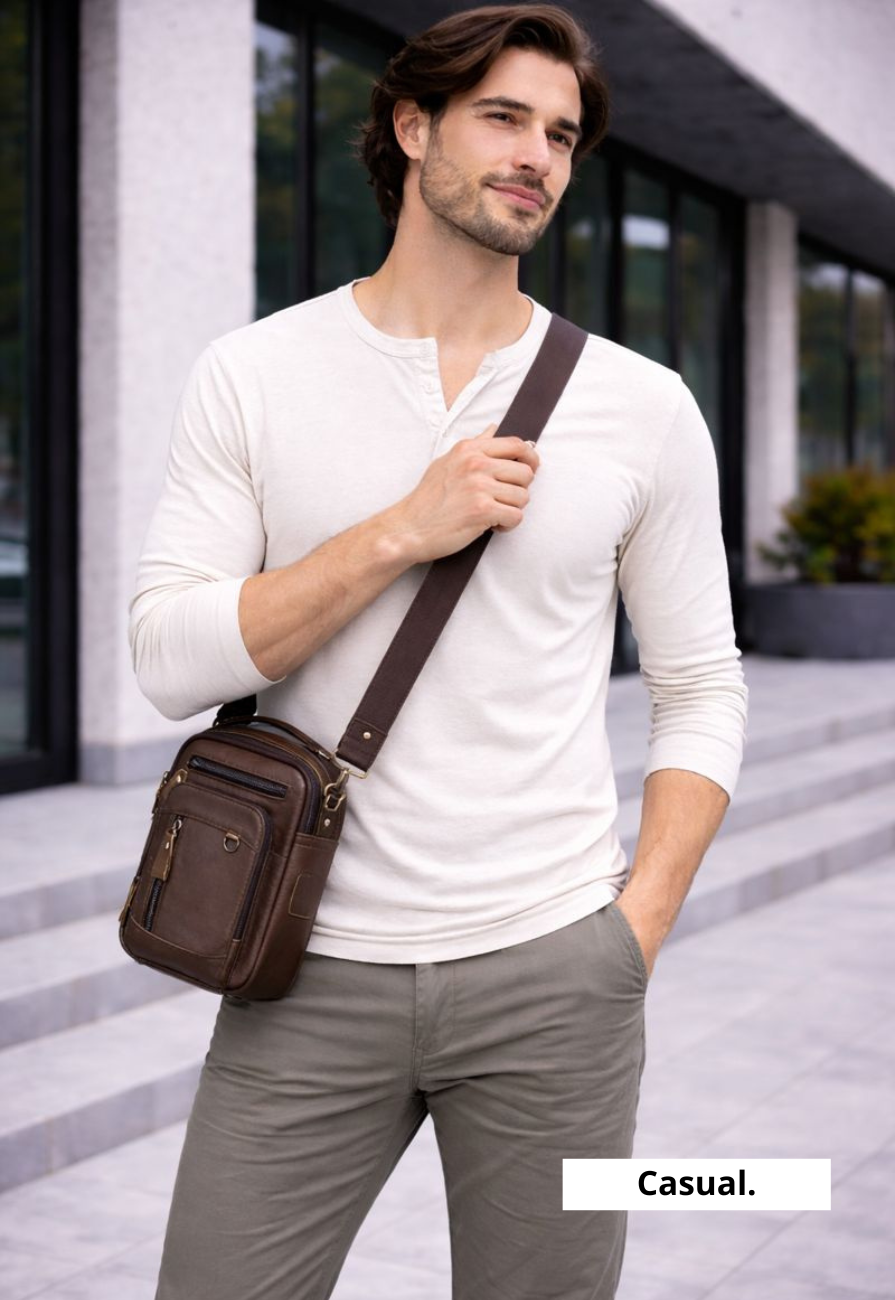
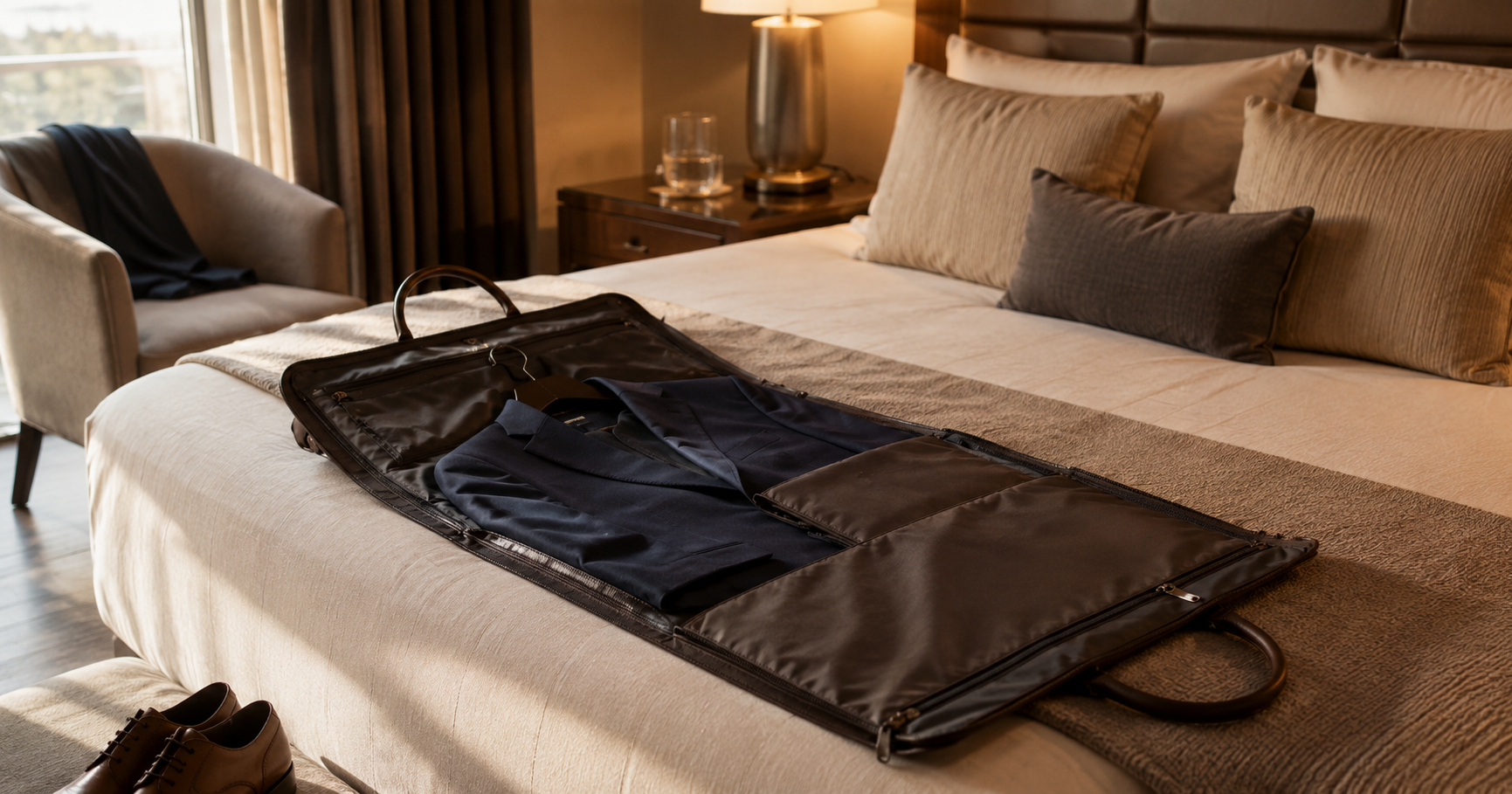
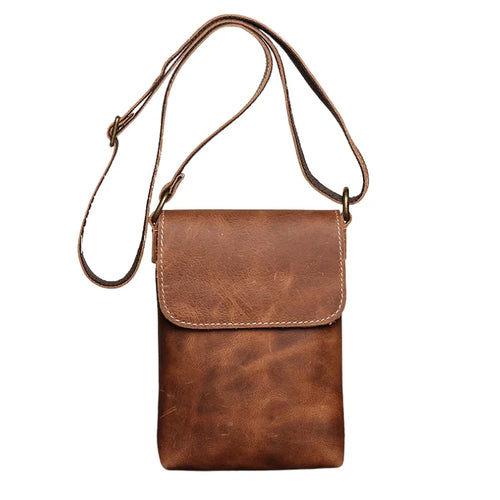
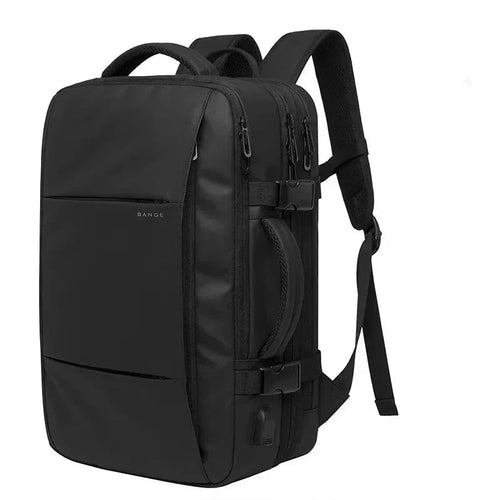
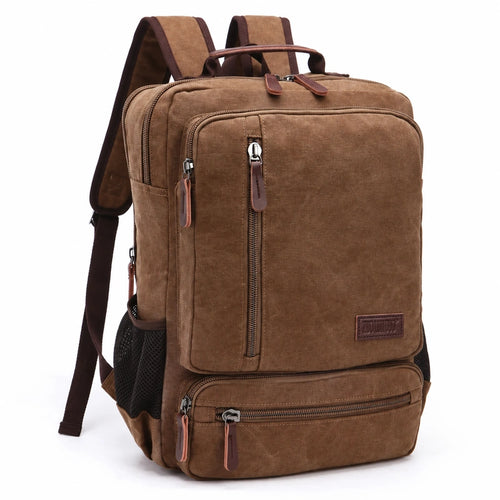
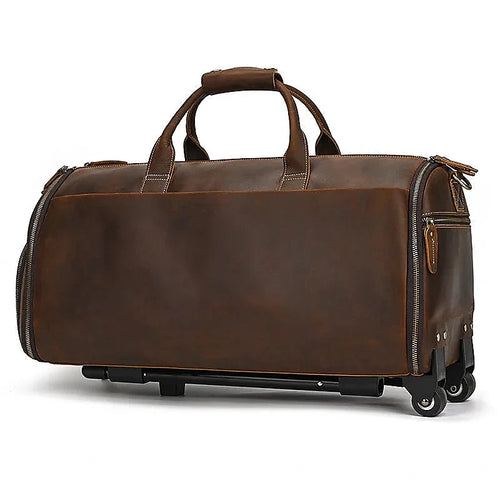
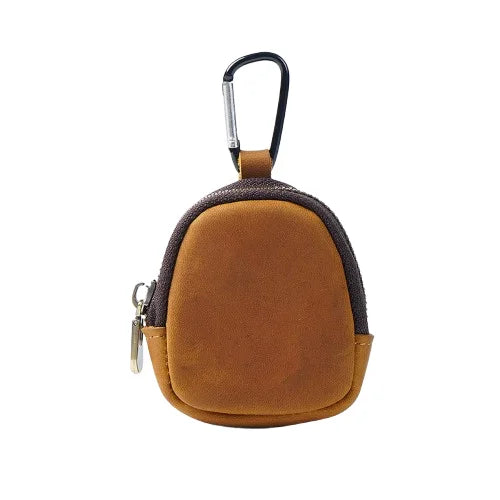
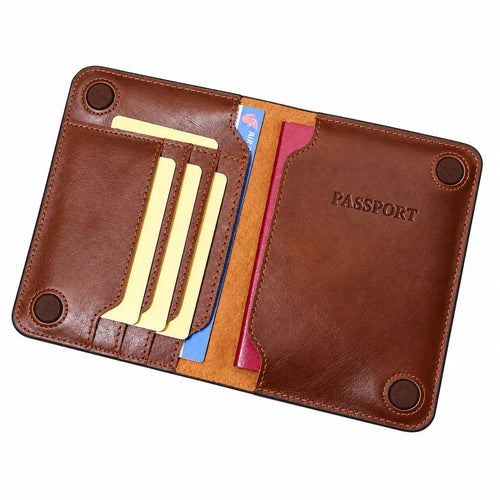
The Ridgeway isn't the right call for every desk. Here's how three other builds in the range answer to the personas from the table above.



The honest trade-offs of a leather briefcase
Leather sellers rarely list the downsides, so here they are plainly.
Watch out
A full-size leather briefcase, loaded with a laptop and a day's worth of documents, is heavier than a nylon or canvas equivalent. If you already deal with shoulder or back strain on long commutes, that weight difference is worth testing in person before you commit.
Leather also isn't weatherproof. A short walk in light rain is fine, but a full-grain briefcase left soaked will stiffen as it dries unless it's conditioned afterward. And it needs occasional upkeep: a conditioner every few months to keep the surface from drying out, which is a real task, not a one-time purchase decision.
Keeping it looking right for years
None of the care a leather briefcase needs is complicated, but skipping it entirely is where most bags start looking tired after a year. Wipe it down with a dry cloth after heavy use, keep it out of direct sun for long stretches, and condition it two to three times a year depending on your climate.
Good to know
If you're dealing with a specific issue rather than routine upkeep, our guides on how to clean a leather bag and full-grain vs top-grain vs genuine leather go further into product-by-product care and how to read a leather grade before you buy.
 Men's Briefcases
See the full range of structured work bags built for daily office carry.
 Men's Leather Backpacks
For hybrid weeks where a hands-free carry makes more sense.
Frequently asked questions
What is the best leather for a work briefcase?+
Full-grain leather is the strongest choice because the surface hasn't been sanded or corrected, so the natural fiber stays intact and the bag develops a genuine patina. Top-grain is lighter and more uniform, which some men prefer for a slimmer, dressier look, but it won't age the same way.
Is full-grain leather worth the extra cost over top-grain?+
For a briefcase you plan to carry for years, yes. Full-grain resists scuffing better and hides the small scratches of daily use inside its own texture, so it needs less careful handling than top-grain, which shows marks more visibly on its smoother, sanded surface.
What size briefcase fits a 15 inch laptop?+
Look for an interior laptop sleeve listed at 15 to 15.6 inches with at least a half inch of padding on each side. A briefcase built around a 14 inch sleeve will usually not close cleanly over a 15 inch machine, so check the sleeve dimension, not just the bag's overall size.
Does a leather briefcase actually get better with age?+
Full-grain and most top-grain leathers develop a patina with handling and light, meaning the surface darkens slightly and takes on a smoother sheen at the corners and handle. Bonded or coated leather does not do this. It just wears thin and cracks.
Is a leather briefcase or a backpack more professional?+
It depends on the setting more than the bag itself. A structured leather briefcase reads more formal in client-facing and finance or legal environments, while a leather backpack is now widely accepted in hybrid and creative workplaces. We break this down in detail in our briefcase vs backpack comparison.
How much should a genuine leather briefcase cost?+
A well-made genuine leather briefcase from a direct-to-consumer brand typically runs between 180 and 350 dollars. Below that range the leather is usually bonded or heavily corrected. Above it, you're often paying for a legacy name rather than a meaningful jump in materials.


















Leave a comment
This site is protected by hCaptcha and the hCaptcha Privacy Policy and Terms of Service apply.