




A good leather bag is one of the few things you own that looks better after a few years of use than it did the day you bought it. But that only happens if you treat it right, and most of the cleaning advice online is either too vague to act on or, worse, will quietly damage the leather while looking like it’s helping. I’ve seen more bags wrecked by a confident kitchen-cabinet “hack” than by honest neglect.
This is the method I use on my own bags and the one we stand behind at Hartley. It works at home, with things you mostly already own, whether you carry a structured briefcase or a leather backpack. No special kit, no risky tricks: just the right sequence, done gently, and the reasoning behind each step so you can adapt it to your own bag.
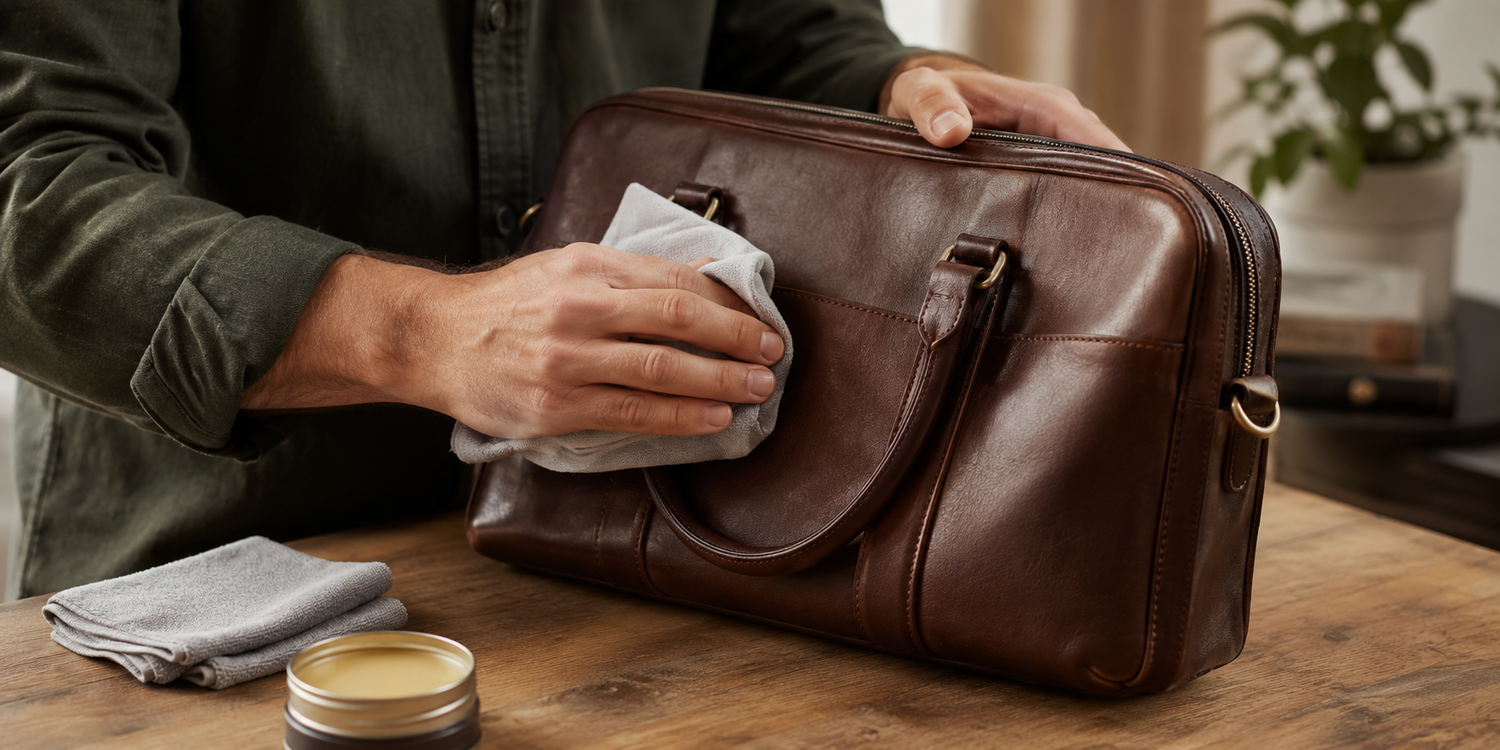
Empty it, brush off loose dust, then wipe the surface with a cloth dampened with water and a drop of mild soap, working in small sections. Pat it dry and let it air-dry away from heat. Once fully dry, work in a thin layer of leather conditioner. Always test any product on a hidden spot first, and never use heat, alcohol wipes, vinegar or food oils.

Know your leather first
Before any cloth touches the bag, know what you’re working with. The single biggest cause of damage is using the right method on the wrong leather. Finished leathers have a protective topcoat and shrug off a damp wipe. Unfinished and aniline leathers are open-pored, drink up liquid instantly, and darken the moment they get wet. Waxed pull-up leathers like crazy horse behave differently again, which is why they get their own section below.
There’s a simple test that tells you which camp your bag falls into. Put a single drop of water on a hidden spot. If it beads on the surface, the leather is finished or coated and a damp clean is safe. If it soaks in and darkens within a few seconds, the leather is unfinished or aniline. Treat it far more cautiously, use minimal moisture, and lean on a dedicated leather cleaner rather than soap and water.
The expert read
Most modern bags, including genuine cowhide work bags like the ones we carry, are finished enough to handle the standard routine below. The water-drop test takes ten seconds and removes the guesswork. When in doubt, treat the leather as unfinished and use less moisture, not more.
What you’ll need
You don’t need a drawer full of products to clean a leather bag well. The people who do the most damage are usually the ones reaching for the most aggressive cleaner. Here’s the short list that handles routine care for almost any leather bag:
Two soft microfiber cloths, one for cleaning and one for drying. A soft-bristle brush (a clean, old toothbrush works) for seams and dried-on dirt. A lint roller for the lining. Mild soap: a few drops of gentle hand soap in lukewarm water, or a dedicated leather cleaner if you have one. And a leather conditioner for the finishing step. That’s genuinely it.
Good to know
The one rule that overrides everything below: before any product touches the visible surface, test it on a small hidden spot first: the underside of the base, or inside a flap. Leather varies, and a cleaner that’s fine on one finish can darken or dull another.
How to clean a leather bag, step by step
This is the full routine, start to finish. For a bag in normal condition you’ll move through it in well under an hour, most of which is just waiting for the leather to dry. Work in good light so you can see what you’re doing, and read the reasoning under each step, because it’s what lets you adapt the method instead of following it blindly.
-
1Empty it and shake it outTake everything out, check every pocket, and turn the bag upside down to dislodge loose grit and crumbs. Sand and dust are abrasive, so clean over them and you grind them into the surface like fine sandpaper. This step prevents more scratches than any product.
-
2Clean the lining and interiorIf the lining pulls out, run a lint roller over it. If it doesn’t, vacuum the inside with a soft brush attachment. This is where pen marks, crumbs and the source of nearly every bag odor hide, so skip it and you’ll clean the outside while the inside quietly stays the problem.
-
3Dust the exterior dryWipe the outside with a dry microfiber cloth before anything wet touches it, and work a soft brush into the stitching and base seams where grime collects. Cleaning dust off dry means you lift it away rather than turning it into a muddy smear with the damp cloth.
-
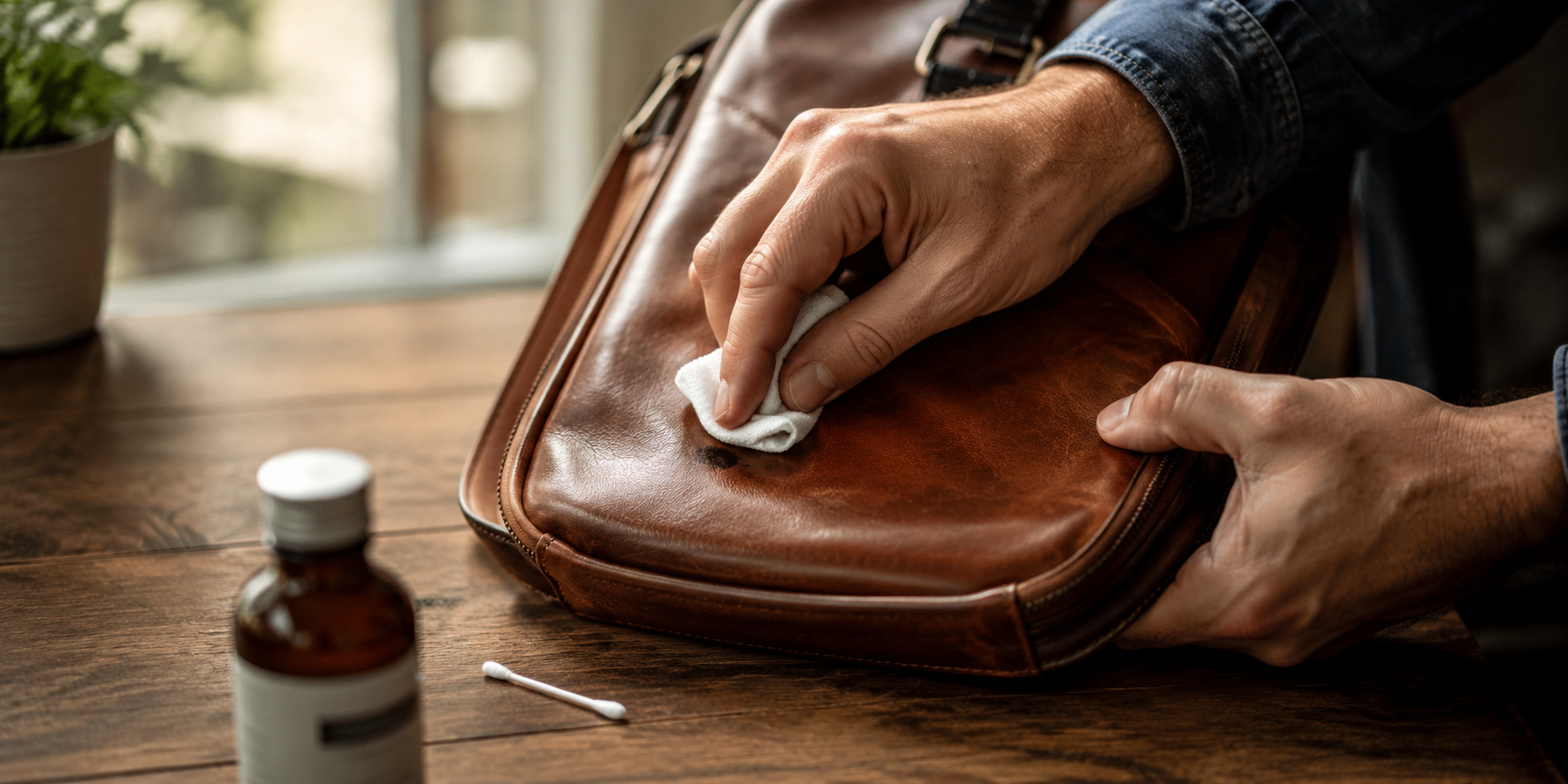
4Wipe with mild soap and waterAdd a small amount of mild soap to lukewarm water. Dampen a cloth, wring it almost dry, and wipe the surface in small sections following the natural lines of the bag. Damp, never wet. Use a white or light cloth so no dye transfers from the cloth itself onto the leather.
-
5Dry it naturallyPat off excess moisture with the dry cloth, then leave the bag to air-dry at room temperature, ideally loosely stuffed with paper to hold its shape. Keep it away from radiators, hair dryers and direct sun. Fast heat is what cracks leather, by pulling moisture out of the fibers faster than they can cope with.
-
6Condition once fully dryWhen the leather is completely dry, put a small amount of conditioner on a clean cloth and work it in with light circular motions, then buff off the residue. A thin, even layer is all it needs, because over-conditioning leaves leather tacky and can clog the pores so it can’t breathe. Conditioning replaces the natural oils that cleaning inevitably strips.
Two details separate doing this well from causing problems. First, damp, not wet: the cloth should feel barely moist on the back of your hand, never dripping. Second, patience on the drying: leather that dries slowly stays supple; leather rushed dry with heat goes stiff and brittle. Everything else is just gentle, repeated, small movements. Leather responds to a light, consistent hand far better than to force.

Good to know
Cleaning strips a little of the leather’s natural oil along with the dirt, which is exactly why the conditioning step isn’t optional. Skipping it leaves the leather drier than before you started. Think of cleaning and conditioning as one job in two halves, not two separate chores.
On the conditioner itself: you don’t need anything exotic, but a dedicated leather conditioner beats anything from the kitchen. A reliable, widely available US option is Leather Honey, a non-toxic, family-made formula that’s been a best-seller for decades. Whatever you choose, the rule is the same: thin coats, test first, buff off the excess.
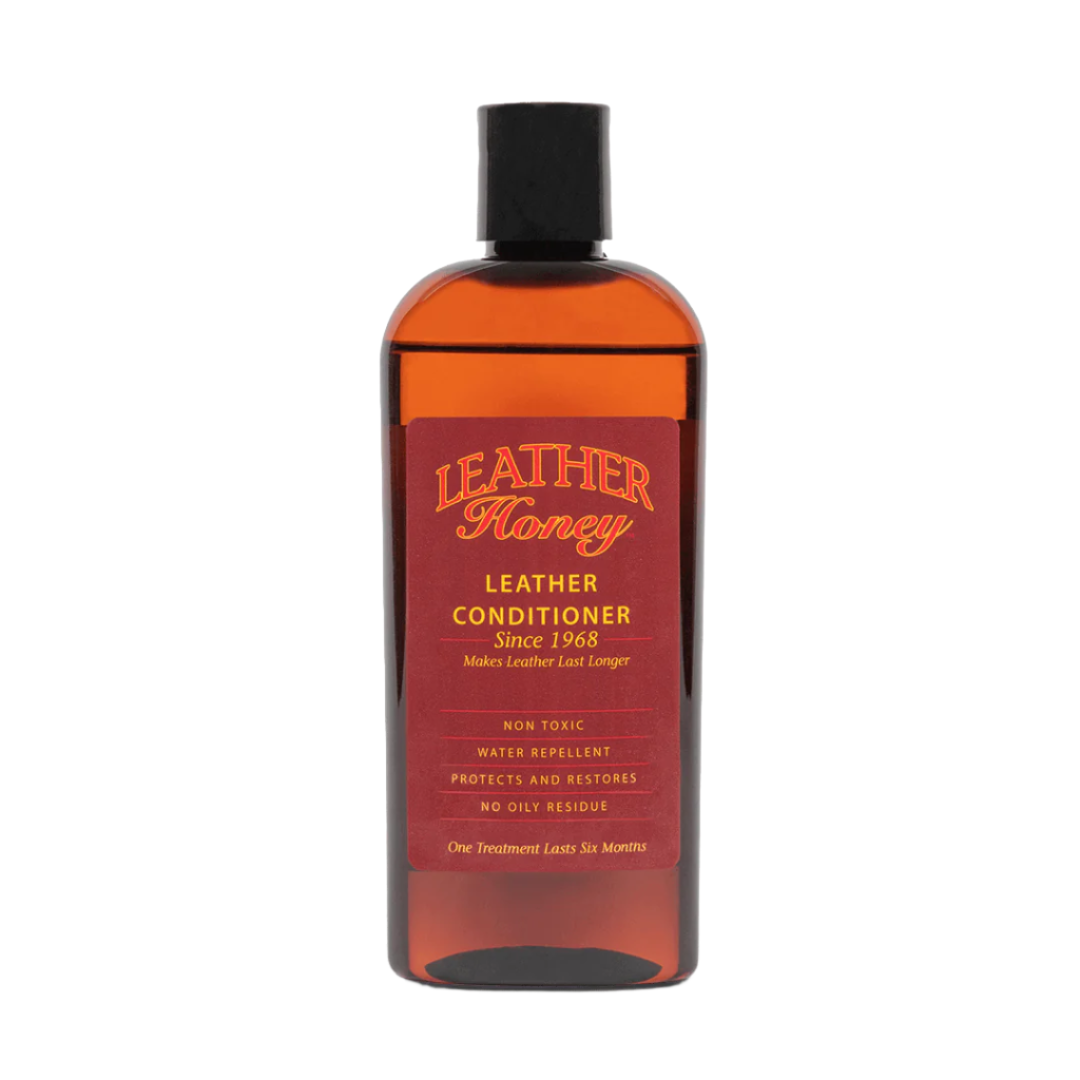
A dedicated leather conditioner
After cleaning, a proper conditioner replaces the natural oils you’ve stripped and keeps the leather supple. A non-toxic, US-made option like Leather Honey works on most smooth leathers, applied thin, tested first, and buffed off.
If your bag is a lighter or more natural, untreated leather (the kind that drinks up moisture and darkens easily), reach for something gentler. Chamberlain’s Leather Milk is a water-based, all-natural liniment that’s been the choice of fine leather makers for years; its milder formula conditions without the heavier feel of a wax-rich cream.
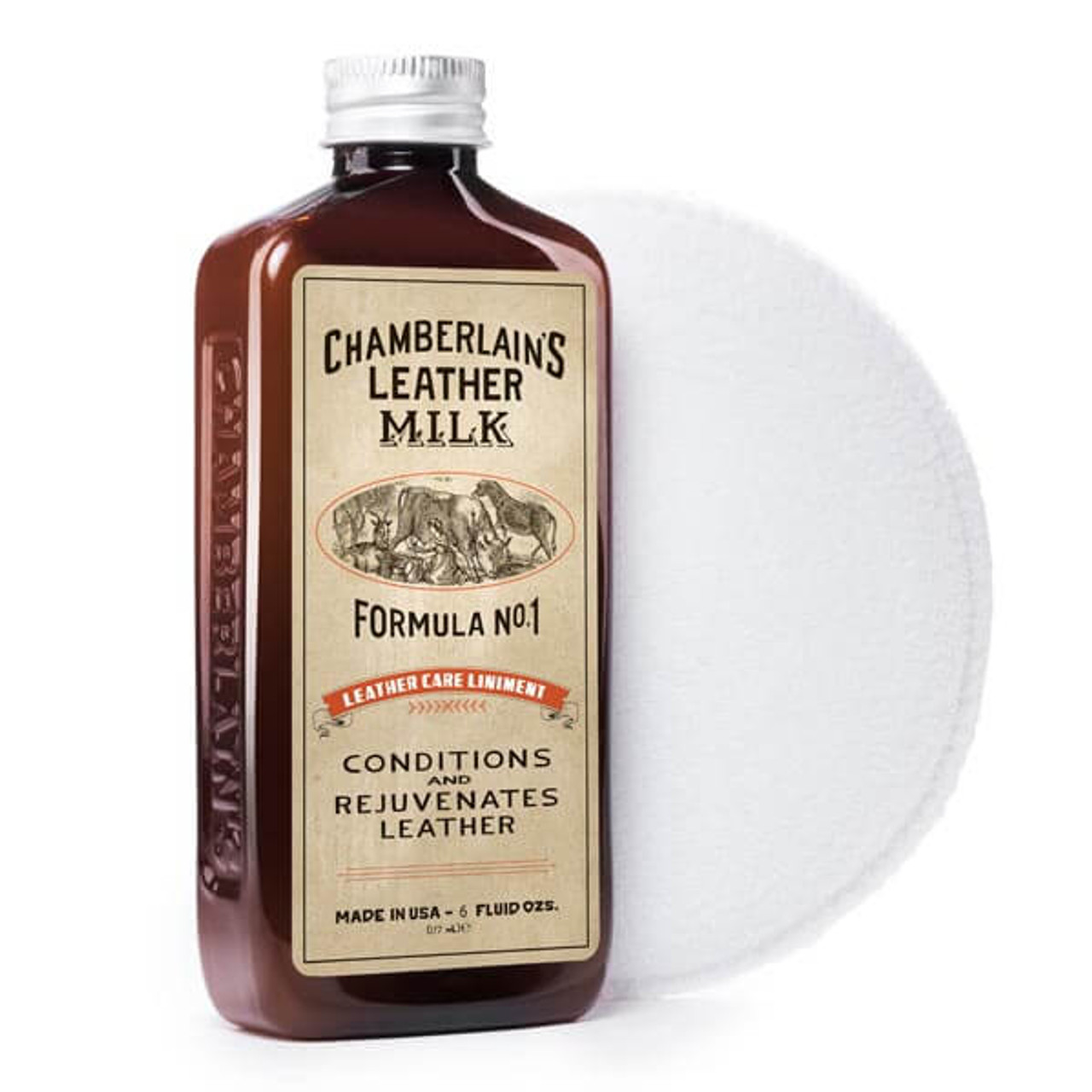
A gentle leather milk
A water-based, all-natural conditioning liniment that absorbs gently, the safer pick for pale, aniline or unfinished leather that a heavier cream might darken. Made in the USA, used by fine leather makers.
And if your leather has gone past dry into stiff or visibly thirsty, like a bag that’s been neglected in a closet, a thicker balm does the heavy lifting a thin conditioner can’t. Otter Wax Leather Salve is a wax-based paste that penetrates deeply to revive parched leather. One honest caveat: like any wax balm it will temporarily darken lighter leather as it settles, and it’s for smooth leather only, never suede or nubuck. Spot-test first.

A deep-conditioning balm
A thicker, wax-based paste of beeswax, shea and carnauba that penetrates deeply to revive dry, stiff or aged leather. Handmade in the USA, PFAS-free. Smooth leather only, and expect a little temporary darkening on lighter tones.

How to clean a white leather bag
White and light-colored leather follows the same routine, but with two extra worries: it shows everything, and it yellows with age. The fix for both is restraint.

For everyday marks, a cloth lightly dampened with water and a drop of mild soap, wiped gently, handles most of it. Resist the urge to scrub. Pressure pushes grime into the grain and can leave a dull patch that’s more obvious than the original mark. Color transfer from dark denim is the classic problem on a pale bag, especially on the back panel and corners; treat it early, because the longer the dye sits, the deeper it sets and the less likely it is to lift at all.
Yellowing is a separate issue, and it’s mostly about prevention. Light leather yellows from UV exposure, heat, oxidation and the oils from your hands. Keep a white bag out of direct sun, store it cool and ventilated rather than in plastic, handle it with clean hands, and condition it lightly. Once leather has yellowed deeply, home cleaning rarely reverses it, which is why prevention matters far more than any cleaning trick.
Spot-treating everyday marks
The single most useful rule with any stain is speed: the sooner you treat it, the more likely it lifts. Here’s what works on the most common everyday marks, the kind you can safely handle at home before they set.
Water spots: blot immediately, then let the area dry naturally and condition it; don’t chase the mark with more water. Oil or grease: never add water. Blot off what you can, then dust the spot with cornstarch or baking soda and leave it overnight to draw the oil out before brushing it away. Dirt and mud: let it dry fully, then brush off the dry crust with a soft brush before you wipe; rubbing wet mud just drives it deeper into the grain.
Watch out
Deep ink, set-in stains, mold, cracking and anything on a valuable or vintage bag are a different job from routine cleaning, and the aggressive home remedies people reach for cause more permanent damage than the original mark. We cover rescue work like ink, mold and cracked leather separately, in depth. For everyday cleaning, if a mark won’t lift with gentle treatment, stop before you make it worse: a specialist leather cleaner is cheaper than a ruined bag.
Odors, mold and metal hardware
Three things come up often enough on a routine clean to be worth covering here, without turning this into a damage-rescue manual.
Odors almost always come from the lining, not the leather. Clean the interior thoroughly (step 2), air the bag out somewhere dry, and for stubborn smells leave it overnight with a small open container of baking soda inside. Don’t spray scented products onto the lining, because the moisture does more harm than the smell.
Light surface mold, the powdery kind that appears after a bag has been stored somewhere humid, can be wiped off gently with a barely damp cloth, after which the bag must be dried completely and moved somewhere dry. Deep or recurring mold is a rescue job, not a routine one. Metal hardware (zips, buckles, clasps) just needs a wipe with a soft dry cloth to stay clean; keep cleaners and conditioners off the metal, and keep metal polish off the leather, since each can stain the other.
Caring for crazy horse leather
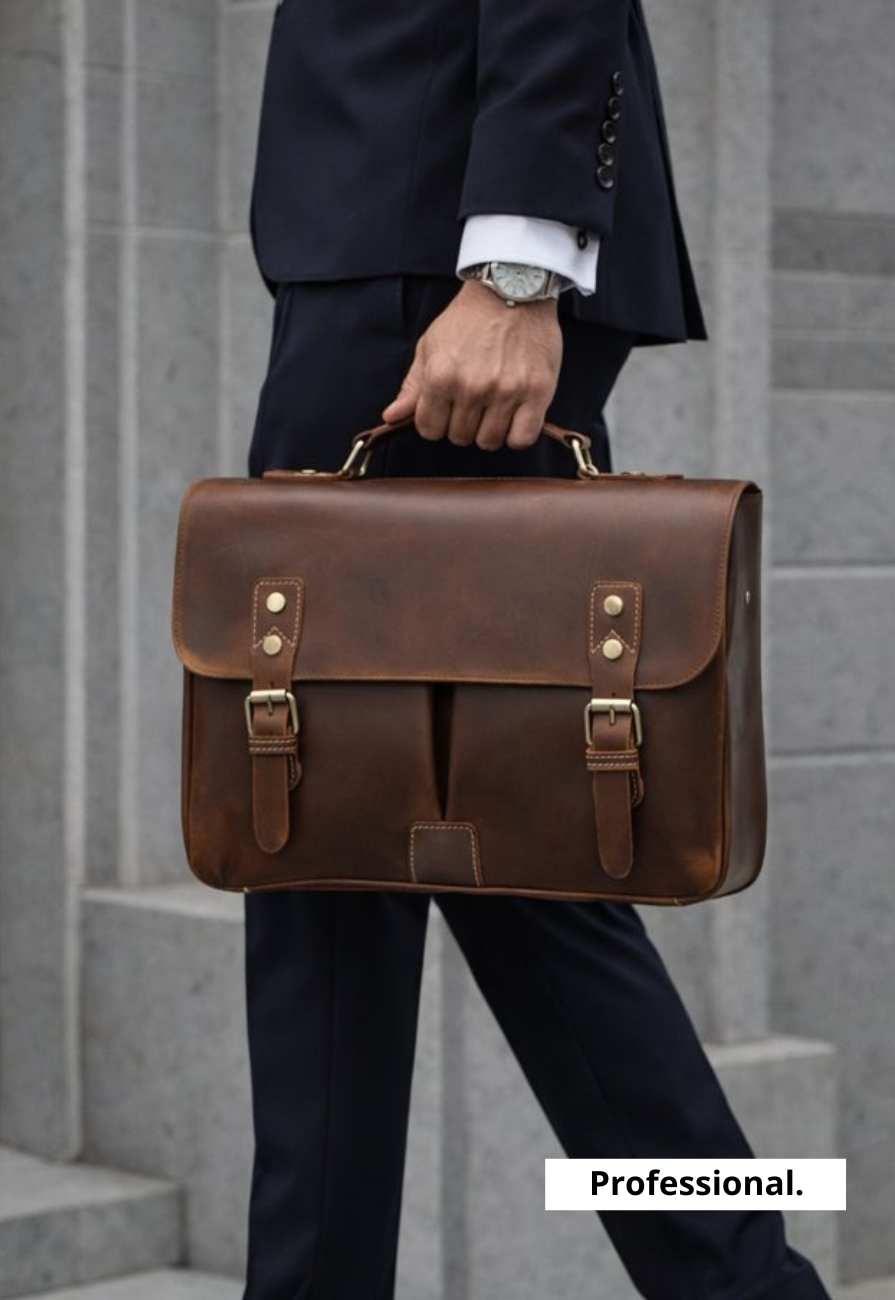
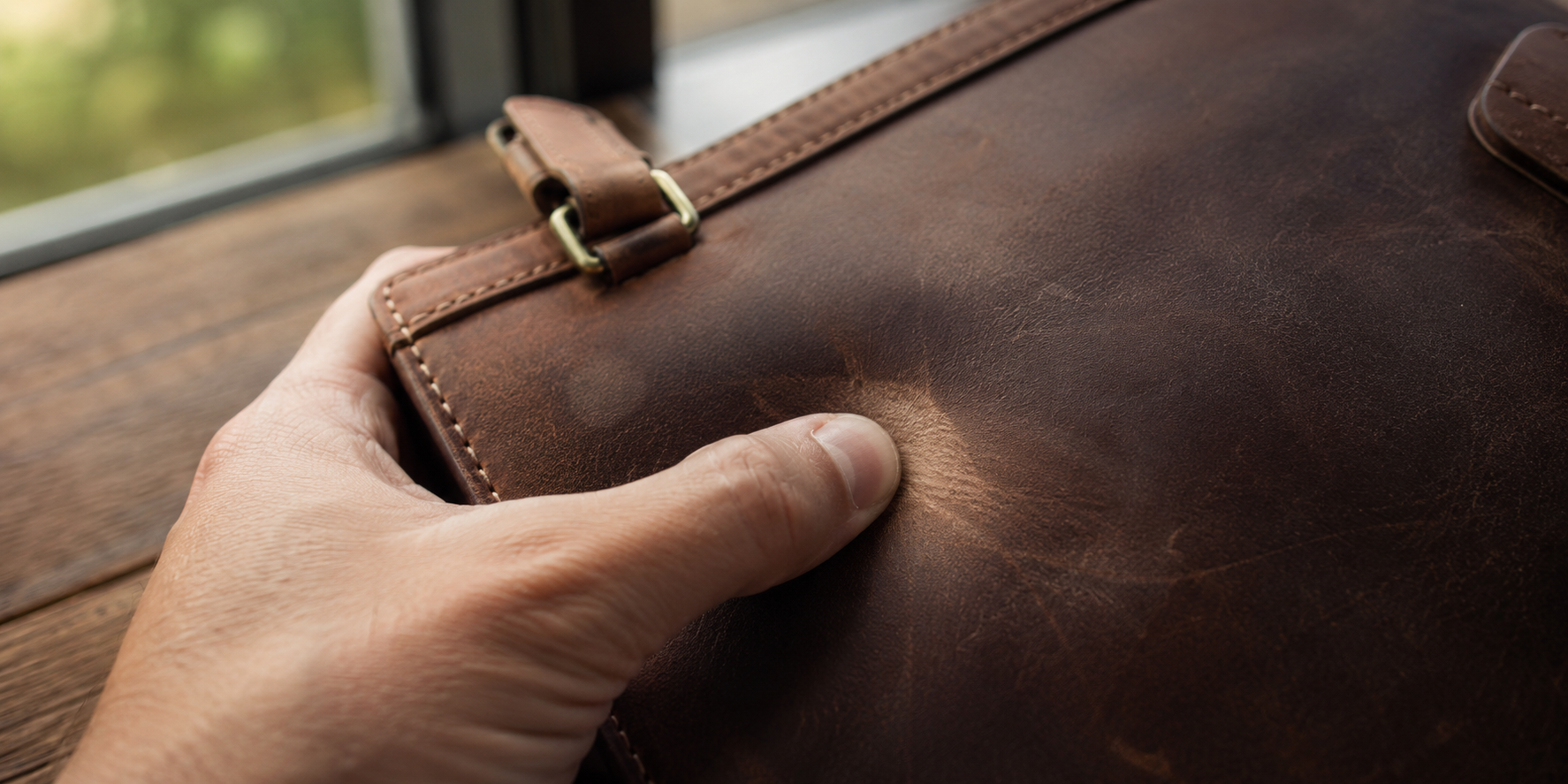
If your bag is made from crazy horse leather, almost everything above changes, and most guides won’t tell you that. Crazy horse is a heavily waxed pull-up leather, and the wax is the whole point. Press it or scratch it and the color shifts lighter; rub it and the mark fades back in. That living, marking surface is the feature, not a flaw to clean away.
So the rule is genuinely less is more. Most scuffs and scratches buff out with a dry cloth or just the warmth of your fingers smoothing the wax back over, no products at all. For actual dirt, a barely damp cloth and natural drying is plenty. What you want to avoid is heavy, frequent cleaning and constant conditioning, because both flatten the depth and contrast that make crazy horse look the way it does. We go deeper into how this leather behaves in our guide to what crazy horse leather is and why it ages so well.
This is also why our crazy horse pieces are some of the easiest bags we sell to live with, because they’re built to take marks gracefully rather than be babied.

The Ridgeway Case
A structured crazy horse briefcase built for daily work carry. The waxed genuine cowhide takes scuffs and marks in stride, so a dry-cloth buff is usually all the upkeep it needs.
Mistakes that quietly ruin leather
Most leather damage isn’t from neglect. It’s from well-meaning cleaning done wrong. These are the ones I see most often, and several are recommended freely online by people who should know better.
If you take one thing from this section: the kitchen cabinet is not a leather care kit. The remedies that sound clever, like oil, vinegar and lemon, are exactly the ones that cause slow, irreversible damage. Plain water, a touch of mild soap, and a real conditioner will out-perform every “hack” and never hurt the leather.
The honest trade-offs
Good leather care isn’t all upside, and you should know the catches. A conditioner almost always darkens leather a little, though usually it evens out, but on pale or untreated leather the change can stick, so test first. Over-cleaning is a real risk too: every clean strips some natural oil, so a bag wiped down constantly ages worse than one left mostly alone. And a freshly conditioned bag can transfer a faint color onto light clothing until it’s fully buffed and settled. None of these are reasons to skip care, just reasons to do less of it, more carefully.
How often should you clean it?
There’s no fixed schedule, and anyone who gives you an exact number is guessing. It depends on how hard you use the bag and what it’s exposed to. As a working guide for a bag in regular rotation:
A quick wipe with a dry cloth weekly keeps dust from settling in. A proper soap-and-water clean about once a month if you carry it daily, or every few months if you don’t. And conditioning two to four times a year, more in dry winter air, less in humid climates. A bag that mostly lives in a closet needs far less of all three. Let the leather tell you: clean it when it looks like it needs it, not because the calendar says so.

On the question everyone asks, no, water does not ruin leather. A caught-in-the-rain bag is fine if you blot it, reshape it, let it dry slowly, and condition it once dry. What ruins leather is panicking and drying it fast with heat. The same patience that makes a bag develop a rich patina over the years is what gets it through the occasional soaking.
What you’ll notice
Done right, the difference is immediate and tactile. A freshly cleaned and conditioned bag feels suppler under your thumb, the grain looks deeper and a touch richer in color, and that faint dry, dusty smell is replaced by the quiet, clean scent of the leather itself. It’s the same satisfaction as a well-kept pair of leather shoes. You can feel the care the moment you pick it up.
Storing it between uses
How you store a bag between uses matters almost as much as how you clean it. Stuff it loosely with paper to hold its shape, keep it in a breathable dust bag or old pillowcase (never sealed in plastic, which traps moisture and invites mold), and stand it upright in a cool, dry spot away from direct sun. Don’t hang it by the straps for long stretches; the weight distorts them over time.
This routine works across the catalog, whether you carry a leather briefcase to the office or a backpack day to day. The better the leather underneath, the better it rewards the care, and the longer it keeps looking like something worth owning.
If you’re putting in the care, it’s worth putting it into leather that earns it: the kind that looks better, not worse, after a few years of this routine.
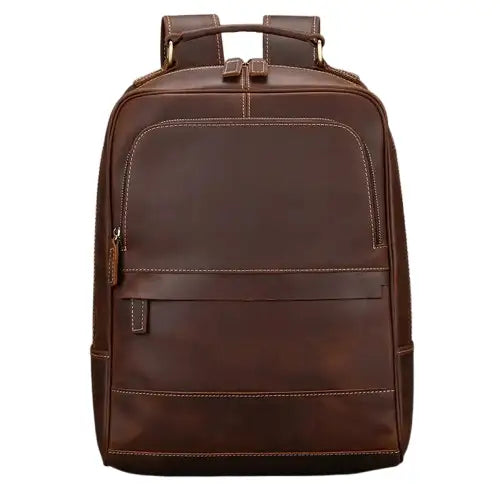
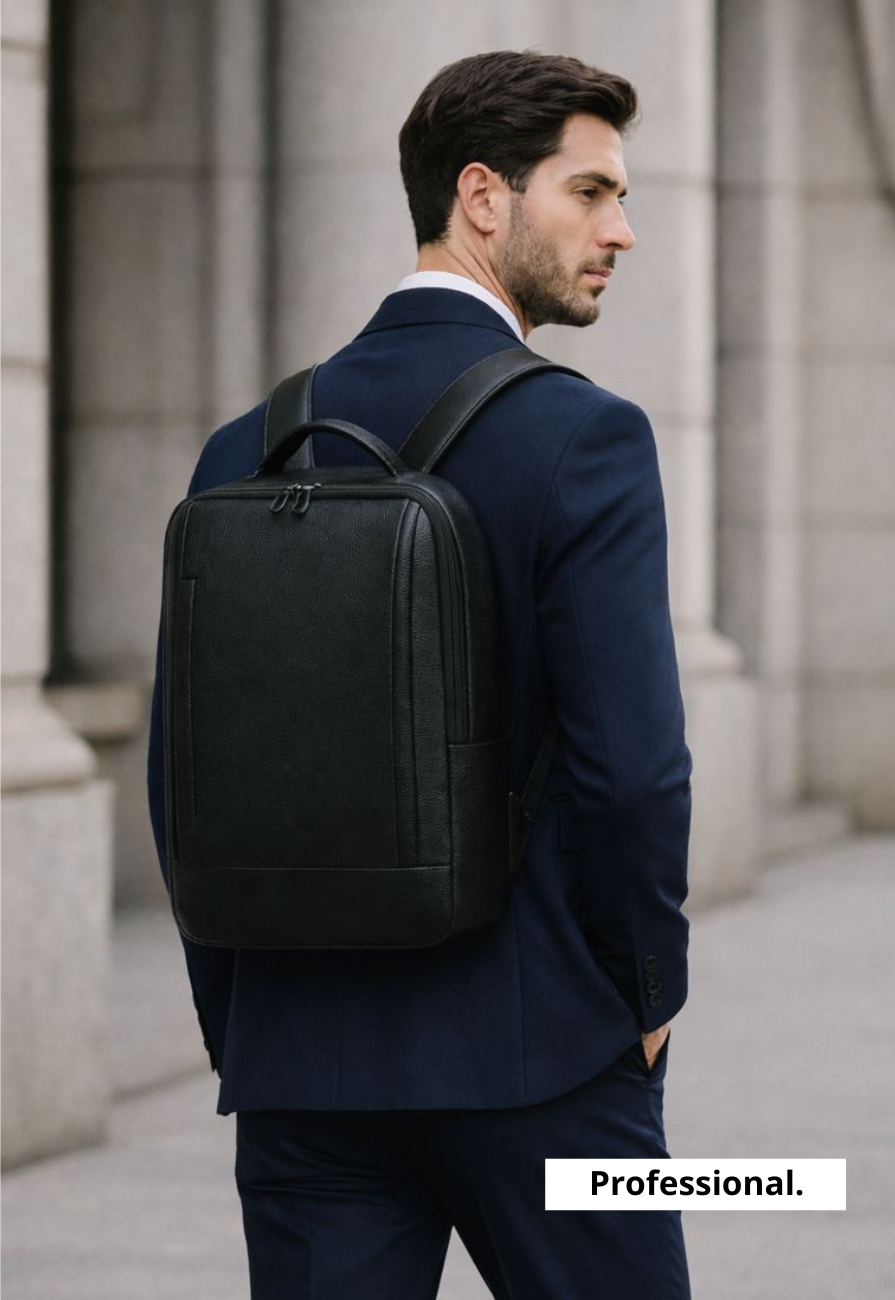
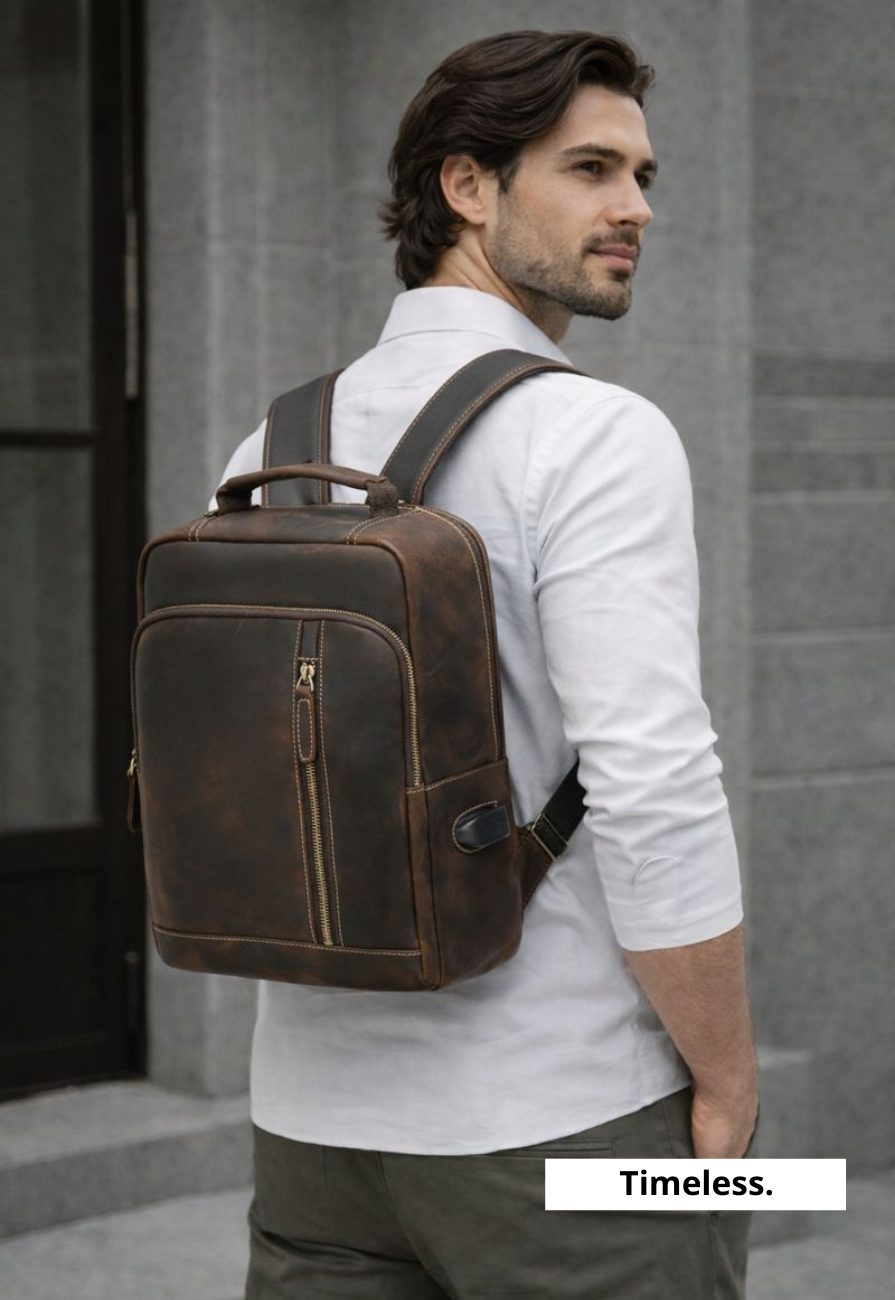
The Heritage Craft Backpack
A refined genuine leather backpack built for daily commuting and work. The smooth grain takes well to routine conditioning and deepens in color as it ages.

The Keystone Leather Briefcase
A structured genuine cowhide briefcase for professional daily carry. Its clean finish is the kind that rewards a monthly wipe and a couple of conditioning sessions a year.
Or browse by what you carry. Each of these collections is built around the same genuine leather that ages well with a little care:
 Leather briefcases
Structured work bags that hold their shape and reward routine care.
 Leather backpacks
Everyday genuine leather carry that deepens in color as it ages.
 Messenger bags
Hands-free carry with leather details worth keeping clean.
 Leather duffles
Weekend leather that travels well and cleans up easily.
Frequently asked questions
How often should you clean a leather bag?+
Wipe a daily bag with a dry cloth once a week, do a light soap-and-water clean roughly once a month if you use it heavily, and condition two to four times a year. A bag that mostly stays in a closet needs far less of all three. Let how dirty it actually gets guide you rather than a fixed schedule.
Does water ruin leather?+
A little water will not ruin leather. The real damage comes from soaking it and then drying it fast with heat, which stiffens and cracks the fibers. If your bag gets wet, blot it with a dry cloth, reshape it, let it air-dry slowly at room temperature, and condition it once dry.
Can you use baby wipes on a leather bag?+
It’s best to avoid them. Most baby wipes and household wipes contain alcohol or other solvents that strip the leather’s natural oils over time, leading to dryness, peeling and faded color. A barely damp cloth with a drop of mild soap is the safer choice.
Can you clean leather with vinegar or olive oil?+
No. Vinegar is acidic and can dull or lighten dyed leather, and food oils like olive or coconut oil never fully absorb, so they turn rancid, attract dust and darken the leather permanently. Use water, mild soap, and a proper leather conditioner instead.
Does leather conditioner darken the leather?+
Most conditioners darken leather slightly on application, and it usually evens out as the bag dries. The change is more noticeable on lighter or untreated leather, so always test a small hidden area first and apply a thin layer rather than a heavy coat.
Will a freshly conditioned bag transfer color onto clothes?+
It can, briefly, if you over-apply. A thin, fully buffed-in layer shouldn’t transfer. After conditioning, buff the surface with a dry cloth until nothing comes off on your hand, and give the bag a few hours before wearing it against light clothing.
Mink oil or neatsfoot oil for a leather bag?+
Both are traditional treatments, but they’re heavy and will darken and soften leather significantly, usually too much for a structured bag. For most bags a balanced leather conditioner or cream is the safer, more controllable choice. Save the heavy oils for rugged work boots and gear where softening is actually wanted.
How do you clean crazy horse leather?+
Less is more. Crazy horse leather is waxed, so most marks buff out with a dry cloth or the warmth of your fingers. For dirt, use a barely damp cloth and let it dry naturally. Avoid heavy cleaning and frequent conditioning, since both flatten the very scratches and color shifts that give the leather its character.



Leave a comment
This site is protected by hCaptcha and the hCaptcha Privacy Policy and Terms of Service apply.