













There's a particular kind of bag that looks like it already has a story before you've even left the house. Press your thumb into it and the color shifts; set it down on a desk corner and it picks up a mark you'll learn to like. Nine times out of ten, that's crazy horse leather — one of the most misunderstood materials in the leather world, and one of my favorites to talk a customer through.
The name throws people. It sounds like a finish from a Western, or worse, like it might involve an actual horse. It doesn't. So before we get into how it ages, why it scratches, and how to look after it, let's clear up what crazy horse leather actually is.
Crazy horse leather is full-grain cowhide that's been worked with a heavy blend of wax and oil during finishing. That treatment creates its signature "pull-up" effect — the color lightens wherever the leather is pressed, bent or scratched — and a distressed, vintage look that deepens with use. It's water-resistant, highly durable, and designed to wear in rather than wear out.
What crazy horse leather actually is
Crazy horse leather is a type of full-grain cowhide that has been finished with a thick infusion of wax and oils. The base hide is the good stuff — the top layer of the skin, with nothing sanded away but the hair — and the wax treatment is what turns it into "crazy horse."
That distinction matters, because the term gets thrown around loosely. You'll see it on sites that swear it's a separate species of leather, or that it's somehow a lower grade dressed up to look rugged. Neither is true. Crazy horse isn't a grade of leather at all — it's a finishing process applied to a full-grain hide. The hide does the heavy lifting; the wax gives it the look.
The name has nothing to do with horses, either. It traces back to the leather's original use in saddlery and tack, where it had to take a beating and keep going. The "crazy" part is the unpredictable way the surface marks and shifts color — every piece ends up looking a little different.

Good to know
Most crazy horse leather is cowhide, but the same wax-and-oil process can be applied to buffalo hide too, which is why you'll see both terms online. The finish is the constant; the animal is the variable. At Hartley, our crazy horse pieces are genuine cowhide.
How crazy horse leather is made
The character all comes from the finishing. Start with a full-grain hide, then work a high-grease blend of waxes and oils deep into the fibers — what tanners sometimes call a "hot-stuffed" leather, because the fats are driven in while the hide is warm. The surface is buffed and smoothed, but crucially, no plastic-style topcoat or lacquer is sealed over it. The grain stays open and reactive — usually over an aniline or semi-aniline base dye that lets the natural markings show through rather than hiding them.
That's the whole trick. Because the wax sits in the fibers rather than on top of a sealed coating, it can move. Bend the leather and the wax migrates away from the crease, lightening it. Rub it back and the color floods in again. A sealed, corrected-grain leather can't do this — once you've coated a hide in pigment and finish, it's locked. Crazy horse stays alive.
A point that trips up even leather forums: crazy horse describes the finish, not the tanning. You'll see one site swear it's vegetable-tanned and another insist it's chrome-tanned — and both can be right, because the wax-and-oil treatment can be laid over either. Vegetable tanning, using plant tannins, gives a denser, more characterful hide that patinas beautifully; chrome tanning is faster and a touch more supple. The crazy horse look comes from what happens after tanning, not from which tannage was used. So if a description tells you the tannage, that's a bonus detail — it doesn't define whether something is "really" crazy horse.
One honest caveat from years of handling this material: "crazy horse" isn't a regulated, standardized term. Two brands can both call a bag crazy horse and mean slightly different wax recipes and hide qualities. The tells of a good one are consistent — a real leather smell, visible natural grain, and a surface that lightens cleanly when you press it. A uniform, plasticky grain that springs back with no color change is a warning sign.
The pull-up effect, and why it ages so well
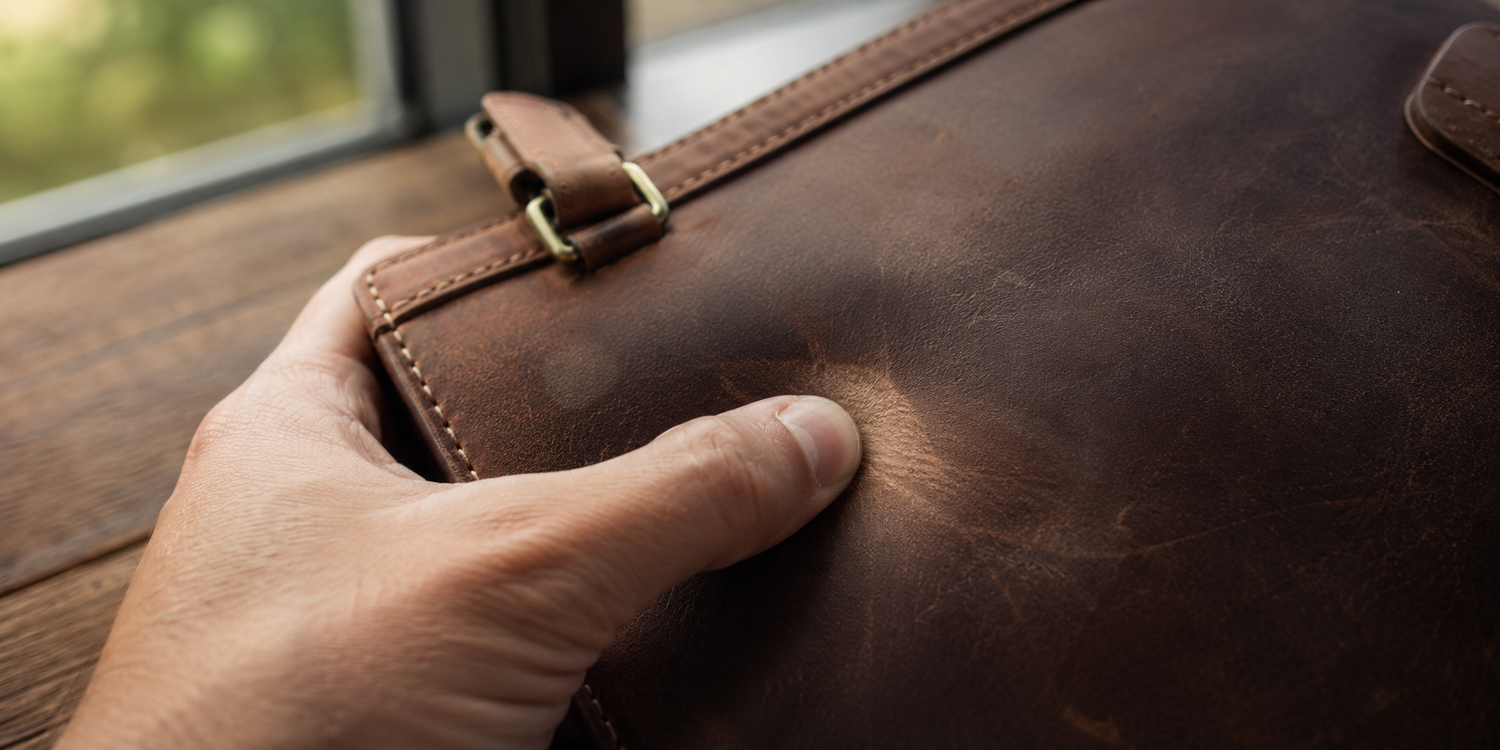
The thing everyone notices first is the pull-up effect. Press a fingernail into the surface and the spot turns visibly lighter; the wax has been displaced, and where the leather is stretched thin over the mark, it scatters light differently. Rub the area and the wax flows back, and the color returns. It's the same physics behind a creased boot or a worn saddle, just dialed up.
What you'll notice on day one
Out of the box, crazy horse feels waxy and grippy rather than slick, with a matte finish instead of a shine. You'll likely see faint marks, tonal variation, or natural grain irregularities straight away — and a rich, unmistakable leather smell. None of that is a flaw; it's the proof you're holding real, minimally finished hide.
This is also why crazy horse develops such a dramatic patina. Standard full-grain leather ages too, but it does it gradually — a slow deepening of color and a soft sheen on the high-touch areas. Crazy horse is louder about it. From the first week, the corners, the handle, the spots where your hand rests start to two-tone. Here's roughly how that plays out on a bag in daily use:
-
1Year oneIt already looks lived-in. Pull-up marks show from day one, and the first real character appears on the handle and corners where your hand and desk meet the leather.
-
3Year threeThe color has real depth now. The early scratches have stopped reading as scratches and started reading as surface — the two-tone has integrated into the whole piece.
-
5Year five and beyondNo two bags look alike anymore. The marks map your specific routine — the commute, the trips, the desk. This is the point where most owners say it looks better than the day they got it.
If you want to go deeper on how leather darkens and develops over time, we covered the whole subject in our guide to how leather develops a patina. Crazy horse is simply the most theatrical version of that process.


Ridgeway Case
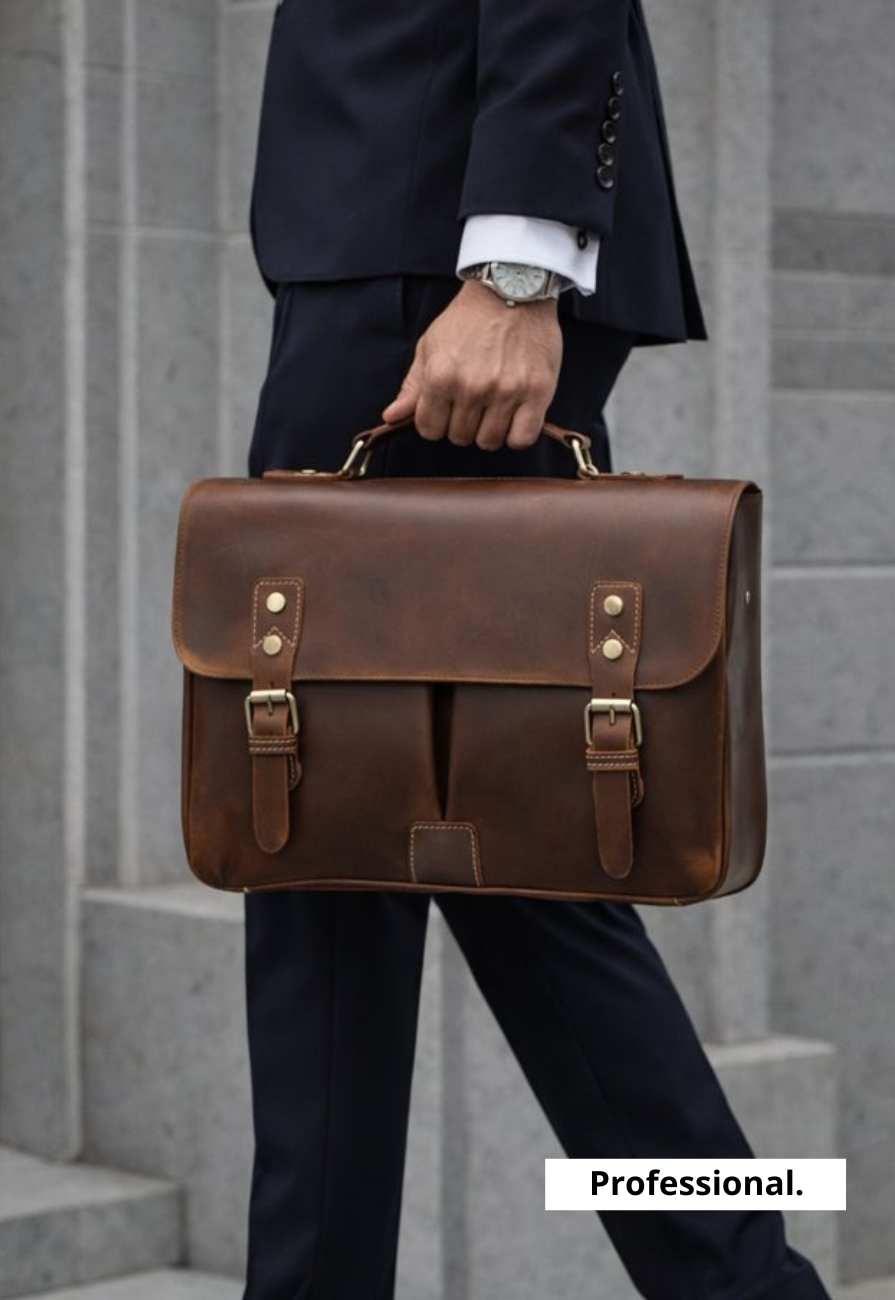
Genuine crazy horse cowhide in a double-compartment briefcase. It's the pull-up effect this whole guide is about, in a bag you'll actually carry to work — and the one most likely to look better in three years than it does new.
Does crazy horse leather scratch?
Yes — and that's the point, not a flaw. The waxed surface marks readily because it's meant to. What separates crazy horse from a sealed leather is that most of those marks aren't permanent. The same pull-up property that lets the color shift also lets it shift back.
How to make a light scratch disappear
For a fresh light scratch, you usually don't need any product at all. Rub the mark briskly with your thumb or a dry cloth, in a small circular motion. The friction warms the wax just enough to let it redistribute over the lighter spot, and the scratch blends back in. It feels a little like magic the first time. Deeper gouges won't vanish completely, but they'll soften and fold into the overall character of the leather rather than standing out.

If a mark is stubborn, a tiny amount of leather balm worked over it will help the wax move. For anything more serious — a deep cut, a scuff that's broken the surface — the full repair playbook is in our guide to fixing a scratch on a leather bag, which walks through the heavier methods step by step.
Watch out
Be skeptical of anyone selling "scratch-proof crazy horse." It's a contradiction — the whole material is built to take and show marks. And avoid anything with a high-gloss shine, which usually means a silicone coating that blocks the patina from ever developing.
Crazy horse vs full-grain leather
This is the comparison worth understanding, because it's the one most often muddled. The short version: crazy horse is full-grain. They're not rivals; one is a subset of the other. Full-grain describes the grade of the hide. Crazy horse describes what's been done to a full-grain hide after the fact.
First, where full-grain sits among the leather grades:

So full-grain is the premium tier. Now here's how a plain full-grain finish compares to a crazy horse finish built on the same quality of hide:
Neither is "better." They're different temperaments. A plain full-grain piece is like a good suit that quietly improves; crazy horse is the jacket that fits better and looks cooler every year precisely because of the wear. (If you want the full breakdown of full-grain on its own, that's a guide of its own — coming soon to The Journal.)
Is crazy horse leather waterproof?
No — and any brand that tells you otherwise is overselling. Crazy horse is water-resistant, not waterproof. The wax does a genuinely good job of beading light rain and shrugging off splashes, which is more than most untreated leathers manage. But it's still natural leather with an open grain, so a prolonged soaking will eventually penetrate the fibers.
In practice that means a walk to the office in a drizzle is a non-issue; getting caught in a downpour with no cover is something to dry out properly afterward. We'll get to the right way to dry it in the next section, because doing it wrong is where most leather damage actually happens.

Rutherford
The same crazy horse character in a flap-front backpack. If you'd rather wear the patina on your back than carry it by the handle, this is where the wax-and-oil finish earns its keep on a daily commute.
How to care for crazy horse leather
The good news: this is one of the lowest-maintenance leathers you can own. The grain isn't sealed, so it's forgiving and easy to revive. Four habits cover almost everything.
-
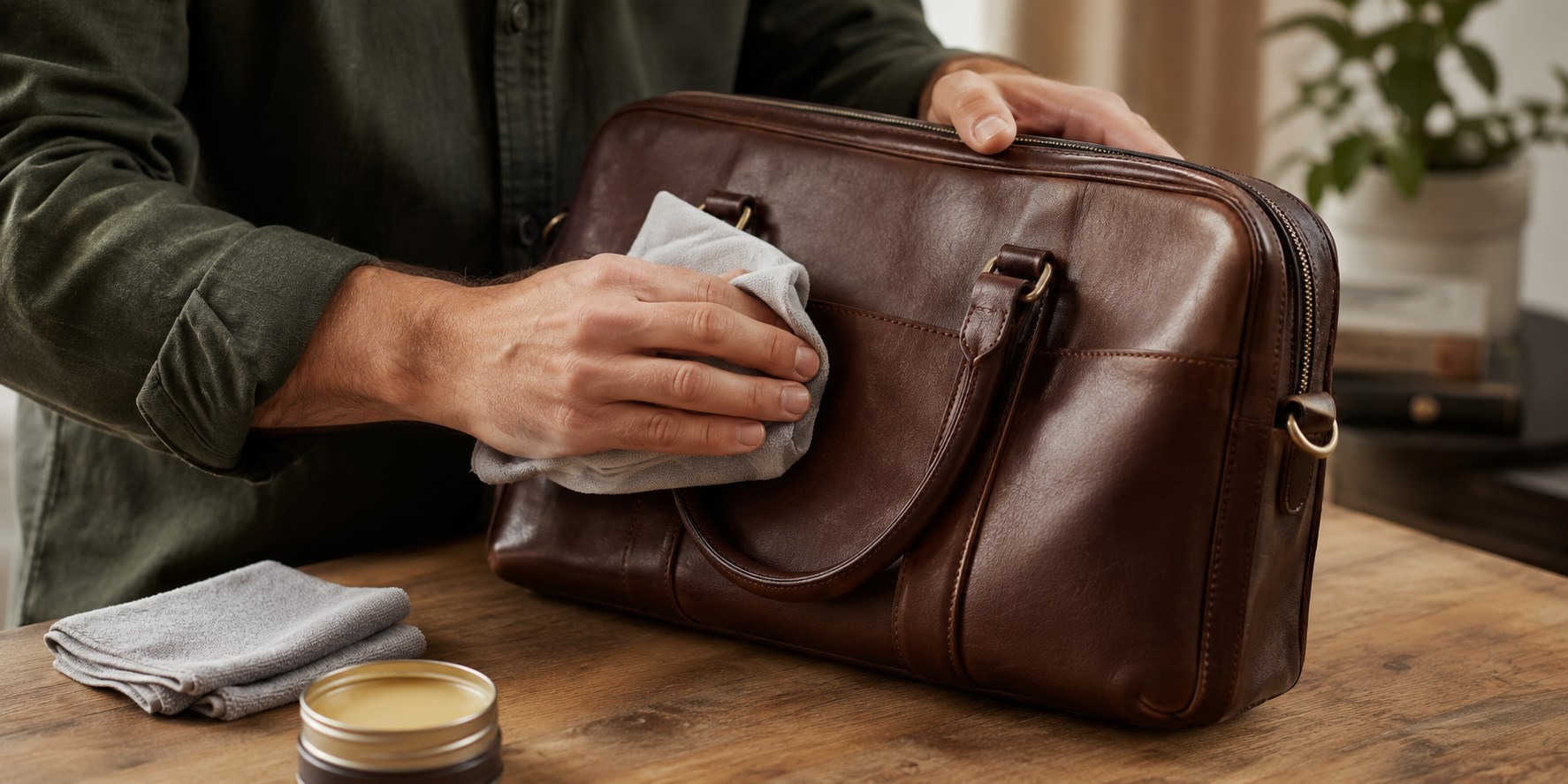
1Wipe it downA soft dry cloth handles dust. For light dirt, a barely damp cloth with water only — skip the soap unless you need it, and never use solvents, alcohol or harsh cleaners, which strip the wax.
-
2Rub out scratches by handMost light marks need nothing more than your thumb and a circular motion to move the wax back over them. Save the products for the deeper ones.
-
3Condition sparinglyA thin, even coat of silicone-free leather balm two to four times a year is plenty. More often than that does harm — over-conditioning clogs the grain and flattens the contrast that makes crazy horse interesting.
-
4Dry and store it rightIf it gets wet, pat it dry and let it air dry at room temperature — never store it damp, which invites mold and mildew. Keep it somewhere cool and dry, out of direct sun, ideally with the bag lightly filled to hold its shape.
There's one point worth slowing down on, because the internet contradicts itself constantly about it: heat. Gentle, localized warmth from rubbing a scratch is fine — that's just friction helping the wax move. But applying real heat to dry a wet bag — a hairdryer, a radiator, a sunny windowsill — is a mistake. It dries the leather unevenly, can warp the shape, and over time leads to cracking. The marks you're trying to manage are cosmetic; heat damage isn't. Warm the wax, never bake the hide.
The one-line version
Wipe it, rub out the small stuff by hand, condition it a couple of times a year, and keep it away from direct heat. That's genuinely most of it.
One honest downside while we're here: the open, waxed grain that makes crazy horse so reactive also means it can take a stain or a water spot more readily than a sealed leather. It's rarely a problem in practice, but the fix is speed — blot a spill straight away with a dry cloth rather than letting it sit and soak in. Caught early, most marks lift or simply fold into the patina.
A few other honest trade-offs worth knowing before you buy, because no one likes a surprise:
What to expect
It darkens when conditioned. Any oil or balm will deepen the tone, sometimes noticeably — always spot-test on a hidden area first and apply thinly. It can transfer when brand new. In the first few uses, a heavily waxed piece may rub a little color onto very light clothing; it settles quickly. It dislikes heat. A hot car dashboard or radiator will pull the oils out and stiffen the leather over time. None of these are dealbreakers — they're just the flip side of a finish that stays this alive.
How to spot real crazy horse leather
Because the term isn't policed, the market has its share of fakes — synthetic or coated leather waxed up to mimic the look. A few quick checks separate the real thing from the imitation, and you can do all of them in a shop or the moment a bag arrives.
Start with the pull-up test: press a fingernail or bend a corner. Genuine crazy horse lightens at the stress point and holds a soft crease; fake leather springs back flat with no color change. Next, the smell — real hide has a warm, earthy leather scent, while a synthetic gives off a faint plastic or chemical note. Then look at the grain: authentic full-grain shows irregular natural pores, the odd healed scar or wrinkle from the animal's life, never a perfectly repeating machine pattern. A drop of water that beads and slowly darkens the surface rather than sitting on top like glass is one more good sign.
Done with reasonable care, crazy horse lasts for decades rather than seasons — it's the kind of leather that outlives the trends around it. The marks it picks up along the way aren't wear in the destructive sense; they're the record of those years, which is the whole appeal.
Who it's for (and who it isn't)
I'd never tell someone crazy horse is the right leather for everyone, because it isn't, and pretending otherwise is how people end up disappointed. So here's the honest cut.
It's for you if you like the idea of a bag that changes — that records the commute, the trips, the desk it lives on. If you'd rather a piece earn its looks than arrive finished. If you want something genuinely low-maintenance that shrugs off the daily knocks of work and travel. Crazy horse rewards use; the more you carry it, the better it gets.
It's not for you if you want a bag that stays exactly as it looked in the photo. If a scuff on day three would bother you, or you need a crisp, uniform, board-room-formal finish that never shifts, a smooth full-grain or a polished leather will make you happier. There's no wrong answer here — only a match or a mismatch with how you like your things to look.
For a lot of men, that combination of ruggedness and character is also exactly why a crazy horse piece makes such a meaningful leather gift — it's the rare present that visibly improves with the years the recipient puts into it.

The Mercer
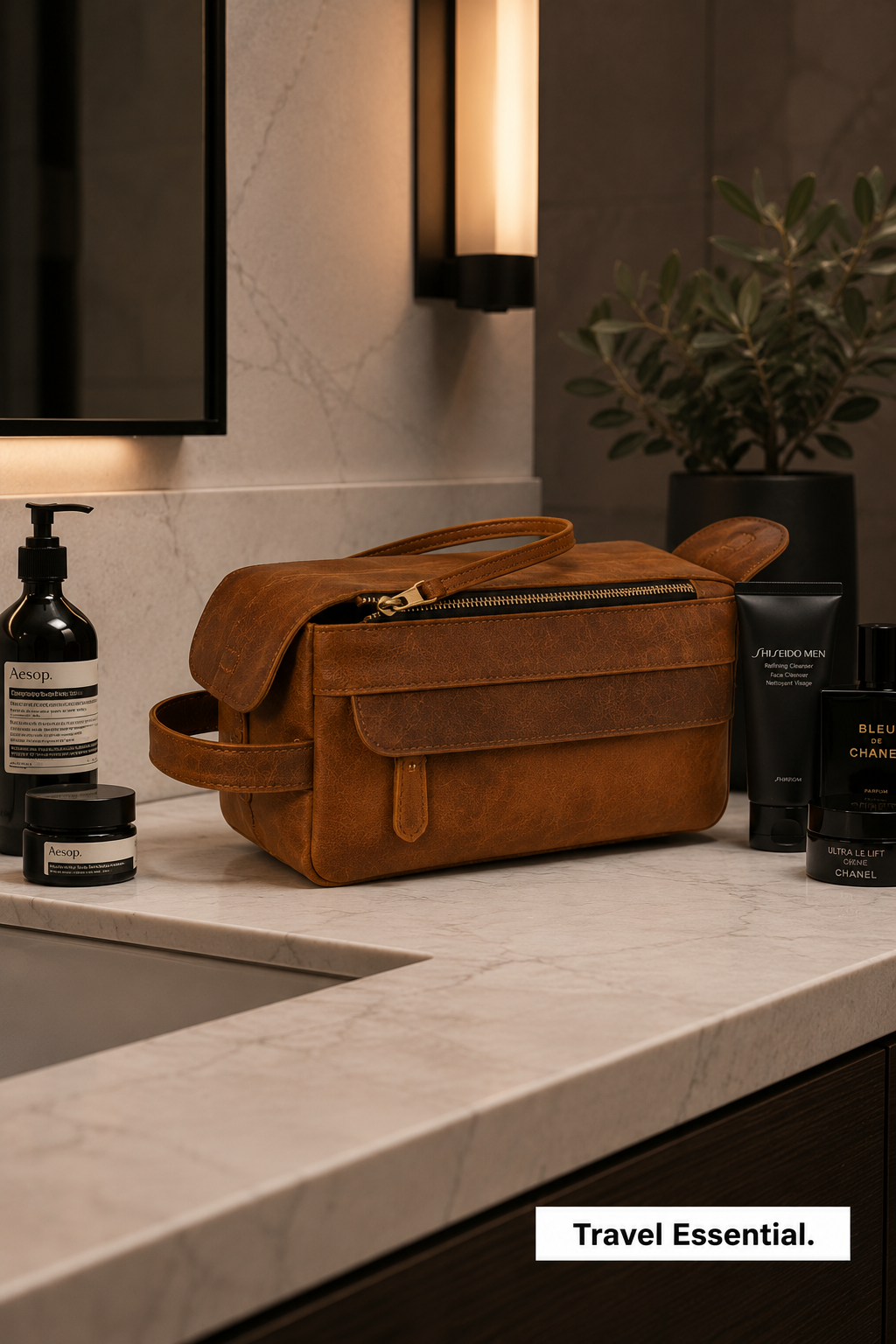
A leather-lined crazy horse dopp kit that ages on the road. The lowest-commitment way into the material — and a gift that starts looking personal the first week it's used.
If a structured work bag is more your speed, the crazy horse finish sits alongside our smooth and full-grain options in the men's briefcases collection, so you can see the finishes side by side before deciding.

Frequently asked questions
Is crazy horse leather real leather?+
Yes. Crazy horse leather is genuine full-grain cowhide, treated with wax and oil. It uses the top layer of the hide with nothing removed but the hair, which makes it one of the more durable leathers you can buy — the opposite of a synthetic or a bonded material.
Does crazy horse leather scratch easily?+
Yes, and that's by design. The waxed surface shows marks readily, but most light scratches blend back in when you rub them with your thumb or a soft cloth. Over time these marks build into the patina rather than ruining the leather.
Is crazy horse leather waterproof?+
No — it's water-resistant, not waterproof. The wax repels light rain and splashes, but prolonged soaking will still penetrate the fibers. If it gets wet, pat it dry and let it air dry at room temperature rather than using direct heat.
What's the difference between crazy horse and full-grain leather?+
Crazy horse is a type of full-grain leather. Full-grain is the base hide; crazy horse is full-grain that's been worked with wax and oil to create the pull-up effect and a distressed, vintage finish. All crazy horse is full-grain, but not all full-grain is crazy horse.
Does crazy horse leather smell?+
It often has a noticeable natural leather scent when new, because it's minimally finished and heavily waxed rather than sealed with synthetic coatings. The smell typically softens over the first few weeks of use as surface wax settles.
How long does crazy horse leather last?+
With basic care, crazy horse leather lasts for decades. Because the grain isn't sealed under a coating, it doesn't crack or peel the way cheaper finishes do — it just keeps developing character. A conditioning a few times a year is enough to keep it going for many years of daily use.
Does conditioner darken crazy horse leather?+
Usually yes. Because the grain is open, any oil or balm soaks in and deepens the tone — sometimes more than you'd expect. It's not damage, but if you want to keep the color, spot-test on a hidden spot first and apply a thin coat. The effect often evens out as the leather settles.
Can I use mink oil or neatsfoot oil on it?+
Generally not the best choice for a waxed pull-up leather. Heavy oils like mink or neatsfoot tend to over-darken crazy horse and can leave it uneven. A silicone-free leather balm made for finished leather is the safer pick, used sparingly.
Will it stain my clothes or transfer color?+
Occasionally, and only when new. A heavily waxed piece can rub a faint amount of color onto very light clothing in the first few uses, and the reverse is true too — dark denim or ink can mark light leather. Both settle quickly; just avoid prolonged contact with light fabrics early on.
How do you clean a crazy horse leather bag?+
Wipe the surface with a soft dry cloth for dust, and a barely damp cloth with water only for light dirt. Avoid solvents, alcohol and harsh cleaners, which strip the wax. Condition sparingly a few times a year to keep it supple — no more than that.




Leave a comment
This site is protected by hCaptcha and the hCaptcha Privacy Policy and Terms of Service apply.