

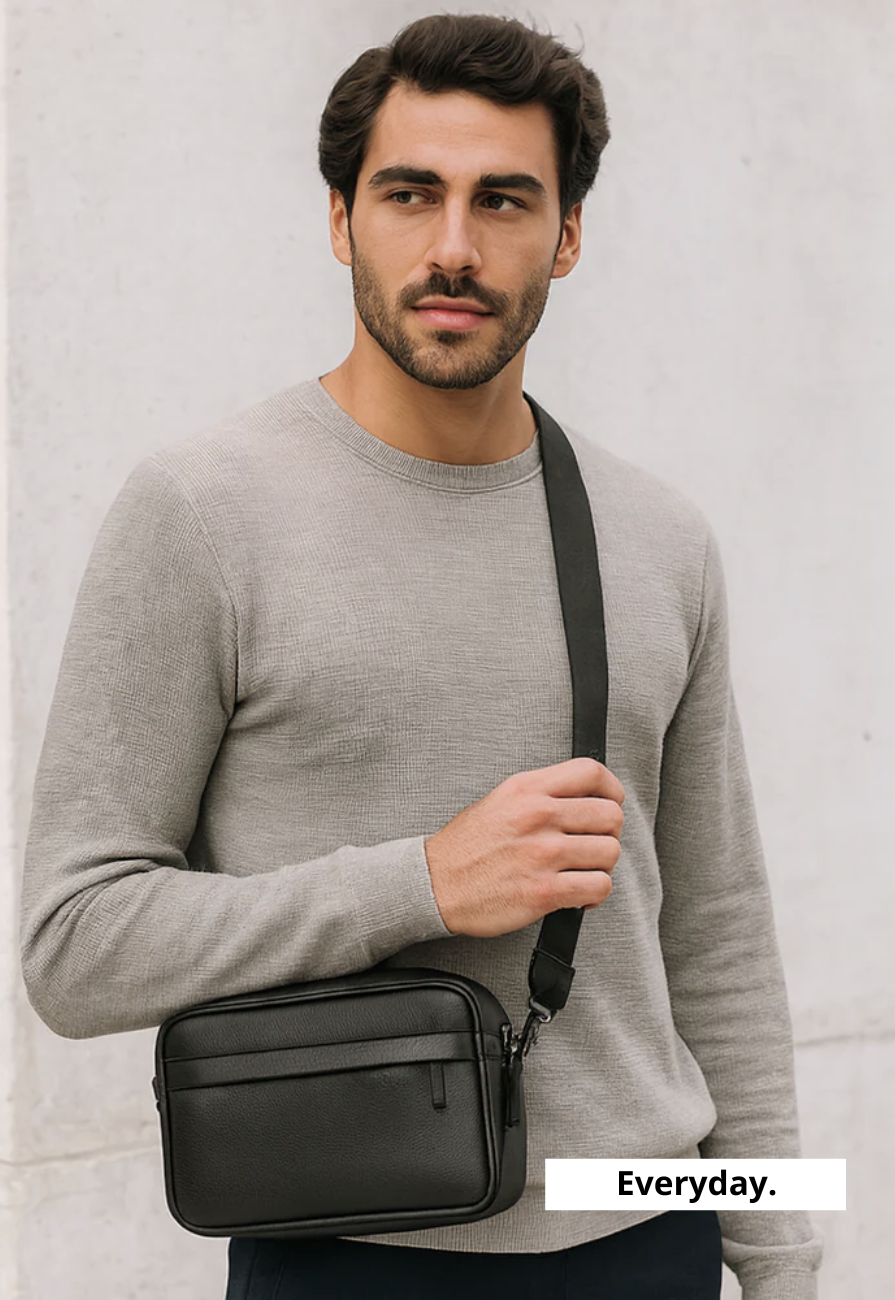
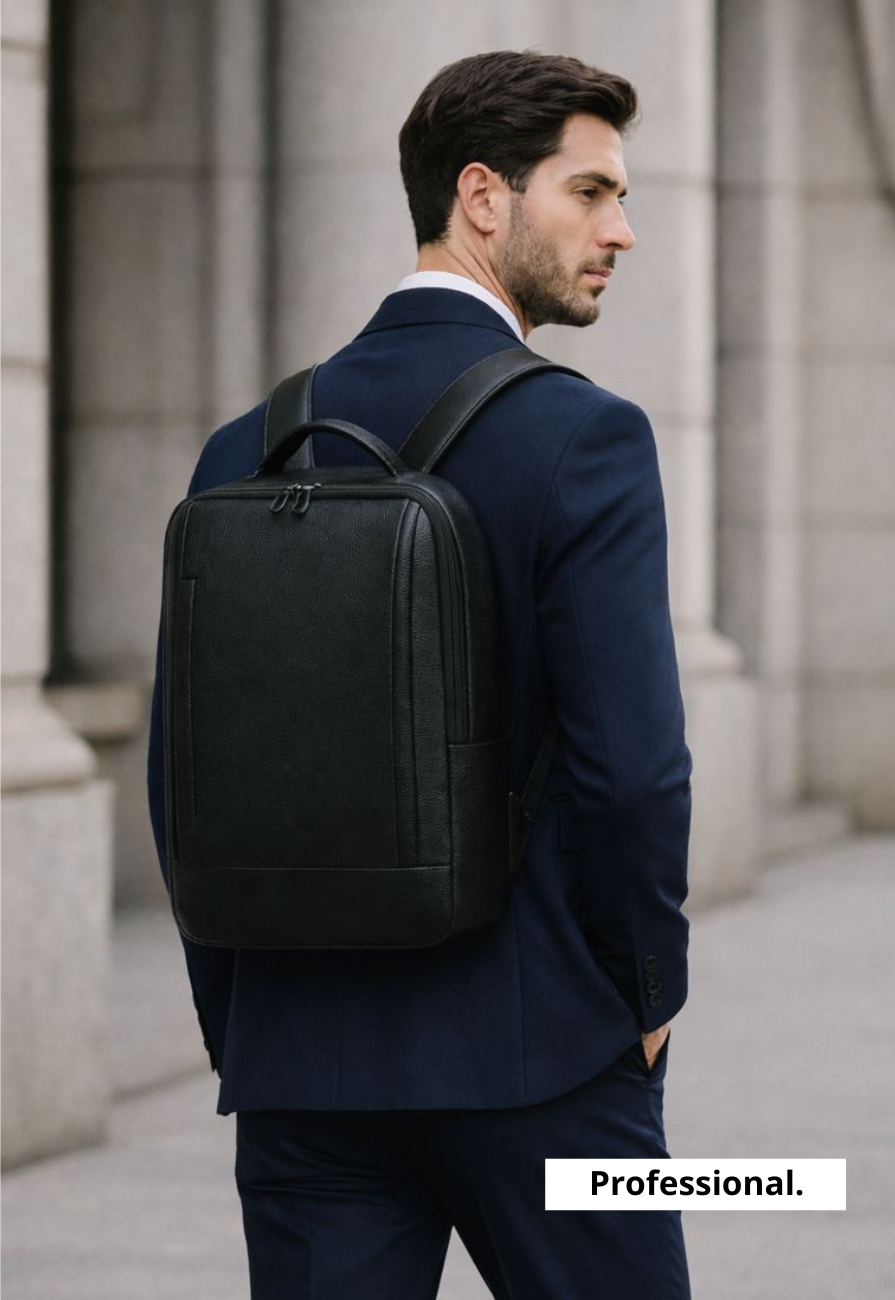
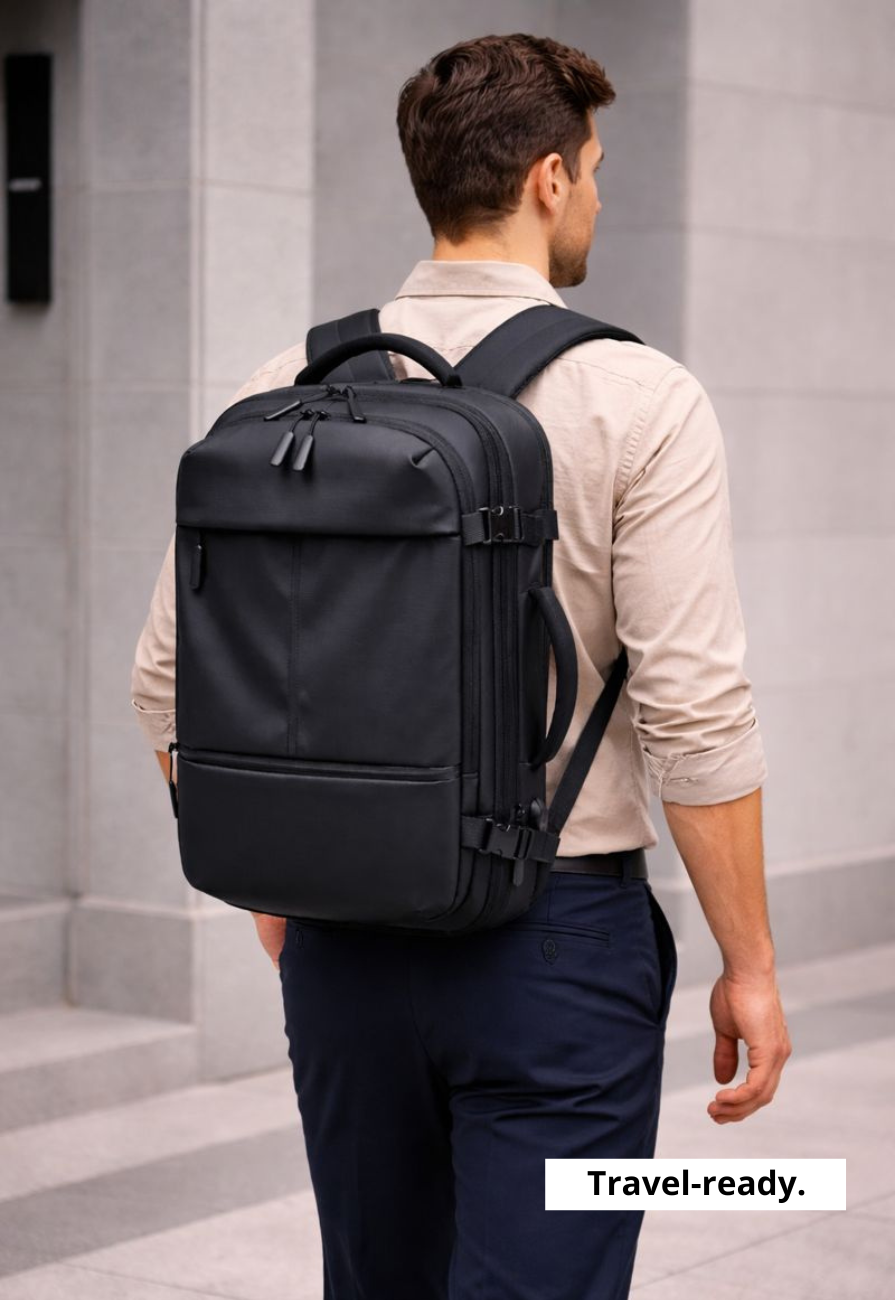
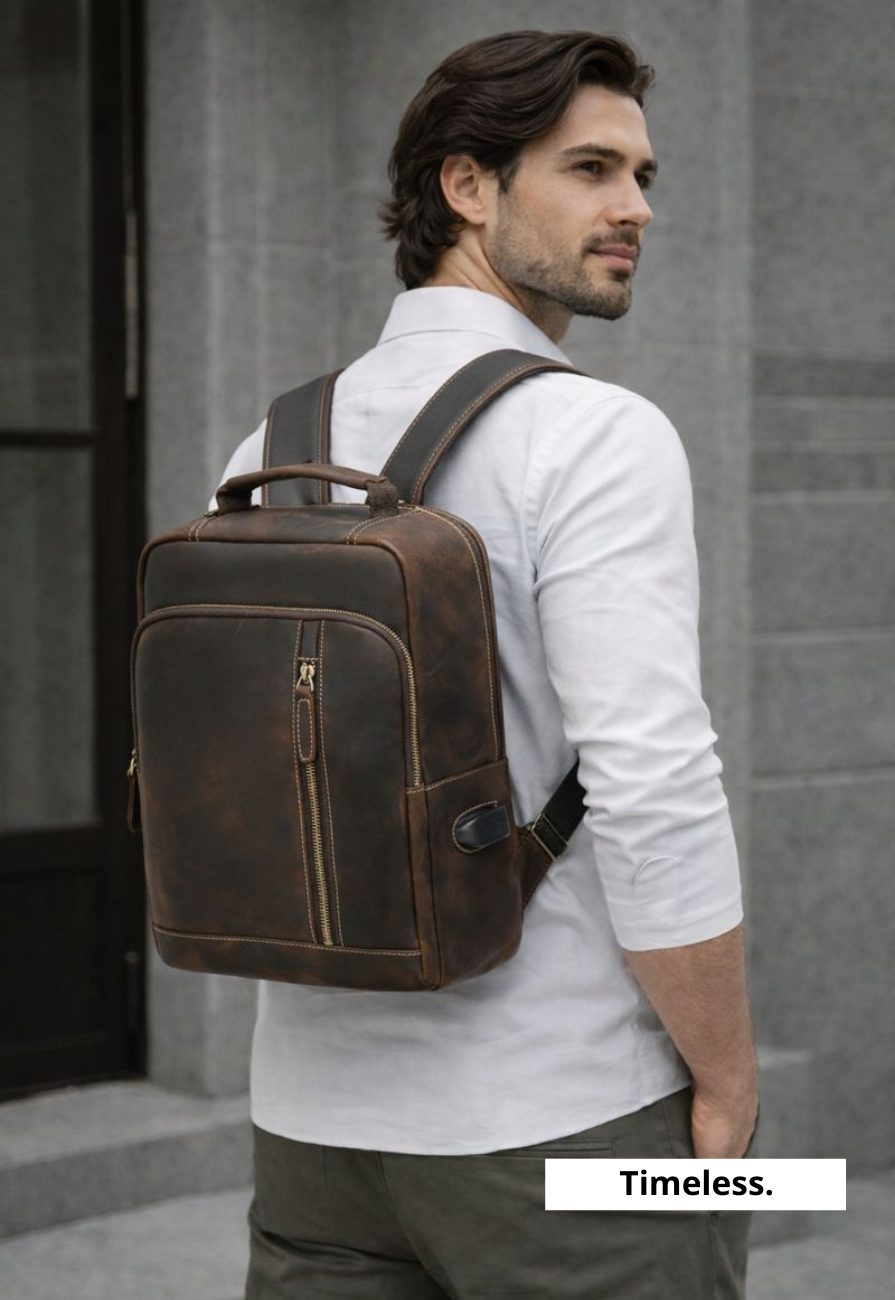
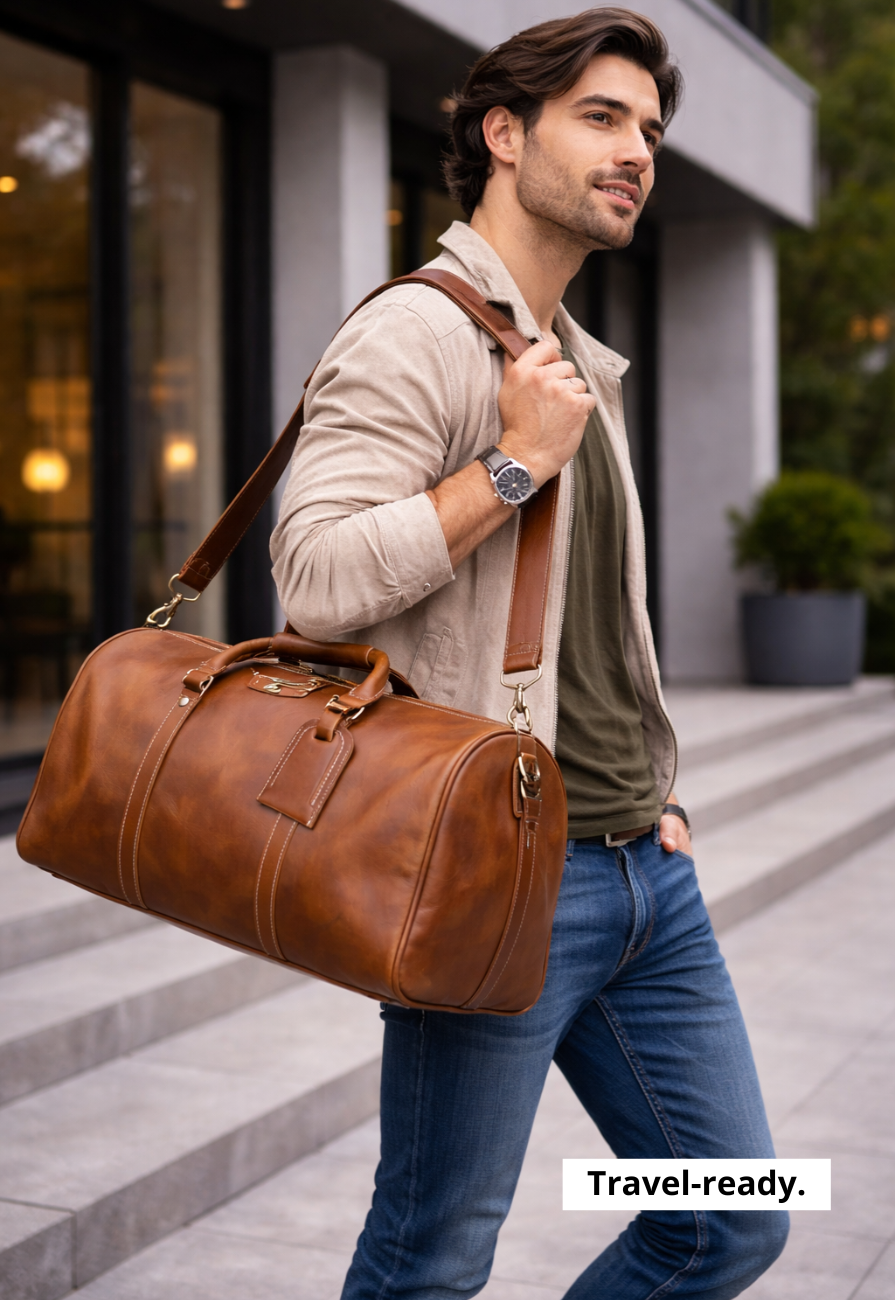
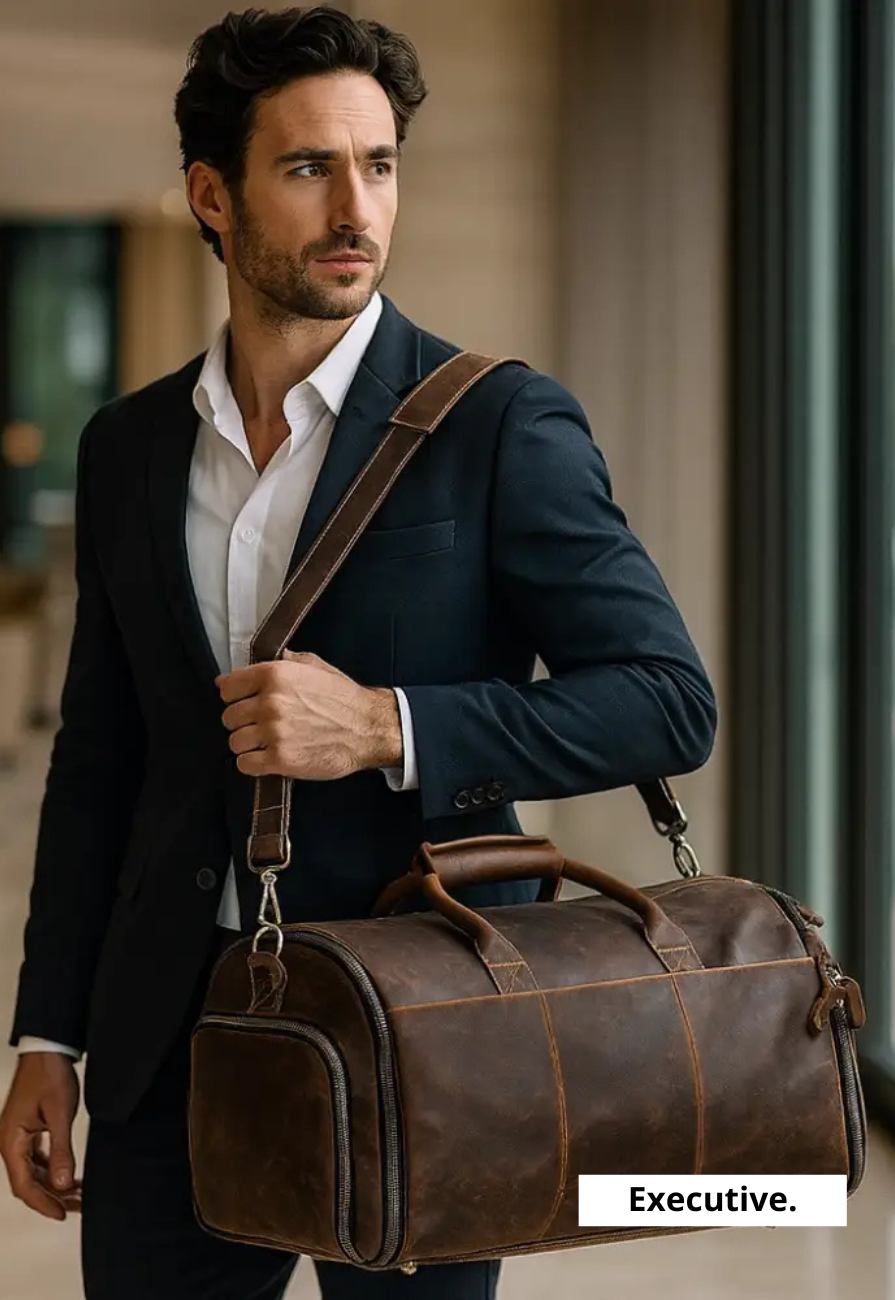
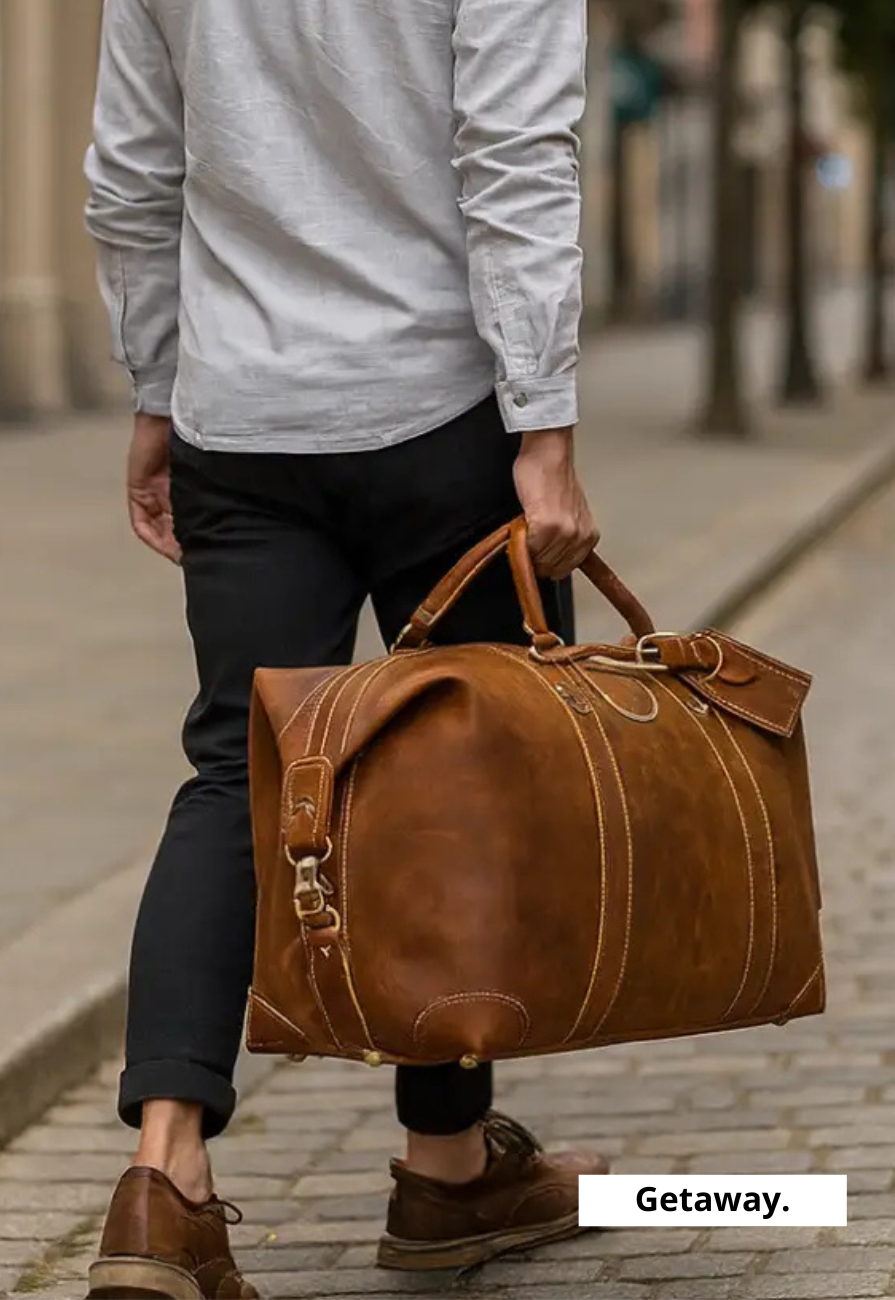

I have watched a lot of men buy the wrong work bag. Not a bad bag, a wrong one. The leather is fine, the stitching is fine, but by noon their shoulder aches, or the thing looks out of place the second they walk into a meeting. The bag was never the problem. The match was.
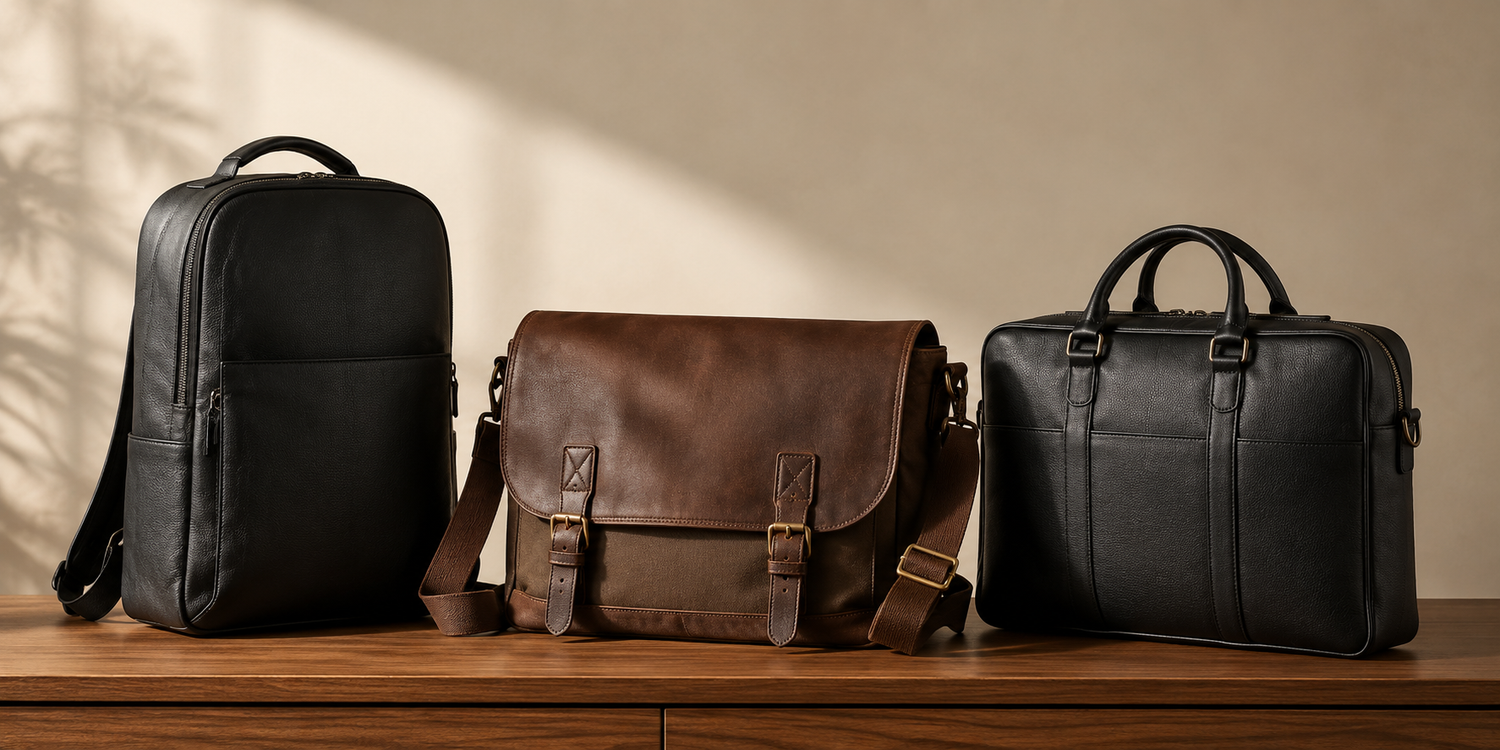
Backpack, messenger, briefcase. These are the three formats almost every man circles when he needs something to carry a laptop and the rest of his day. They all do the job. What separates them is how they carry, what they signal in a room, and how they hold up on your particular commute. Get that match right and you stop thinking about your bag. Get it wrong and it reminds you with every step.
This guide compares the three honestly, with the trade-offs each one hides, so you can decide in a few minutes instead of a few weeks.
Pick a backpack for comfort, a heavy daily load, or an active commute. Pick a messenger bag for quick access and a clean business-casual look on a light, short commute. Pick a briefcase for formal, suit-and-tie offices where structure is part of the dress code. No format wins everywhere: match it to your week.

The three formats, side by side
Before the detail, here is the whole decision in one table. The core difference is carry style and structure: a backpack rides both shoulders, a messenger hangs crossbody, and a briefcase is carried in the hand and holds a rigid shape.
Read the table and you can already feel where you land. The sections below are for the cases that sit on a line: the man whose office is half-casual, the one whose commute changed, the one who carries more than he admits.
When a backpack is the right call
Choose a backpack if comfort and load are your top two concerns. It is the only one of the three that puts weight on both shoulders, which matters more than people expect. A laptop, a charger, a water bottle, lunch, and a notebook add up fast, and a backpack carries that without punishing one side of your body.
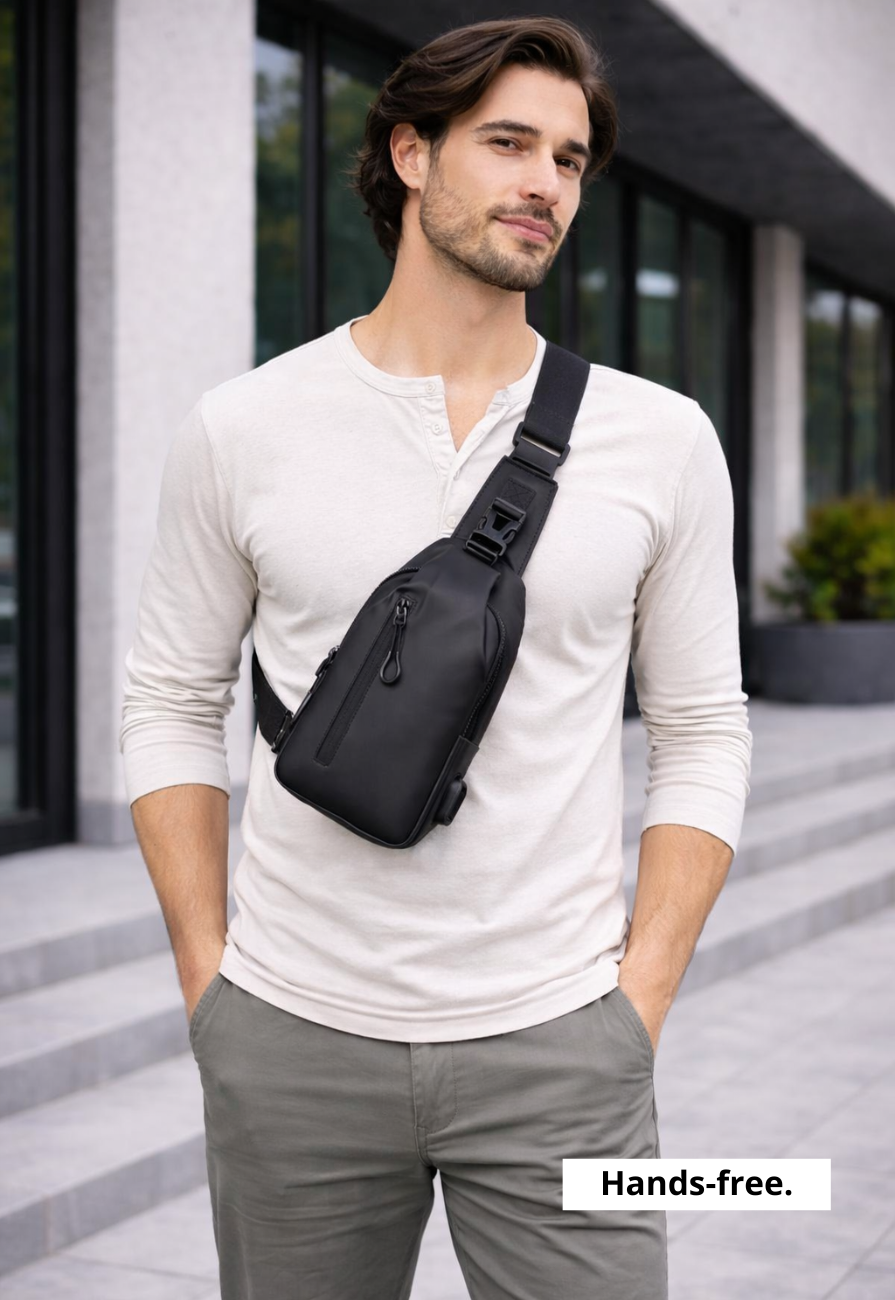
It is also the clear winner for an active commute. If you cycle, walk a long stretch, or change trains with coffee in one hand, hands-free carry is not a luxury. The bag stays put and your balance stays yours.
The old knock on backpacks was that they looked like school. That was true of a nylon sport bag, and it is still true of one. A slim leather backpack in a dark color is a different object. It reads as deliberate, holds a clean silhouette, and slides into a business-casual office without comment. For men who want one bag for the laptop and the commute, this is usually it. If you want the full breakdown of what to check inside one, our guide on what to look for in a leather laptop bag covers padding, sleeve depth, and organization.
The honest trade-off
A backpack is the worst of the three for quick access and for the most formal rooms. You have to take it off to reach your laptop, and behind you it sits out of sight, so reaching a side pocket on a crowded train is a small fight. In a courtroom or a board meeting where everyone carries structure, it can read as casual.

Black Leather Laptop Backpack
A slim 15.6 inch leather backpack built for the laptop-and-commute crowd. Both-shoulder comfort and a clean dark silhouette that holds up in a business-casual office, without the school-bag look.

When a messenger bag is the right call
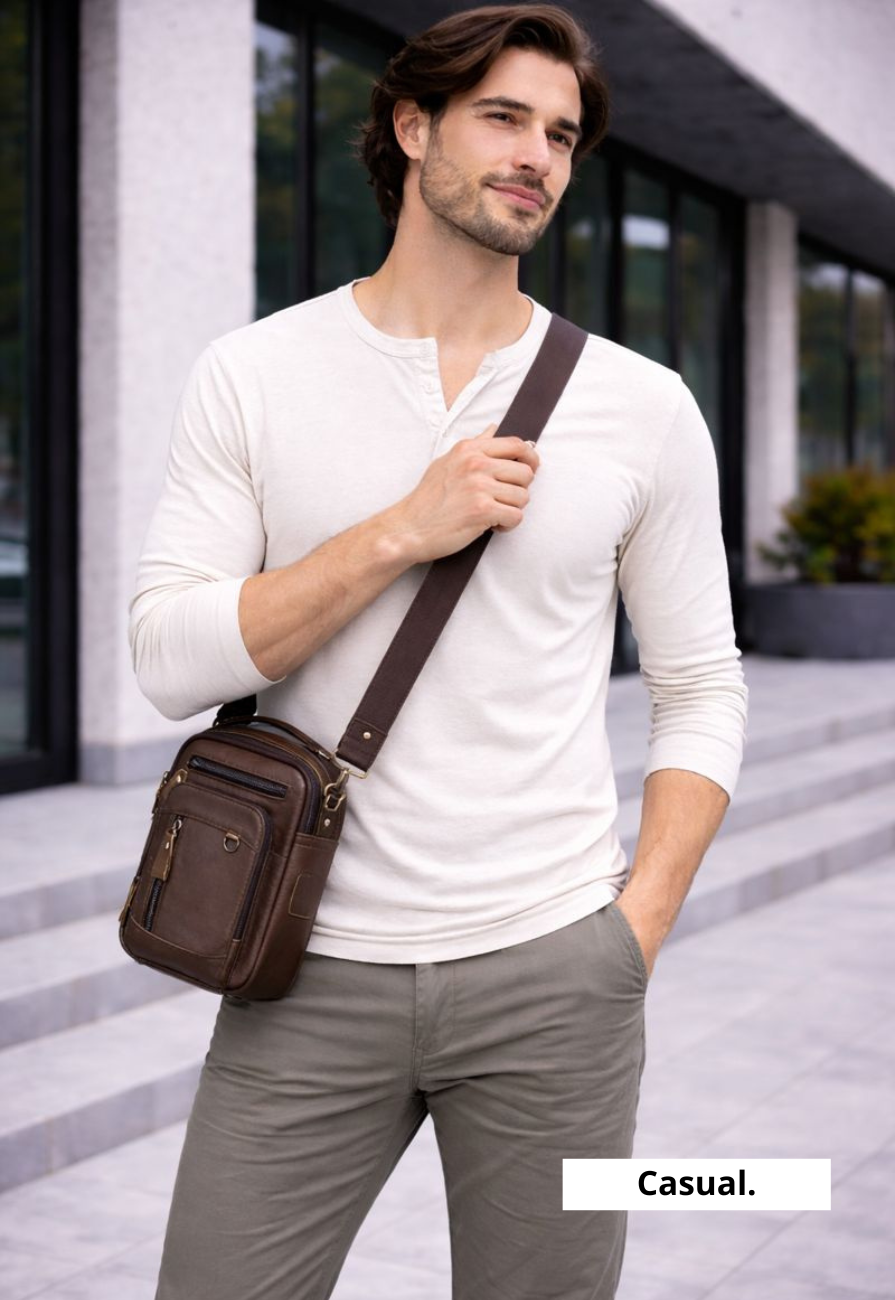
Choose a messenger bag if you value quick access and a clean look on a light, short commute. Worn crossbody, it sits flat against your body and opens with a fold-over flap you can reach without setting anything down. At a reception desk, in an elevator, at a security line, you flip the flap and you are in. A backpack makes you stop and turn around first.
It is also the most naturally polished of the three in a casual or business-casual office. The crossbody line is tidy, and a leather or leather-and-canvas model pairs with chinos and an open collar as easily as it does with a sport coat. For a lot of modern offices, this is the sweet spot between a backpack that reads too relaxed and a briefcase that reads too stiff.
One thing worth knowing about Hartley's range here: most of our messenger bags are built in canvas and waxed canvas, with leather straps and trim, rather than full leather. That is a deliberate, lighter, more weatherproof take on the format. If you want leather in a messenger silhouette, the leather-canvas model below is the one to look at.
What you will notice over time
A canvas messenger softens and breaks in; a leather one darkens and burnishes into a patina. Both age in your favor, which is the opposite of a nylon commuter bag that just wears out. If you are curious why leather improves with use rather than degrading, we get into it in our piece on leather patina.
The honest trade-off
Everything rides on one shoulder. Keep the load light, under roughly 11 to 13 pounds (about 5 to 6 kg), and it is comfortable all day. Load it with a laptop, charger, water bottle, and a stack of files, and that single strap will let you know by mid-afternoon. A messenger is a light-carry tool, not a pack mule.
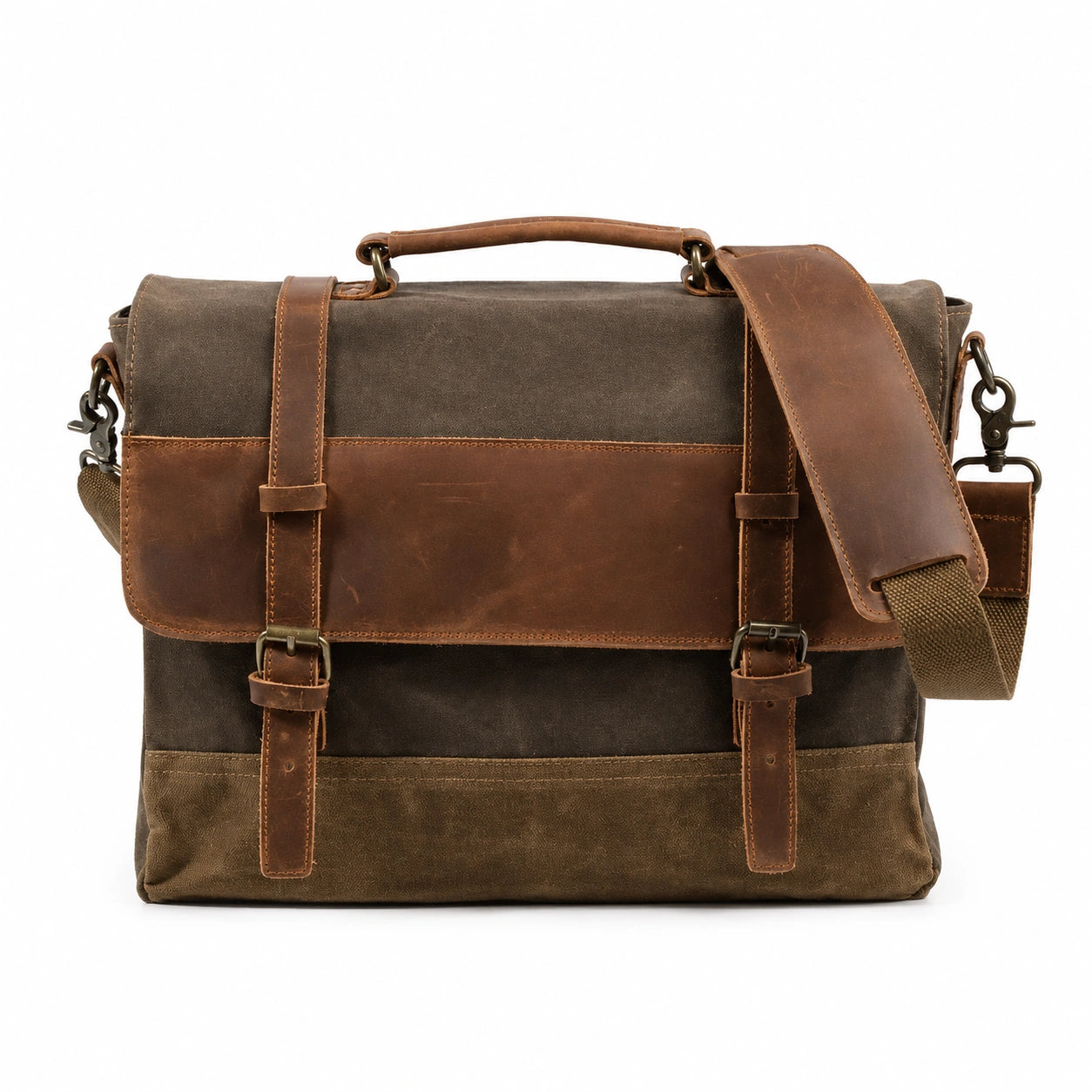
The Old Town Courier
A leather-and-canvas messenger that fits a 14 inch laptop and keeps the crossbody profile slim. Flap access while you wear it, a look that works from a casual office to a client lunch, and materials that age instead of wearing out.
When a briefcase is the right call
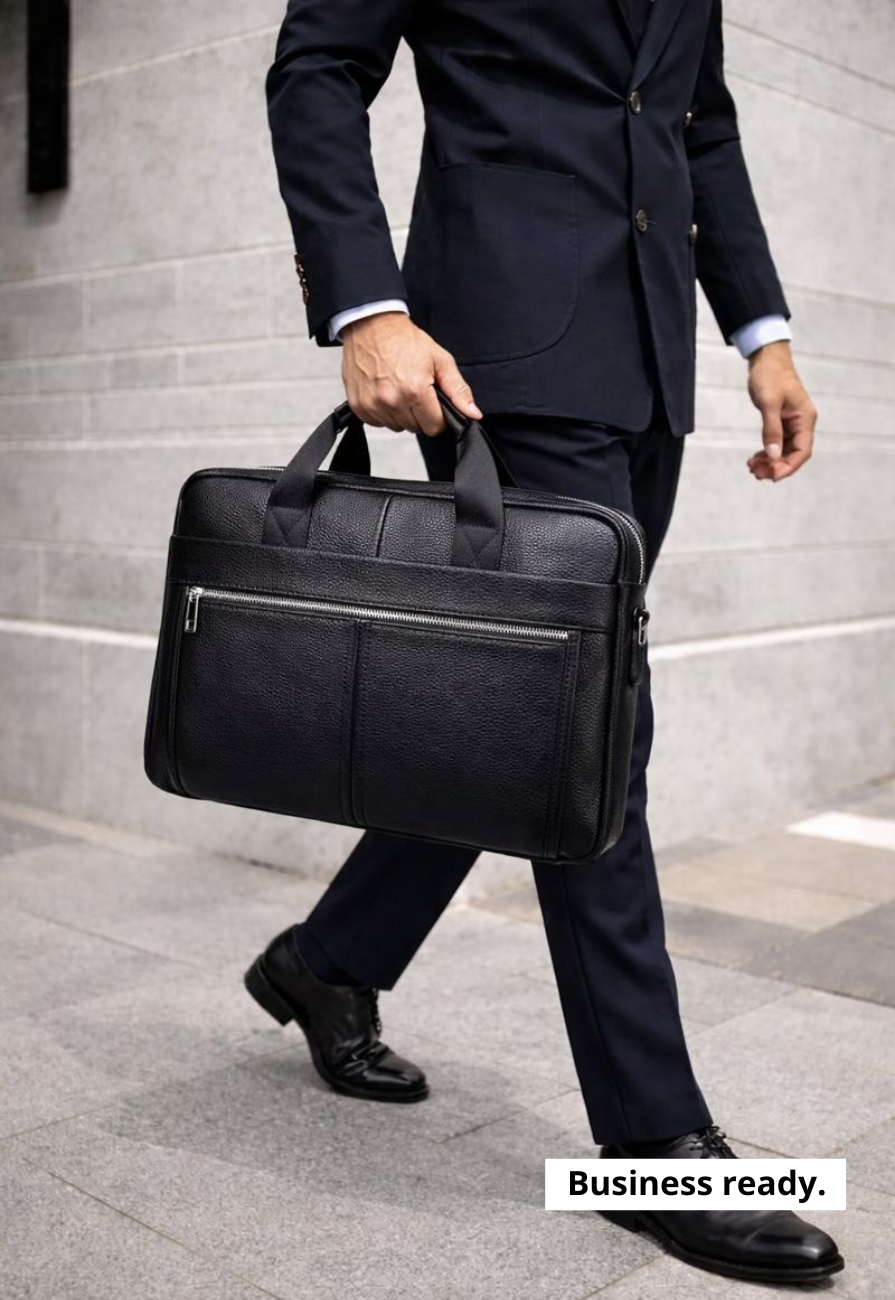
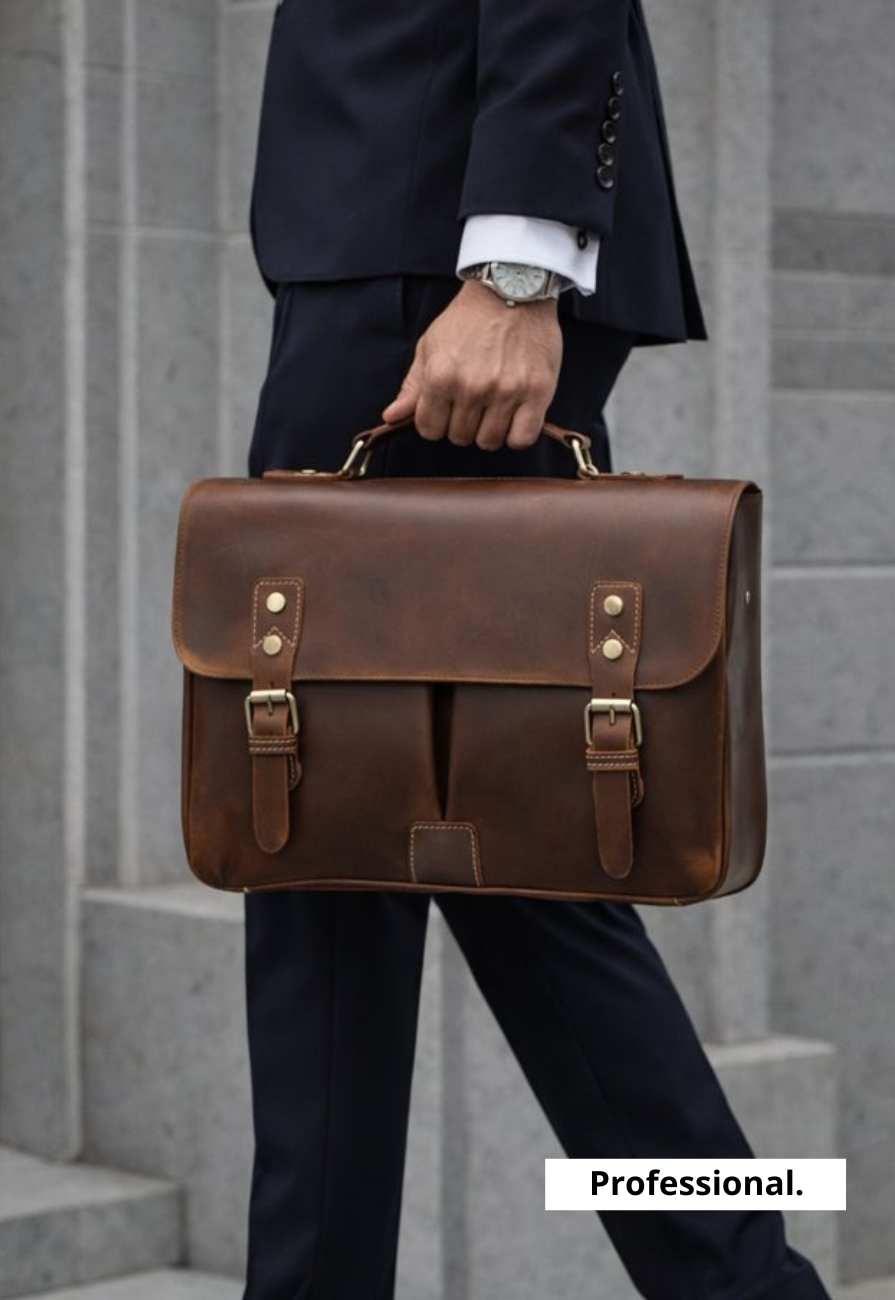
Choose a briefcase when your environment is formal and the bag is part of the dress code. Law, finance, client-facing consulting: in these rooms a structured leather case still signals that you came prepared. It keeps documents flat and uncreased, presents cleanly when you set it on a boardroom table, and carries an authority a soft slouchy bag never quite manages.
There is a real functional edge too. Nothing protects paper like a structured case, and nothing else holds its rectangular shape when you set it down. If your day involves signed documents, printed decks, or a laptop you want cradled rather than dropped into a sack, the briefcase earns its keep.
The modern answer for most men who think they need a briefcase is a hybrid: a structured leather case with a detachable shoulder strap. It carries in the hand into the meeting and crossbody on the commute, which solves the one real weakness of the format. Talk to enough men who have cycled through all three formats and this is where most of them land. One thing tailored-clothing wearers learn the hard way: a single strap loaded heavy will wear down the shoulder line of a good jacket over time, which is another quiet argument for a case you can carry by the handle when it matters. Many of Hartley's leather briefcases are built this way.
The honest trade-off
A briefcase is the least versatile of the three. It occupies a hand, swings on stairs, and is genuinely awkward on a bicycle. It also looks formal everywhere, which is great in a boardroom and odd at a weekend market. Buy one because your work calls for it, not because it looks the part in a product photo.
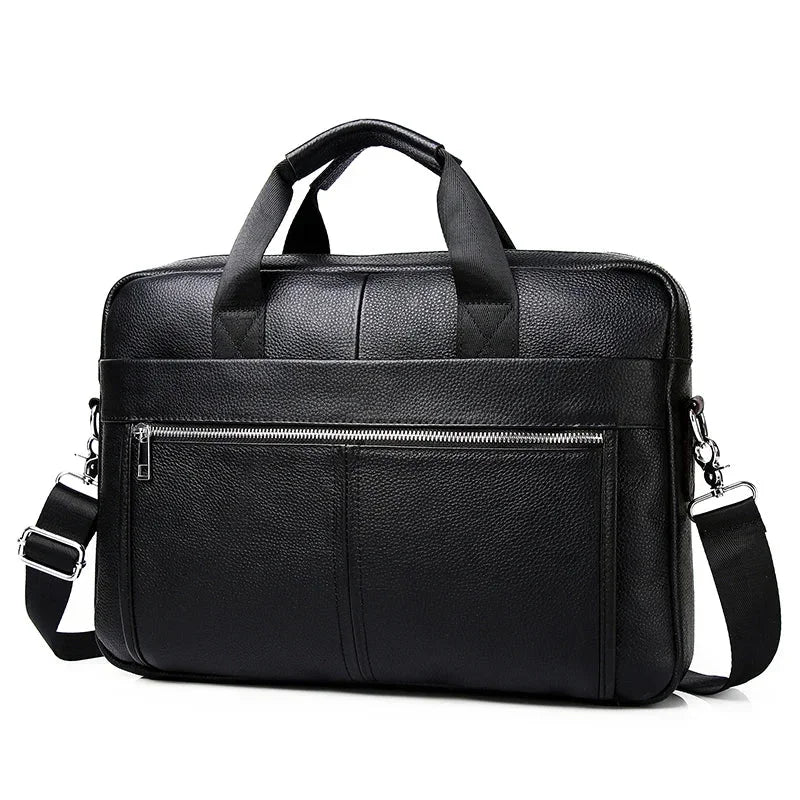
The Boardroom
A structured leather business briefcase built for a 15 inch laptop and a formal room. Clean lines, a shape that holds when you set it down, and the kind of presence a suit-and-tie office expects.
The head-to-head questions people actually ask
Most men do not weigh all three at once. They get stuck on one pairing. Here are the three that come up most, settled plainly.
Backpack vs messenger bag for work
Short version: a backpack wins on comfort and load, a messenger wins on access and a slightly sharper look. This is the most common standoff, and the answer is load and commute. Heavy daily carry or an active commute: backpack, because the weight is shared and your hands are free. Light load and a short commute where you value quick access: messenger. On the "which looks more professional" question, the messenger still has a narrow edge in a business-casual office, but a slim leather backpack has closed most of that gap, so this is now a comfort-and-access decision more than a formality one.
Messenger bag vs briefcase
Formality decides this one. If your office is business-casual or relaxed, the messenger is more practical and looks current. If you work in a suit-and-tie industry where the bag is part of the uniform, the briefcase matches the room. For a mixed week, a hybrid briefcase with a strap does both jobs.
Briefcase vs backpack
This is comfort against formality in its purest form. The backpack is far kinder to your shoulders and your commute; the briefcase is far better in a formal room and for protecting documents. If your week is mostly movement, lean backpack. If it is mostly arrival, in front of clients or a board, lean briefcase.
Match the bag to your dress code
The fastest shortcut is to match the bag to what you actually wear on a normal Tuesday. Style follows dress code more reliably than it follows personal taste.
One styling note that saves a lot of second-guessing: brown leather is the most forgiving choice. It suits every dress code short of the most formal, and it takes on a patina faster and more visibly than black. If you only buy one work bag this decade, brown is the safe bet.

What you carry decides more than you think
Men tend to choose a bag on looks and then discover the load was the real variable all along. Before you decide, be honest about the daily weight, because that single number settles most of the debate on its own.
-
1Light: laptop and a notebookUnder about 11 pounds. Any of the three is comfortable. Decide on formality and access, not on your shoulders. A messenger shines here.
-
2Medium: laptop, charger, water, lunchThis is where a single strap starts to bite by afternoon. A backpack is the kinder pick, and a structured briefcase carried by hand is the formal alternative.
-
3Laptop size matters tooA 13 inch machine fits anything. A 15 or 16 inch one needs a real padded sleeve, so check the internal dimensions rather than the bag's outside size before you buy.
Then there is the shape of your day. If you pull your laptop out five times between meetings, the messenger's flap access is worth a lot. If you set the bag down at one desk and leave it, that advantage all but disappears and comfort takes over.
A word on leather, since the internet gets it wrong
You will read a lot of buying advice that tells you to demand full-grain leather and to treat the words "genuine leather" as a warning sign. That is half right, and the half that is wrong sends people in the wrong direction.
Genuine leather is simply a broad commercial term for real leather. It covers a wide quality range, and on its own it tells you a hide was used rather than a plastic. What you actually want to avoid is bonded leather: shredded leather scrap glued onto a backing. That is the material that cracks and peels within a few years, and it is a genuinely different thing from a solid piece of cowhide.
Full-grain sits at the top of the hierarchy because it keeps the outer surface of the hide intact, so it is strong and ages beautifully. But a well-made genuine cowhide bag, real full-thickness hide, holds its shape, takes a patina, and lasts for years of daily use. Judge a bag by the feel and thickness of the hide and the quality of the stitching, not by a single word on a label. If you want a material that broadcasts character as it ages, look at crazy horse leather, which is built to scuff and burnish into a richer finish over time.

Good to know
The hierarchy, simplest to richest: bonded leather (avoid), then genuine and top-grain leather (solid, everyday quality), then full-grain (the top tier). Hartley bags are made from genuine cowhide and, on select pieces, crazy horse leather.
So which one belongs on your shoulder? Run your week through the three trade-offs above, then pick the format that loses you the least. That is the whole method. The bag that fits your work is the one you stop noticing.
 Leather backpacks
Both-shoulder comfort in a clean leather silhouette, for the laptop-and-commute crowd.
 Messenger bags
Crossbody flap access and a sharp business-casual line, in canvas and leather.
 Briefcases
Structured leather cases for formal rooms, many with a detachable shoulder strap.
 Leather laptop bag guide
What to check inside any work bag before you buy: padding, sleeve depth, organization.
Frequently asked questions
Is a backpack or messenger bag more professional for work?+
A messenger bag still reads as slightly more polished in most offices because it sits flat against the body and looks deliberate. A leather backpack has closed much of that gap, so a slim leather model in a dark color holds up fine in business-casual settings. The real divider is your dress code: in a suit-and-tie industry, neither beats a structured briefcase.
Is a backpack too informal for an office job?+
A sport or nylon backpack can read as informal in a traditional office. A slim leather backpack in a neutral color does not, and it works well for business-casual environments and commutes. If your workplace expects a suit, carry a briefcase or a messenger instead and keep the backpack for travel days.
Which work bag is best for commuting?+
For an active commute that involves cycling, long walks, or a heavy daily load, a backpack wins because it spreads weight across both shoulders and keeps your hands free. For a short train or bus commute with a light load, a messenger bag is more convenient because you can swing it to the front and reach inside without taking it off.
Can a messenger bag hurt your shoulder if you carry it every day?+
It can once the load gets heavy. Under roughly 11 to 13 pounds (about 5 to 6 kg), a crossbody strap worn across the torso is comfortable for daily use. Above that, any single-strap bag, messenger or briefcase, will fatigue one shoulder. If your daily carry includes a laptop, charger, water bottle, and a few extras, a backpack is the kinder long-term choice.
Do you still need a briefcase in 2026?+
Only if your industry treats it as part of the uniform. In law, finance, and client-facing consulting, a structured briefcase still signals authority and keeps documents crisp. For most other modern workplaces, a leather messenger bag or a slim leather backpack covers the same job with more comfort. A briefcase with a detachable shoulder strap is a good middle ground.
Does genuine leather mean low quality?+
No. Genuine leather is a broad commercial term for real leather, and it covers a wide range of quality. It is not the same as bonded leather, which is shredded scrap glued together and does tend to crack and peel. A well-made genuine cowhide bag is real, full-thickness hide that holds its shape and develops a patina with use.




Leave a comment
This site is protected by hCaptcha and the hCaptcha Privacy Policy and Terms of Service apply.