



Most leather bags are not killed by use. They are killed by storage. The bag survives three years of daily commuting, then spends one humid summer folded in a plastic tote in the basement and comes out stiff, blotchy, and smelling of mildew. I have seen it happen to a beautiful full-grain briefcase that had years left in it. The leather did not wear out. It was put away wrong.
Storing a leather bag well is not complicated, but almost every guide online stops at "keep it cool and dry, use a dust bag." That advice is fine as far as it goes, and it skips the parts that actually cause the damage: which materials trap moisture, why newspaper is a bad idea, and the fact that a waxed crazy horse bag and a polished dress briefcase do not want to be stored the same way. This is the version I give people who plan to keep a bag for a decade.
Clean and dry it first, then stuff it loosely to hold its shape and stand it upright inside a breathable cotton dust bag, never plastic. Keep it in a cool, dark, well-ventilated spot at roughly 60 to 70°F and 45 to 55% humidity, away from sunlight, radiators, and damp basements. Air it out and check it every couple of months.

Why storage is where most bags die
Leather is a natural material, and it keeps reacting to its environment long after it leaves the workshop. It takes on moisture from humid air and gives it back when the air dries out. Those fibers expand and contract a little with every swing in temperature and humidity. Use keeps a bag moving, flexing, and breathing, which is part of why a bag you carry daily tends to age better than one you stash and forget.
Storage is the opposite of use. The bag sits still, often in the worst microclimate in the house: a sealed closet, an attic that bakes in summer, a basement that sweats. Three things do the damage. Trapped moisture breeds mold and mildew. Dry, hot air pulls the natural oils out of the leather until it cracks. And pressure, from being folded, stacked, or crushed, sets creases that never fully relax. Get the storage right and you neutralize all three at once.
The expert read
Good leather does not need much to survive storage. It needs air, a stable temperature, and to be left in its own shape. Almost every storage disaster I have seen comes from doing too much (sealing it in plastic "to protect it") rather than too little. Think ventilation, not preservation.
Prep the bag before you put it away
What you seal in is what you come back to. Put a bag away dirty or damp and you are giving mold months of undisturbed time to grow on the food you left it. Five minutes of prep is the highest-value thing in this whole guide.
-
1Empty every pocketPens, receipts, coins, a stray lip balm. Anything left inside presses into the leather over months and leaves marks, and anything organic invites trouble. Turn the bag over and give it a shake.
-
2Wipe it downA soft, dry or barely damp cloth over the whole surface to lift dust and oils from your hands. If there is real grime, clean it properly first. Our guide on how to clean a leather bag walks through it step by step.
-
3Let it dry fullyIf you cleaned it with anything damp, let it air-dry completely, away from heat. Sealing in even a little moisture is the single most common cause of mildew in storage.
-
4Condition only if it needs itIf the leather feels dry, a light coat of conditioner before storage helps it hold its oils through months of stillness. If it feels supple, leave it alone. More on which leathers want this below.
Watch out
Do not over-condition right before a long storage stretch. A heavy coat that cannot work in through daily handling can sit on the surface and, on some waxed leathers, bloom into a dull haze. A thin coat is plenty.
The right environment: temperature, humidity, light
Where you store the bag matters more than what you wrap it in. Get the room right and the leather is forgiving. Get it wrong and no dust bag will save it. You will see slightly different numbers across sources; the ranges below are the safe middle that protects against both extremes.
In practice, that rules out the three places people most often reach for. Attics swing hot and dry in summer. Basements run damp and still. The space above a radiator or next to a heating vent cooks the leather from one side. A shelf in a bedroom closet on an interior wall, with the door cracked now and then, beats all of them.
Storing leather bags in a humid climate
Humidity is the hardest case, and it is worth its own note because so much of the standard advice quietly assumes a dry house. If you live somewhere genuinely humid, the dust bag and the closet are not enough on their own, because the air itself is the problem. Two things help. A small dehumidifier or a rechargeable desiccant unit in the closet pulls the ambient damp down toward that 45 to 55% target. Reusable canisters like the ones Hydrosorbent makes use indicating silica gel that you recharge in the oven, so there is nothing to refill. And a single silica gel packet placed near the bag, not touching it, soaks up the moisture closest to the leather.
Good to know
Keep any desiccant at arm's length from the leather. A silica packet pressed flat against the surface can over-dry that spot and leave a mark. Set it beside the bag inside the dust bag, not against the hide, and swap it out once it saturates. In a humid climate, air the bag out more often than the usual couple of months: once a month is not too much.
How to store it: shape, position, cover
Once the bag is clean, dry, and in a good room, the actual storage comes down to three things: hold its shape, stand it the right way, and cover it so it can still breathe.
Stuff it to hold the shape
An empty bag slumps, and a slump becomes a permanent crease. Fill the main compartment loosely so it keeps its form, using something soft and clean: bubble-free packing paper, a clean cotton T-shirt, or acid-free tissue paper. The goal is to support the shape, not to pack it tight enough to stretch the leather outward.
Skip the newspaper
Plenty of guides suggest crumpled newspaper for stuffing. Don't. Newsprint ink rubs off, and on a light interior lining or pale leather it can transfer and stain. If ink ever does reach the leather, our guide on how to remove ink from a leather bag covers it, but the easy fix is to never use newspaper in the first place. Plain packing paper or cotton does the same job with no risk.
Stand it upright, never hang it
Store the bag sitting on its base, the way it sits on a desk, so its weight rests where the bag was built to carry it. Do not hang a leather bag by its handles or straps for months. The weight pulls the leather and stretches the handles out of shape, and on a heavier bag it can distort the whole top line. Flat on a shelf is fine too. Hanging by the handles is the one position to avoid.
Cover it with cotton, not plastic
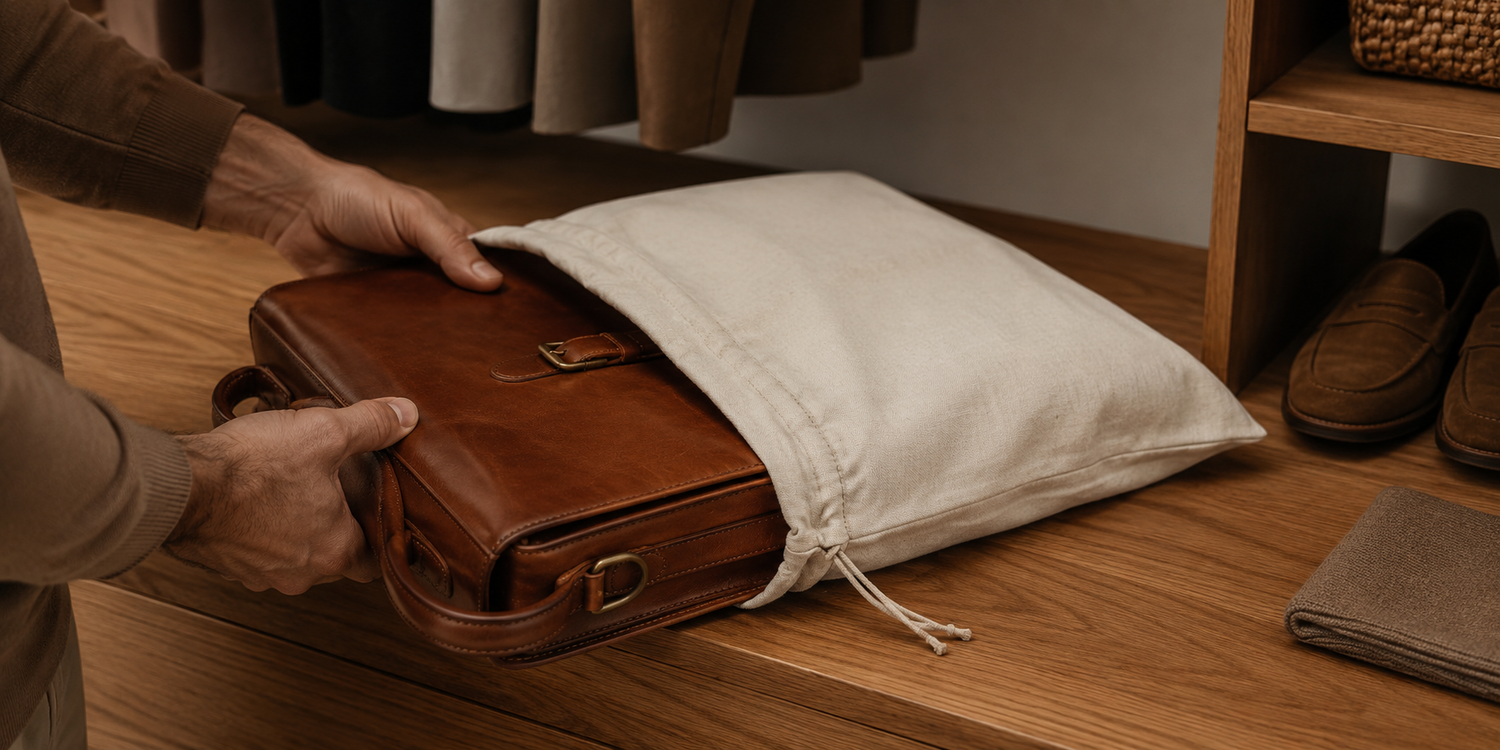
Use a breathable cotton or linen dust bag, the kind a quality bag often ships in. If you do not have one, you do not need to buy anything: a clean cotton pillowcase works just as well, and a soft cotton sheet wrapped loosely around the bag does the job too. What you never want is plastic. A plastic bag, a garment bag with no airflow, or a sealed bin traps humidity against the leather and is the fastest route to mildew and that musty, stuck-in-a-closet smell. The same rule holds whether you are putting away a purse, a backpack, a briefcase, or a weekender duffle: cotton breathes, plastic suffocates.
If you would rather buy purpose-made covers than repurpose pillowcases, look for organic cotton with a drawstring. Hayden Hill, a London maker that specializes in garment and bag protection, sells GOTS-certified organic cotton dust bags in mixed sizes that fit most handbags, totes, and briefcases. They are not the only option, but they are a good example of what to look for: breathable natural fabric, a secure drawstring, and a size that fits the bag with a little room to spare.
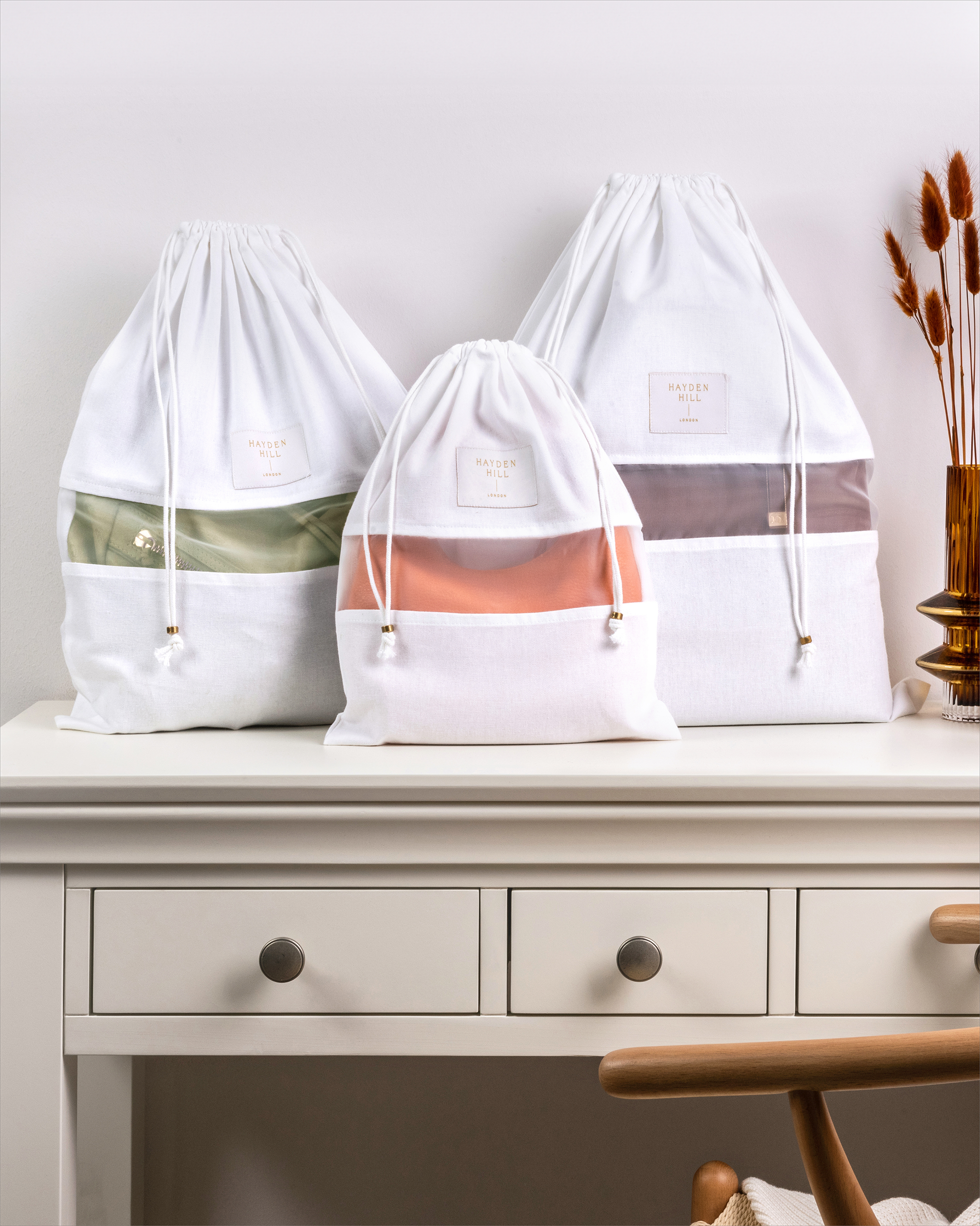
Hayden Hill Organic Cotton Dust Bags
A London maker's set of GOTS-certified organic cotton dust bags in small, medium, and large. Breathable natural fabric and a brass-slider drawstring, the kind of cover that protects leather without trapping moisture.

Storage by leather type (this part matters)
Here is what almost every storage guide leaves out: not all leather wants the same treatment in storage. The finish on the surface changes how it handles moisture and whether it wants conditioning before a long rest. Knowing which one you own saves you from over-caring for a bag that does not need it, or under-caring for one that does.
A waxed crazy horse leather bag is the most self-sufficient of the group. The wax and oil already worked deep into the hide, so it rarely needs conditioning before storage, and a wipe is usually all it wants. The one quirk to know: in a cold room, the wax can rise to the surface as a pale, cloudy bloom. It looks alarming and it is completely harmless. A few passes with a dry cloth, or simply carrying the bag again, warms the wax and it melts back in.
Full-grain and other unwaxed leathers dry out faster, so they are the ones most likely to want a light conditioner before a long rest, especially in a dry climate. Suede and nubuck are the exception to everything above: never condition or oil them, just brush off dust and store them somewhere a touch drier than usual.
Why this connects to patina
A bag in storage is not aging the way a bag in use is. Patina comes from handling, light, and the oils from your hands working into the leather over time. A stored bag pauses that process. It will not develop character in a closet, which is the real argument for rotating bags in and out rather than retiring one for years. If you are curious how that aging actually works, we get into it in our piece on leather patina.
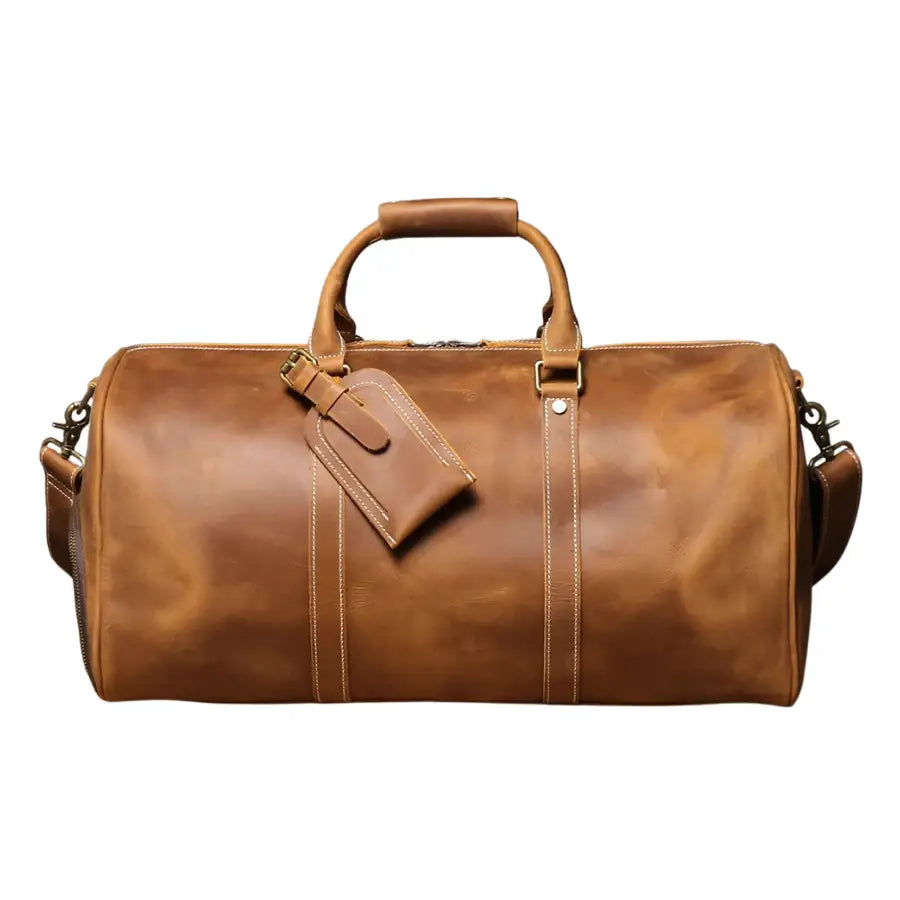
Bags built for storage between trips, like a leather weekender that only comes out a few times a year, are exactly the pieces this guide is written for. They spend more of their life resting than working, so how you put them away decides how they look when you next reach for them.
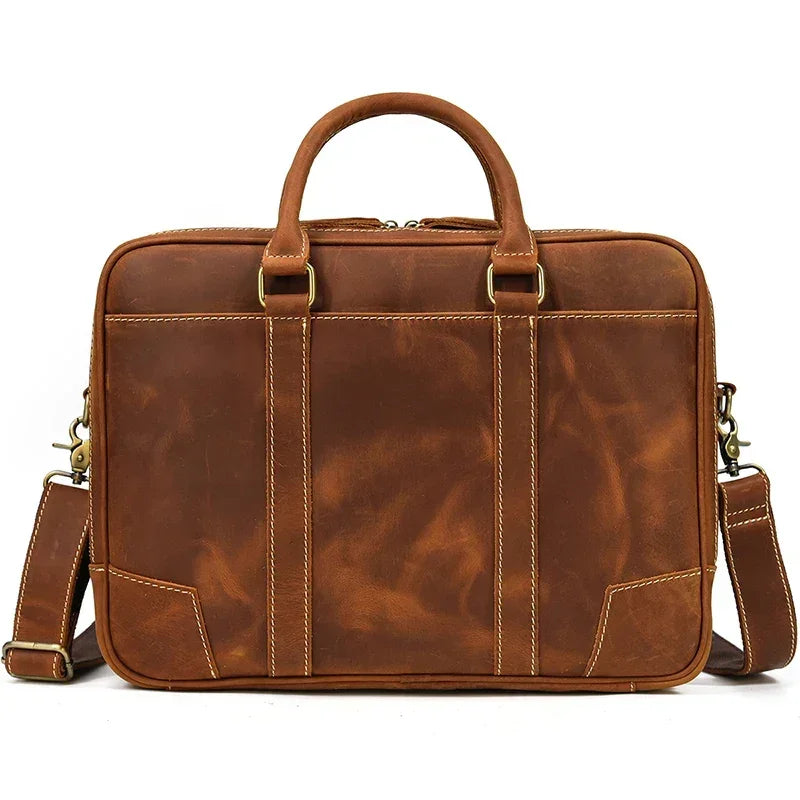
The Ridgeway Case
A double-compartment briefcase in crazy horse leather with a 14-inch laptop section. The waxed finish means it asks for almost nothing in storage: a wipe, an upright shelf, and it is set.
The Rutherford
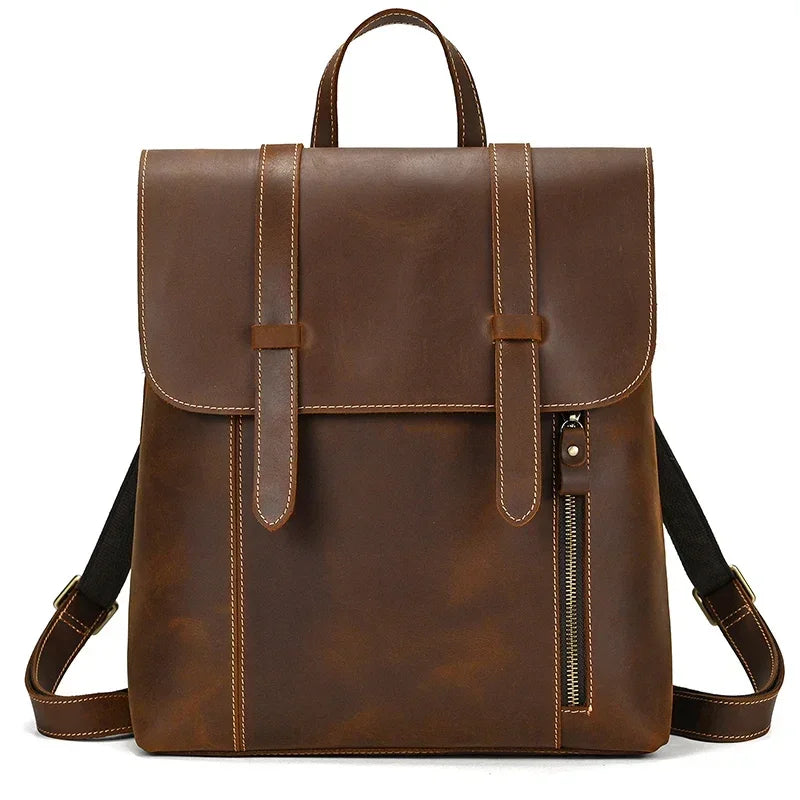
A flap-front backpack in 100% crazy horse leather that deepens into a unique patina with use. Carry it often and it gets better; when it does go on the shelf, it stores as easily as the briefcase.
The Ashcroft Leather Weekender
A vintage-finish leather duffle with a dedicated shoe compartment, built for the weekends away. It spends most of its life resting, which makes good storage the difference between ready-to-go and stiff.
The mistakes that ruin stored leather
Most storage damage traces back to a short list of avoidable errors. If you do nothing else, do not do these.
The color-transfer one surprises people. Store a dark dyed bag pressed against a pale one in a warm spot for months and the darker dye can migrate onto the lighter leather. If you are storing several bags close together, a layer of acid-free tissue between them, or just a little space, prevents it.
What to do while it is in storage
A stored bag is not a sealed time capsule. Leather does best when it gets a little attention even at rest, and a two-minute check every couple of months catches small problems before they become permanent ones.
-
1Air it out every few monthsTake it out of the dust bag and let it sit in a shaded, ventilated room for a few hours. This lets any built-up moisture escape and keeps the leather from going musty.
-
2Check for early moldLook for any fuzzy white or green spots, especially in seams and corners. Caught early it wipes off easily. Left for a season it stains. If it has taken hold, here is how to remove mold from leather.
-
3Feel for drynessRun a hand over the leather. If it feels stiff or papery, a light conditioner brings the suppleness back. If it stays dry too long it can crack, and reversing cracked leather is far harder than preventing it.
If all of this sounds like more than you want to do, there is a simpler answer: use the bag. A leather bag in rotation, carried even occasionally, mostly takes care of itself. Storage is for the pieces you genuinely cannot carry right now, and for those, the routine above is what keeps a ten-year bag looking like it has ten more in it.

Frequently asked questions
Can I store a leather bag in a plastic bag?+
No. Plastic seals in humidity and stops air from circulating, which is the fastest way to grow mold and give leather a musty smell. Always use a breathable cotton or linen dust bag, or a clean cotton pillowcase if you do not have one.
Should I condition a leather bag before storing it?+
Only if it feels dry. A light coat helps unwaxed leathers like full-grain hold their oils through a long rest, especially in a dry climate. Waxed crazy horse leather rarely needs it, and suede or nubuck should never be conditioned. Avoid a heavy coat right before storage, since it can sit on the surface instead of soaking in.
What is the ideal temperature and humidity for storing leather?+
Aim for roughly 60 to 70°F (15 to 21°C) and 45 to 55% relative humidity. Too hot and dry pulls the oils out and cracks the leather; too cold makes it brittle; too damp grows mold. A cool, dark interior closet usually hits this naturally.
Should I stuff a leather bag before storing it?+
Yes. An empty bag slumps and sets permanent creases. Fill the main compartment loosely with clean packing paper, acid-free tissue, or a cotton T-shirt to hold the shape. Do not pack it tight enough to stretch the leather, and never use newspaper, since the ink can transfer onto the lining or leather.
Can I hang a leather bag for storage?+
It is best not to. Hanging by the handles or straps for months pulls the leather and stretches the handles out of shape, and on heavier bags it can distort the whole top. Store the bag standing upright on its base, or lying flat on a shelf, so the weight rests where the bag was designed to carry it.
How do I store a leather bag without a dust bag?+
A clean cotton pillowcase is the easiest substitute, and a soft cotton sheet wrapped loosely around the bag works too. The only requirement is that the cover breathes, so reach for natural cotton or linen and avoid anything plastic. Stuff and stand the bag exactly as you would otherwise.
How often should I check on a bag in long-term storage?+
Every couple of months. Take it out, let it air in a shaded, ventilated room for a few hours, check the seams and corners for any early mold, and feel whether the leather has gone dry. Catching mildew or dryness early is the difference between a quick wipe and a permanent stain or crack.



Leave a comment
This site is protected by hCaptcha and the hCaptcha Privacy Policy and Terms of Service apply.