



Here is the honest version no one selling a repair kit wants to lead with: a true crack in leather cannot be undone. The fibers have split, and split fibers do not knit back together. What you can do is real and worthwhile, though. You can stop the damage spreading, soften and feed leather that is merely dry, and fill and recolor real cracks so they all but disappear. This guide walks all three, in plain order, and flags the popular fixes that quietly make things worse.
The first move, before you reach for any product, is to work out which problem you actually have, because dry leather and cracked leather are fixed in completely different ways. Get that right and the rest is straightforward.
If the leather is only dry, condition it in thin coats and the fine lines close up; it is fully reversible. Light surface cracks improve with repeated conditioning. Deep cracks cannot be undone, only filled with a flexible leather filler, recolored to match, and then conditioned so they stop spreading. Always test any product on a hidden spot first, and skip mink, neatsfoot and coconut oils, which darken and damage fine leather over time.

Dry vs cracked: the difference that changes everything
Almost every guide online blurs these two together, and that is why so many home repairs disappoint. Before you touch anything, work out which one you are dealing with, because the fix is completely different.
Dry leather looks tired, stiff and lighter than it should. The surface may show a fine web of lines when you flex it, but those lines close up again when the leather relaxes. Nothing has torn yet. This is fully reversible. Feed it, and it comes back.
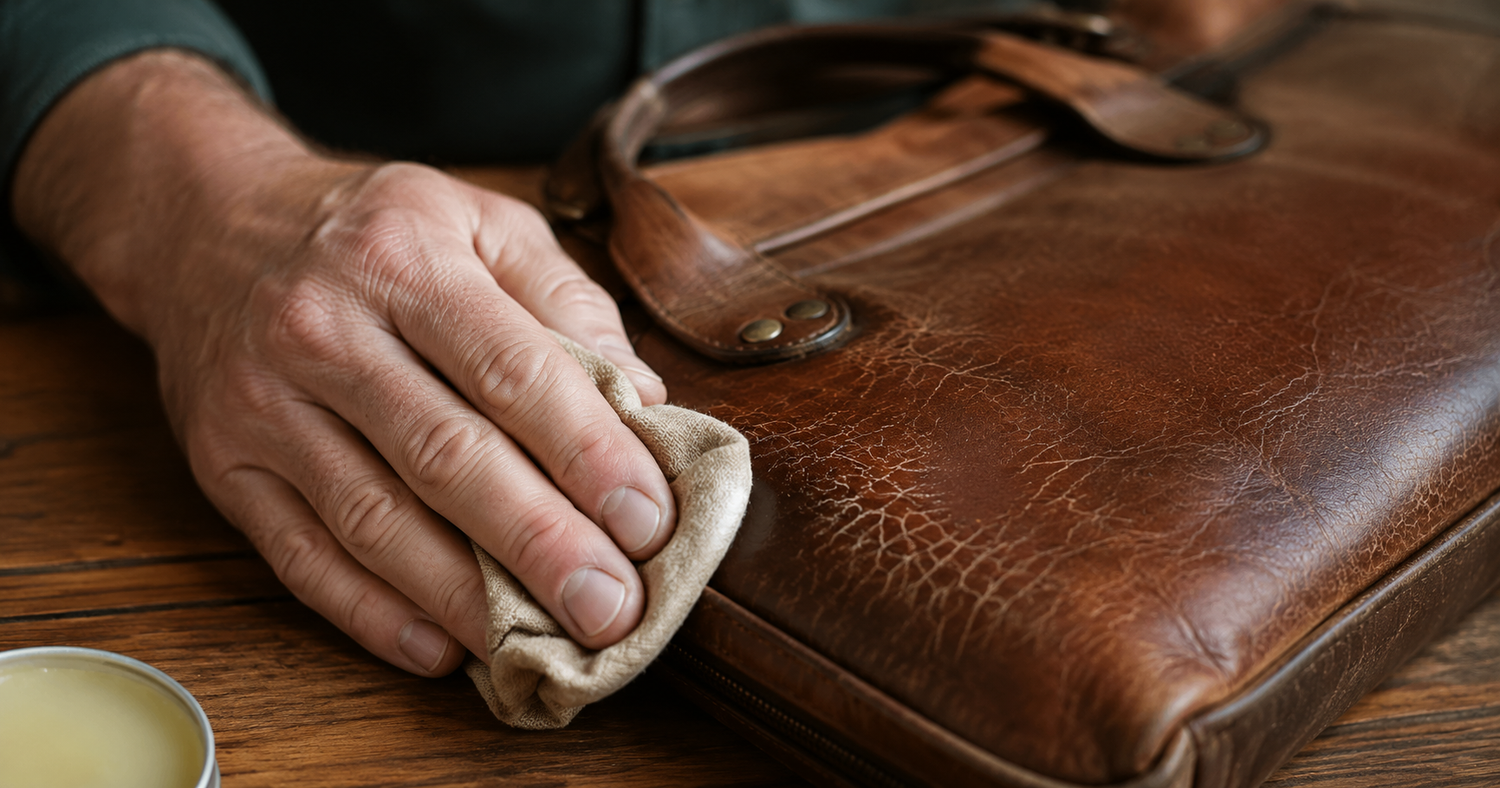
Cracked leather is past that point. The lines stay open when the leather is flat, you can catch a fingernail edge in them, and in bad cases the surface flakes or lifts. The fibers and the finish have physically broken. You cannot un-break them. You can only feed the leather around them and fill the gaps so they stop spreading and stop showing.
The flex test
Press the leather flat with your palm, then gently bend it grain-side out. If the lines vanish when flat and only appear on the bend, it is dry, not cracked, and you are in easy territory. If the lines stay visible flat, or you feel a ridge with a fingernail, those are real cracks. Treat them as cracks below.

Why leather cracks in the first place
Leather is skin. Like skin, it holds a certain amount of natural oil and moisture, and it stays supple only while that balance holds. Cracking is almost always the end stage of that balance being lost over months or years.
The usual causes, roughly in order of how often we see them:
Lack of conditioning. The single biggest one. Natural oils evaporate with use and age. If they are never replaced, fibers rub against each other dry, stiffen, and eventually fracture at the flex points first: handles, base corners, the fold under a flap.
Heat and sun. A bag left on a car parcel shelf, near a radiator, or on a sunny windowsill bakes the oils out fast. Heat is the accelerator that turns slowly-drying leather into cracked leather in a single hot summer.
Water then fast drying. Leather that gets soaked and then dries quickly near heat loses its oils with the water and contracts hard. The same goes for repeated wet-and-dry cycles with no conditioning in between.
Cheap finishes. Some bonded and heavily coated leathers crack at the surface coating no matter what you do, because the plastic-like top layer is more brittle than the leather under it. There is a limit to what conditioning can do for those, and it is worth knowing that going in.
Can cracked leather really be repaired?
This is the question everyone actually wants answered, so here is the straight version rather than the marketing one.
A genuine crack cannot be reversed. The structure is broken, and no oil, balm or cream rebuilds broken fiber. Any product or guide promising to "heal" or "erase" deep cracks is overselling. What honest leather work does is this:
Stop it getting worse. Conditioning the leather around a crack restores flexibility so the crack stops propagating at its edges. This is the most valuable thing you can do, and it is real.
Make it nearly invisible. A flexible filler levels the gap, and matched dye blends it back into the surrounding color. Done patiently, a filled and recolored crack is genuinely hard to spot. It is masked, not undone, but the visible result can be excellent.
Buy the bag years. A bag with stabilized, filled cracks that is then kept conditioned can stay in use for a long time. You are managing the damage, not curing it, and that is a perfectly good outcome.
So: dry leather, you revive. Surface cracks, you soften and minimize. Deep cracks, you fill and mask. Nobody truly "fixes" a crack, and any guide that says otherwise is the one to be skeptical of.
What you'll need
You do not need much, and most of it you may already own. The list changes slightly depending on whether you are reviving dry leather or filling real cracks.
For dry or lightly cracked leather: a soft cloth or two, a soft brush, a quality leather conditioner, and a little patience between coats. That is genuinely all.
For deep cracks: add a flexible leather filler and a color-matched dye, ideally from a single repair kit so the two are designed to work together. A small palette knife or plastic spreader, very fine sandpaper (around 600 grit), and cotton swabs round it out.
One rule before any product touches the bag: test it on a hidden spot first, the underside of the base or inside a flap. Leather varies, dyes and fillers vary, and a thirty-second spot test on leather you cannot see is what stands between you and a visible mistake on leather you can.
Reviving dry leather before it cracks
If your flex test said dry rather than cracked, this is the whole job, and it is satisfyingly simple. Catch leather here and you may never see a crack at all.
-
1Clean off surface dirt firstWipe the leather down with a barely damp cloth and let it dry fully. Conditioner over a layer of grit just grinds the grit in. Skip harsh cleaners here; you want the leather neutral, not stripped.
-
2Apply conditioner in thin coatsPut a little conditioner on a soft cloth, not directly on the leather, and work it in with small circles. Thin and even beats thick and patchy. The leather should look fed, not greasy.
-
3Let it absorb, then repeatGive it a few hours, ideally overnight. Dry leather drinks the first coat in fast. A second and even third thin coat, each left to absorb, does far more than one heavy one. Buff gently with a clean cloth between coats.
-
4Buff and assessOnce the leather feels supple again and the fine lines have closed, you are done. If a few lines remain open when flat, those have tipped into surface cracks; carry on to the next section for them.

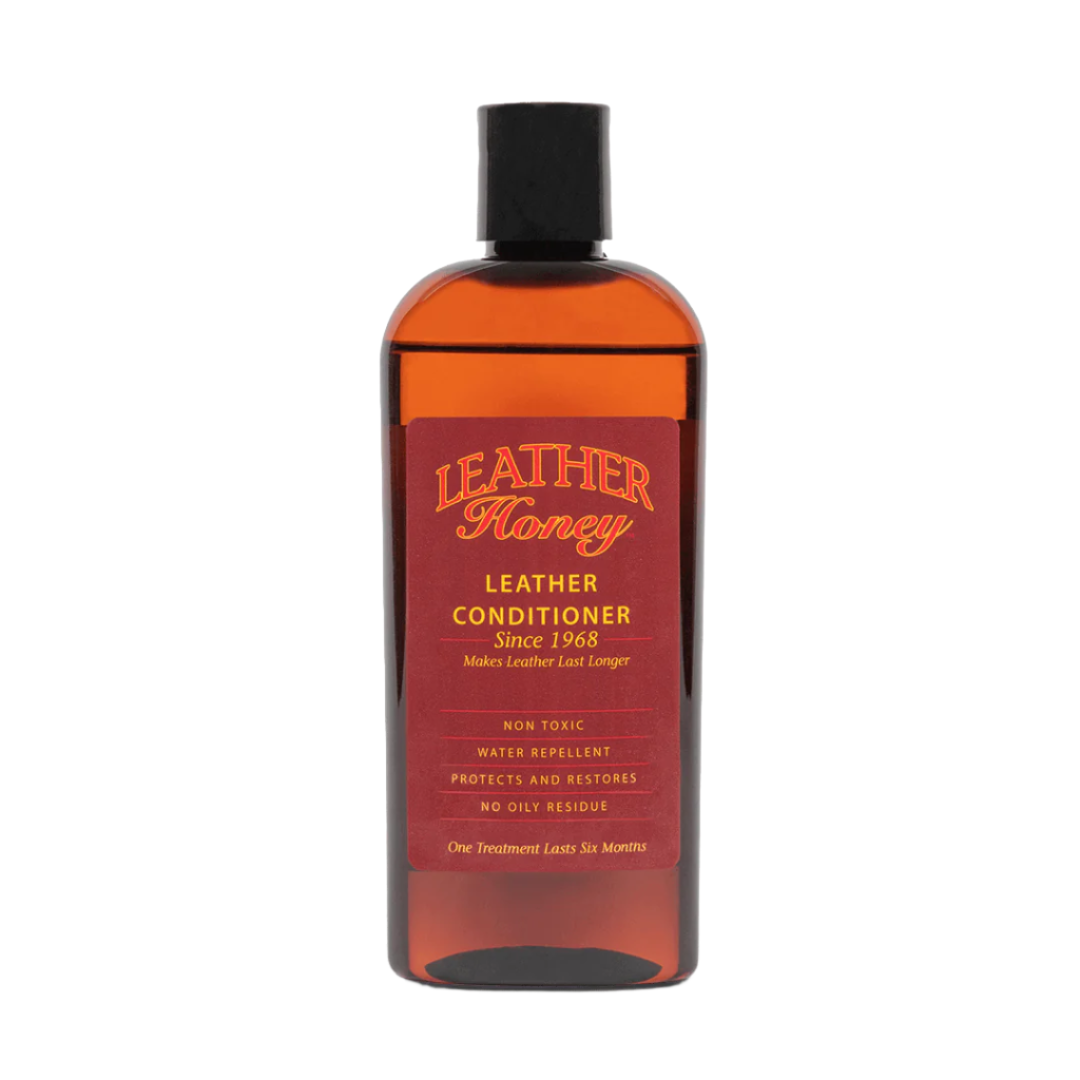
Leather Honey Conditioner
A long-trusted liquid conditioner that soaks deep rather than sitting on top, which is exactly what dried-out leather needs. It is the single most useful thing you can own for keeping a bag out of the cracked category in the first place, and for stopping existing cracks spreading. A little goes a long way, so one bottle lasts years.
Fixing light surface cracks, step by step
Surface cracks sit in the finish and the top grain. They stay faintly visible when the leather is flat but have not yet split deep or started flaking. Most of the time they respond well to cleaning and intensive conditioning, with no filler needed.
-
1Clean gently and dry fullyWipe with a barely damp cloth to lift dirt out of the cracks, working along them rather than across. Let the leather dry completely, ideally overnight, away from any heat source.
-
2Work conditioner into the cracksUse a fingertip or soft cloth to press conditioner directly into each line, not just over the top. The aim is to feed the dry edges of the crack so they soften and draw back together as far as they will.
-
3Repeat over a few daysLight cracks improve gradually, not instantly. Two or three rounds of conditioning across a few days lets the leather recover its flex. Many surface cracks fade to barely-there at this stage and never need filler.
-
4Seal with a light buffOnce you are happy, buff the area with a clean dry cloth to even the sheen. If some lines are still clearly open and catching a nail, they belong in the deep-crack method below.
Fixing deep cracks with a filler
Deep cracks need leveling, because conditioning alone cannot bridge a gap. This is where a repair kit earns its place. Be honest with yourself about the result: a well-filled deep crack becomes hard to see, but the leather there is now repaired surface, not original grain. On a much-loved bag, that trade is usually worth it.
-
1Clean and fully dry the areaFiller will not bond over dirt or moisture. Clean the crack out, let it dry completely, and lightly key the very edges with fine sandpaper so the filler has something to grip. Wipe away dust.
-
2Apply filler in thin layersSpread a thin coat of flexible filler into the crack with a palette knife, scraping flush with the surface. Let it dry, then add another thin coat. Several thin layers level far better than one thick one, which shrinks and re-cracks as it cures.
-
3Sand smooth, then color-matchOnce fully cured, sand the filled line gently flush with very fine paper. Then build up matched dye in light coats until the repair blends into the leather around it. Mix to the worn, real color of the bag, not a factory-fresh tone.
-
4Condition the whole panelFinish by conditioning the entire area, repair and surrounding leather alike, so everything flexes together. A filled crack in stiff, unconditioned leather just reopens next to the repair. Keep that panel fed from now on.
What about peeling leather?
Peeling is a close cousin of cracking, and it gets its own question a lot, so it is worth being straight about. When leather looks like it is peeling, what is usually lifting is a surface finish or coating, not the leather itself, and this is most common on bonded or heavily coated leathers. The fix follows the same logic as a deep crack: gently remove the loose flakes, lightly key the edges, then fill and recolor to level the area. But manage your expectations. If the coating is failing across a whole panel, filler buys you time rather than a true repair, because the same coating will keep lifting elsewhere. Genuine, full-bodied leather rarely peels; it cracks, which is the more repairable problem of the two.
Choosing a leather repair kit
If you are filling deep cracks, a repair kit is the practical way to get filler and matched dye that are designed to work together. The market is crowded and most kits are built for car seats and sofas, which are bigger jobs than a bag. For small leather goods you want a kit with a flexible filler that will not go brittle, a workable color-mixing system, and enough finesse for a small area.
After comparing the kits US reviewers rate most highly for cracked leather specifically, the one best suited to a bag is Coconix. Reviewers single it out for crack repair because its filler stays flexible after curing instead of setting hard and re-splitting, and its mix-your-own brown shades suit the tan-to-chocolate range most leather bags live in. It is sized for small goods rather than a whole sofa, which is what you want here.
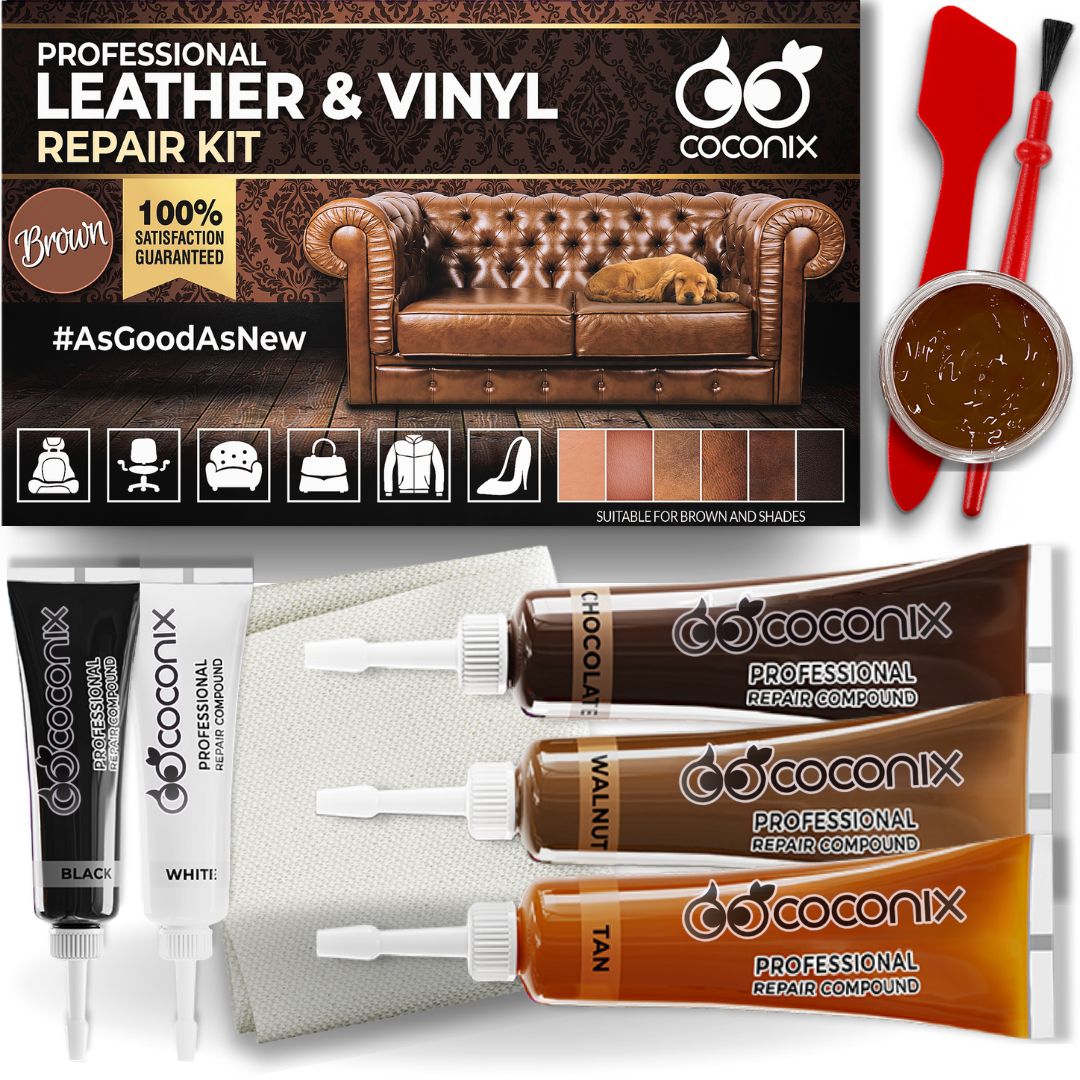
Coconix Leather Repair Kit, Brown & Shades
A flexible-filler kit with a mix-your-own brown color system, widely rated as the best pick for cracked leather rather than just tears. The filler flexes with the leather instead of going brittle, and the brown-to-chocolate shade range matches most leather bags. Sized for small goods, so it is not overkill for a single bag. As with any filler and dye, mix to your bag's worn color and test on a hidden spot first.
A note on color matching: this is the step that makes or breaks a filler repair. Even reviewers who like their kit say the same thing, that matching a worn, faded leather takes a couple of tries. Build the color up in thin layers and check it in daylight, not under a warm bulb. Patience here is the difference between an invisible repair and an obvious patch.
Softening stiff, hardened leather
Sometimes leather is not cracked so much as gone hard, a wallet that has stiffened, a strap that has turned to board. Hard leather is dry leather that has lost its flex, and it is on the road to cracking if left. The fix is the same family as reviving: feed it, work it, repeat.
Condition it in thin coats as above, but add gentle movement. After each coat absorbs, flex and massage the leather with your hands to work the oils into the fibers and remind them how to bend. This is really what it means to recondition leather: not a one-off product, but feeding and working it until the suppleness returns. Warmth helps the conditioner penetrate, but it must be gentle ambient warmth, never a hairdryer, heat gun or radiator, which drive out the very moisture you are adding. Over a few sessions, stiff leather usually softens noticeably. Leather that stays board-hard after honest conditioning has likely lost too much structure to fully recover, and is telling you it is near the end of its life.
Cracks on crazy horse leather
Crazy horse leather deserves its own note, because it can look cracked when it is simply doing what it is meant to do. It is finished with a heavy wax, so it shows dramatic color shifts, light scratches and creasing wherever it flexes. Fresh creases and pale scuff lines are character, not damage, and most of them rub back in with a warm thumb or a dry cloth, the same way a light scratch on leather often does. We cover how this leather behaves in our guide to what crazy horse leather is and why it lasts.
Real cracking on crazy horse is different: open lines that stay put when flat, with the leather feeling dry and stiff rather than waxy. Because the surface is wax-rich, it usually needs less conditioning than smooth leather, and a little goes a long way before it looks greasy. Treat genuine cracks the same way as any other leather, but go lighter, test first, and resist the urge to "fix" what is really just the finish living its life. With crazy horse, restraint is usually the right move.

The Ridgeway Case
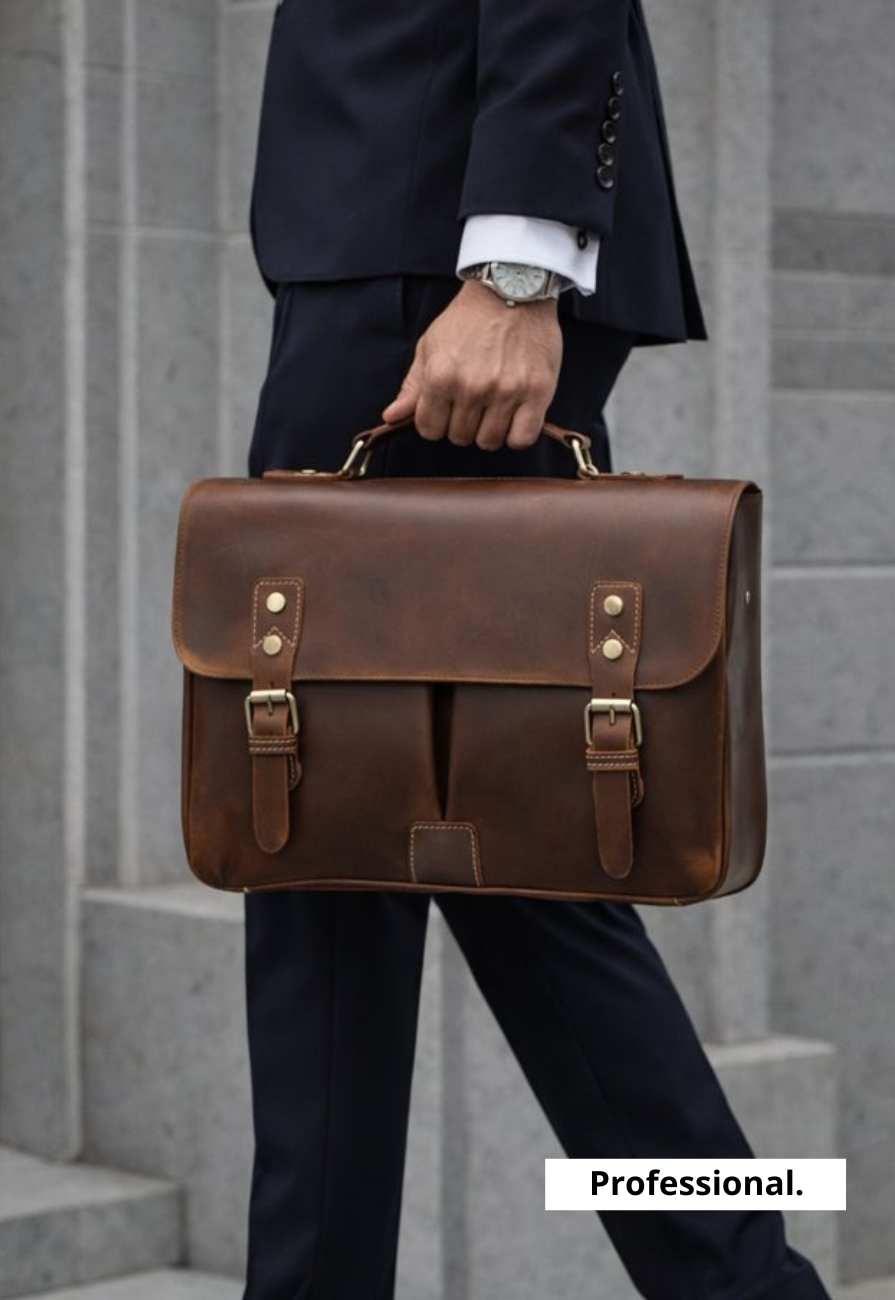
If a bag is cracking everywhere at once, the better money goes toward leather that ages instead of failing. This structured crazy horse briefcase is built to take the marks of daily life: scuffs and small scratches buff back into the waxed surface with a dry cloth rather than needing filler. Kept conditioned, it is the kind of bag you read a crack guide about once and never again.
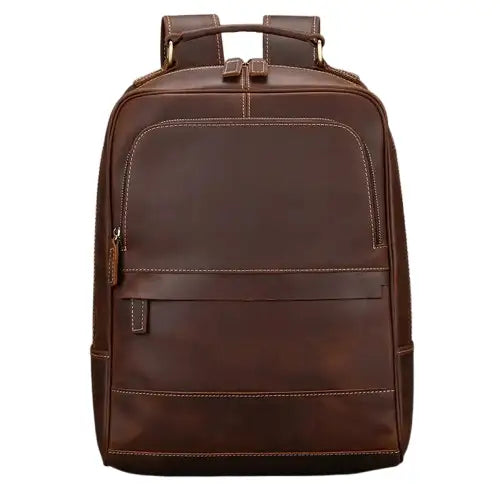
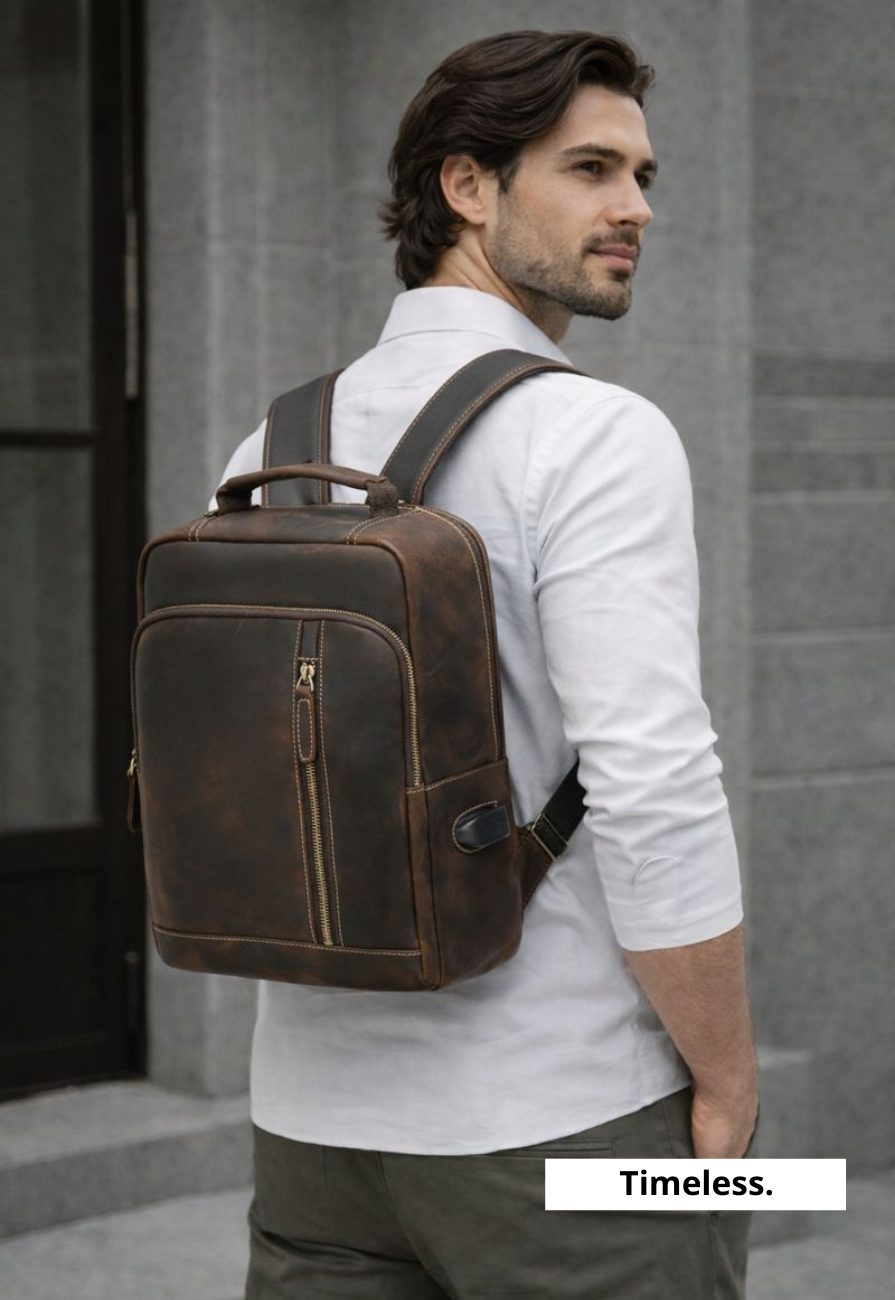
The Heritage Craft Backpack
A refined genuine leather backpack with a finished surface that takes conditioning well and resists drying out. Leather like this rewards a little routine care by deepening into a patina instead of cracking. The everyday bag that stays supple for years when you feed it a few times a year, exactly the habit this guide is really about.

The mistakes that ruin leather for good
This is where we part company with a lot of the advice online, including from sellers who should know better. Several widely-repeated "fixes" actively shorten a bag's life. We would rather lose your agreement than your bag.
You will find reputable-looking guides recommending mink, neatsfoot and even coconut oil for cracked leather. They are not lying about the short-term softening; they are quiet about what those oils do to fine leather over the months that follow. On a workhorse boot, maybe. On a leather bag you want to keep looking its best, a purpose-made conditioner is the safer call every time.
How to stop leather cracking again
Repair is managing a problem. Prevention is avoiding it, and it costs almost nothing. Cracking is overwhelmingly a maintenance failure, which is good news, because maintenance is entirely in your hands.

Condition on a schedule. Two to four times a year for a bag in regular use, more in dry winters or hot summers. Thin coats. This one habit prevents the vast majority of cracking we ever see.
Keep it out of heat and sun. No car parcel shelves, no radiators, no sunny windowsills. Heat is the fastest route to a cracked bag.
Store it breathing. Rest a bag you are not using in a dust bag or soft cloth, loosely stuffed to hold its shape, somewhere with stable room humidity. Not sealed in plastic, which traps moisture, and not anywhere damp.
Dry wet leather slowly. If a bag gets rained on, blot it and let it dry at room temperature, then condition once it is dry to replace what the water took with it.
Looked after this way, leather does the opposite of cracking: it deepens into a rich patina over the years. The same routine that prevents cracks is the one that builds that character, and it starts with knowing how to clean a leather bag the right way between conditioning sessions.
When to call a pro or replace the bag
Home repair has a ceiling, and recognizing it saves money and heartache. Consider a professional leather restorer when cracks are extensive across a main panel, when the leather is flaking away in pieces rather than just lined, or when the bag has real sentimental or monetary value that justifies expert recoloring.
And sometimes the honest answer is that the leather is spent. If a bag is cracking everywhere at once, has gone hard and brittle throughout, or is a heavily coated bonded leather shedding its surface coating, no amount of filler will give you a bag you enjoy carrying. At that point you are pouring effort into a lost cause. The better money goes toward a well-made bag in leather that ages rather than cracks, kept conditioned from day one so you never read a guide like this about it again.
 Leather briefcases
Structured work bags in leather built to age, kept supple with a little care.
 Leather backpacks
Everyday genuine leather carry that rewards regular conditioning.
 Messenger bags
Hands-free leather carry worth keeping fed and out of the heat.
 Leather duffles
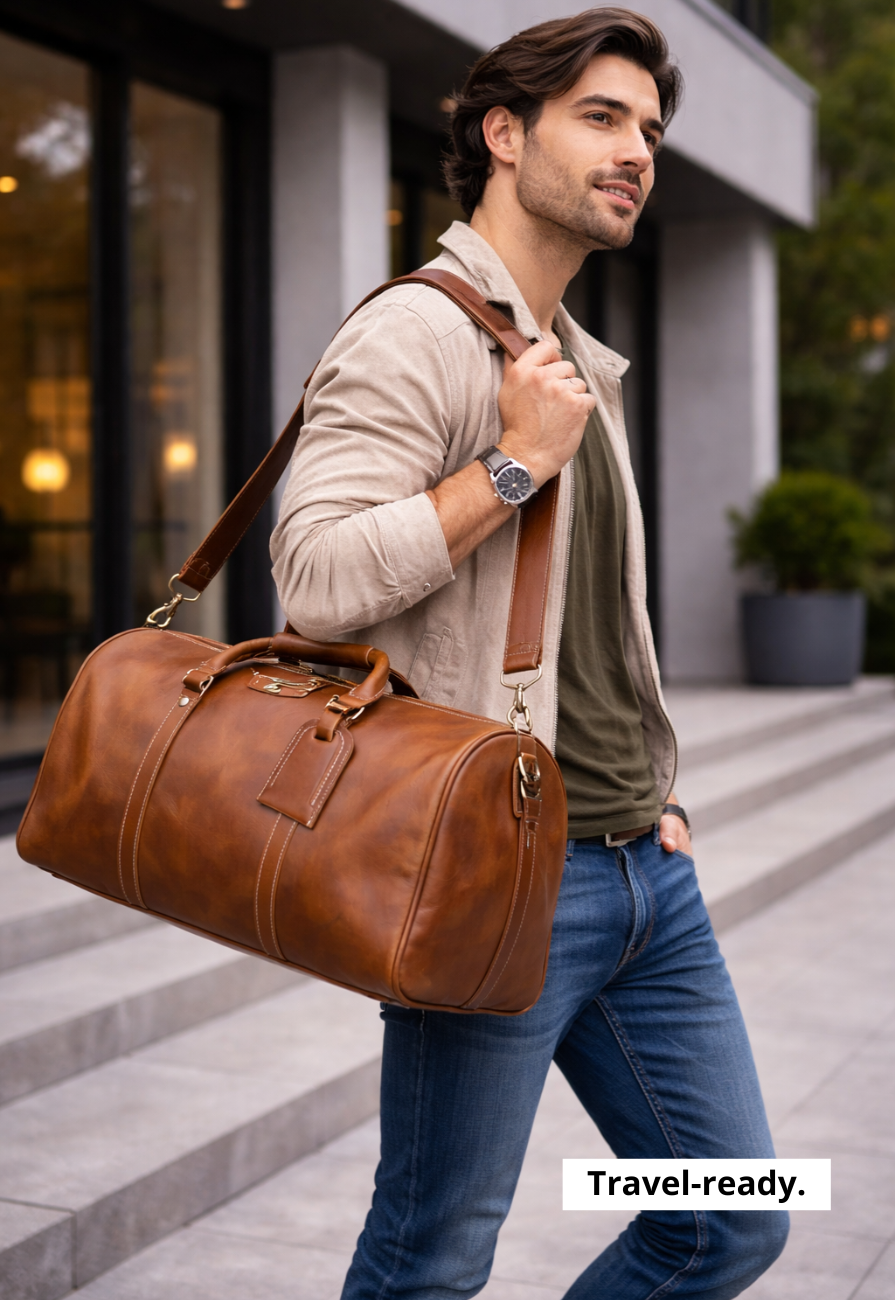
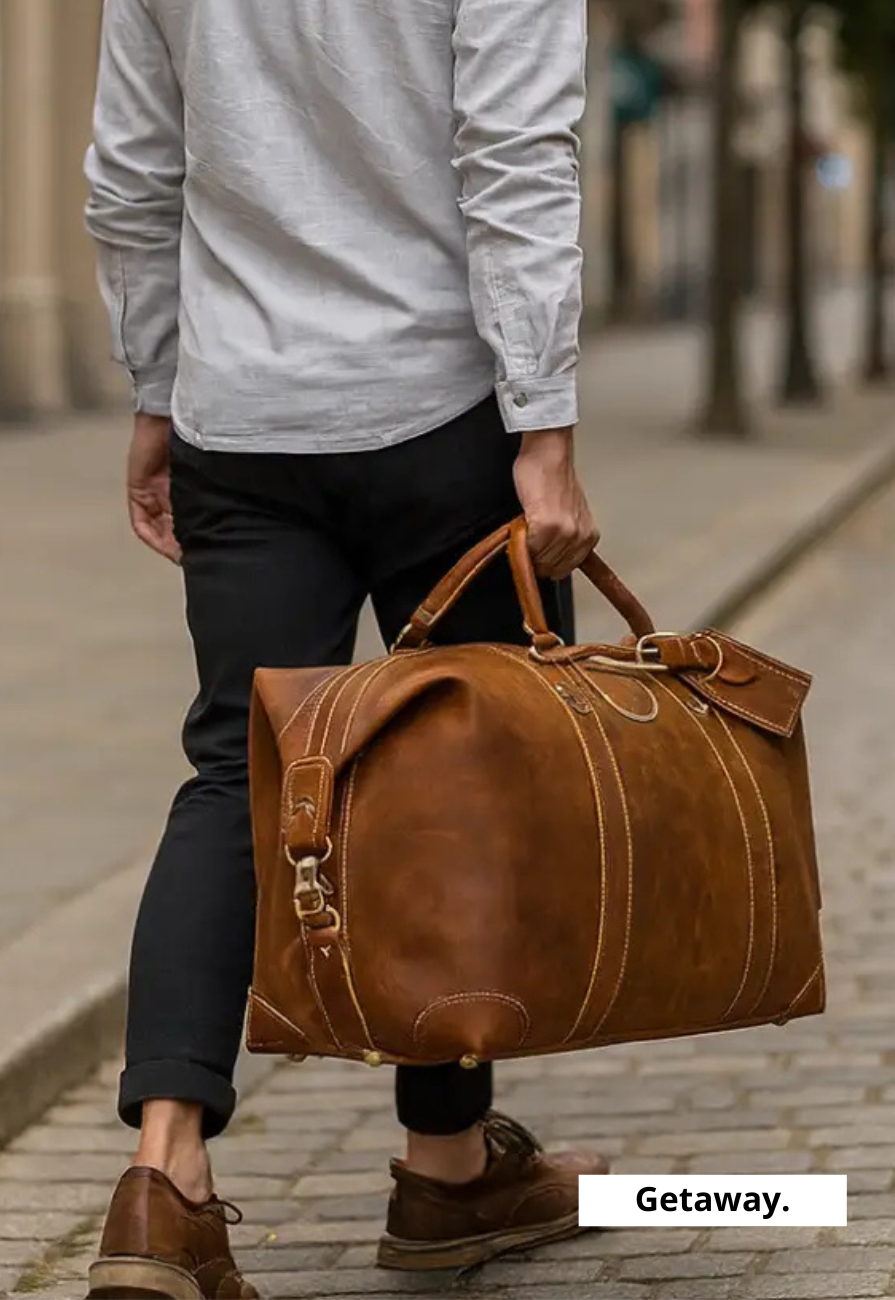
Travel leather to condition before and after a trip, never stored damp.
Frequently asked questions
Can cracked leather be repaired?+
Not in the sense of being undone. A true crack means the fibers have split, and they do not knit back together. What you can do is real and worthwhile: condition the leather to stop the crack spreading, and fill and recolor deep cracks so they become very hard to see. So cracked leather can be stabilized and masked to an excellent standard, but not genuinely reversed. Dry leather that has not yet cracked, on the other hand, is fully recoverable.
What is the best oil for cracked leather?+
Skip the oils people most often suggest. Mink oil and neatsfoot oil over-soften and darken fine leather, often permanently and unevenly, and coconut or olive oil can go rancid inside the leather over time. For a leather bag, a purpose-made leather conditioner is the safer choice. It feeds the fibers without flooding them, and used in thin coats it softens dry leather and helps stop cracks spreading without the long-term downsides of heavy oils.
How do you fix deep cracks in leather?+
Clean and fully dry the area, then build a flexible leather filler into the crack in several thin layers, letting each dry before the next. Once cured, sand it flush with very fine paper and blend matched dye over it in light coats until it disappears into the surrounding color. Finish by conditioning the whole panel so the repair flexes with the leather. A repair kit that pairs filler and dye makes this far easier than sourcing them separately.
Does conditioning actually remove cracks?+
It removes the appearance of fine, dryness-related lines, and it dramatically improves light surface cracks by softening and closing them. It will not level a deep, open crack, because there is a physical gap conditioner cannot bridge. Think of conditioning as the cure for dry and lightly cracked leather, and filler as the tool for deep cracks. In both cases, regular conditioning afterward is what keeps the result from coming back.
How do you soften hard leather?+
Work a leather conditioner in thin coats, and between coats gently flex and massage the leather by hand to work the oils into the fibers. Give each coat hours to absorb and repeat over a few sessions. Avoid hairdryers, heat guns and radiators, which drive out moisture and make leather harder, not softer. Leather that stays board-stiff after honest conditioning has usually lost too much structure to fully recover.
Why does leather crack in the first place?+
Almost always from losing its natural oils and moisture with no conditioning to replace them. Heat and sun speed it up by baking the oils out, and getting soaked then drying fast near heat strips them too. The flex points crack first: handles, base corners, the fold under a flap. Cheap bonded or heavily coated leathers can crack at the surface coating regardless, because that brittle top layer fails before the leather beneath it.
Is a leather repair kit worth it for a bag?+
For deep cracks, yes, because it gives you filler and color-matched dye designed to work together. For dry leather or light surface cracks, you usually do not need one; a good conditioner does the job. If you buy a kit, pick one rated for cracked leather with a flexible filler that will not go brittle, and a workable color-mixing system. Most kits are sized for car seats and sofas, so for a bag look for one suited to small leather goods.
When should I just replace the bag instead?+
When the leather is cracking everywhere at once, flaking away in pieces, gone hard and brittle throughout, or shedding a bonded surface coating. At that point filler and dye will not give you a bag you enjoy carrying, and the effort is better spent on a well-made bag in leather that ages rather than cracks. Kept conditioned from the start, good leather should never reach the state that brought you to a guide like this.
 Genuine leather
 Timeless
 Built to last
 Top rated
Leather worth keeping for decades
Genuine leather bags built for work, commute and travel, made to age into a patina rather than crack when you look after them.
Browse Hartley bags

Leave a comment
This site is protected by hCaptcha and the hCaptcha Privacy Policy and Terms of Service apply.