





You pull a leather bag out of the closet after a humid summer and there it is: a pale, fuzzy haze creeping across the surface, with that unmistakable musty smell. It feels like the bag is ruined. Usually it isn't. Mold on leather looks far worse than it is, and most bags clean up completely if you catch it before it eats into the fibers. The catch is that half the advice online will either spread the spores around your home or quietly wreck the leather while claiming to save it.
This is the method we stand behind at Hartley, in the order that protects both your lungs and the leather. There's one twist that sets mold apart from every other leather problem, and it's the first thing to get right: before you clean anything, you need to be sure it's actually mold.
Take the bag outside and wear a mask. Brush off the loose mold with a dry soft brush, then wipe with a cloth dampened with mild soap and water. For stubborn mold on finished leather, wipe with a half-and-half white vinegar and water mix, which kills the spores. Air-dry slowly away from heat and sun, then condition. Always test a hidden spot first, and first make sure it's mold and not harmless wax bloom.

First: is it really mold?
This is the step almost every guide skips, and it's the most important one. Three different things show up on stored leather and look alike at a glance, but only one of them is mold, and treating the wrong one causes damage.
Mold and mildew are living fungi. They look fuzzy or powdery, spread in irregular patches, smell musty, and usually come in white, gray, green or black. Wipe a patch and it smears rather than brushing cleanly away. Wax bloom (sometimes called "spue" or "repus") is completely different: a harmless pale, waxy haze that rises to the surface of waxed and oil-rich leathers when they get cold or sit unused. It has no musty smell, feels slightly greasy, and buffs away with a dry cloth or the warmth of your hand. Plain dust or a dried stain is the third lookalike, and it lifts with a dry brush.
The ten-second test
Smell it and rub a small patch with a dry cloth. Musty smell and it smears or returns? Mold, treat it as below. No smell, waxy feel, and it buffs away clean? That's bloom, and you're done already. When in doubt, treat the gentlest way first and escalate only if it comes back.
Is mold on leather dangerous?
Worth a straight answer, because most guides breeze past it: yes, mold is worth taking seriously, more for your health than for the bag. Mold releases spores into the air, and those spores can trigger allergies, irritate airways and cause real problems for anyone with asthma or a sensitive respiratory system. The bag is almost always salvageable. Your lungs are the thing to protect.
So the very first move, before any cleaning, is about where and how you work. Take the bag outside, or to a room with wide-open windows and strong airflow. Wear a face mask. Never brush dry mold off indoors over a carpet or sofa, because you're not removing the spores, you're launching them into the air and onto every other surface in the room. This single habit is what separates cleaning mold from spreading it.
What causes mold on leather
Understanding why mold appears is half of stopping it. Mold is a fungus, and it needs four things to grow: moisture, warmth, darkness, and something organic to feed on. Leather, unfortunately, offers all four. It holds moisture, it's an organic material, and the oils, sweat and dust it picks up from daily use are exactly what mold eats.
That's why mold almost always shows up after storage, not during use. A bag put away slightly damp, sealed in a plastic bag that traps humidity, or left in a basement, attic or unventilated closet through a humid season is the classic setup. The leather isn't defective and you didn't do anything dramatic wrong. It's simply biology meeting the wrong storage conditions, which is also why the prevention section below matters as much as the cleaning.
What you'll need
The supplies are simple, and most are already in your home. The point of this list is restraint: mold tempts people into reaching for bleach and harsh chemicals, and those do more damage than the fungus.
A face mask and a ventilated space, the non-negotiables. A soft-bristle brush (an old toothbrush works) to lift dry mold. Two clean cloths, light-colored so no dye transfers. Mild soap in lukewarm water, or a dedicated leather cleaner. White vinegar, the one genuinely useful kitchen item here, for stubborn mold on finished leather. And a leather conditioner to finish, because every step above strips the leather's natural oils.
Good to know
Before any liquid touches the visible surface, test it on a hidden spot, the underside of the base or inside a flap. Run the water-drop test too: if a drop beads on top, your leather is finished and can take the routine below. If it soaks in fast, the leather is unfinished or aniline, so use minimal moisture and lean toward a professional.
How to remove mold from leather, step by step
Here's the full routine for a finished leather bag. Work through it in order, and stop as soon as the mold is gone and the leather is clean. Most of the total time is just waiting for the bag to dry.
-
1Take the bag outside and mask upMove to fresh air or a wide-open room and put on a face mask. Empty the bag completely and check every pocket. This first step is about your lungs, not the leather: brushing mold indoors just spreads spores around your home.
-
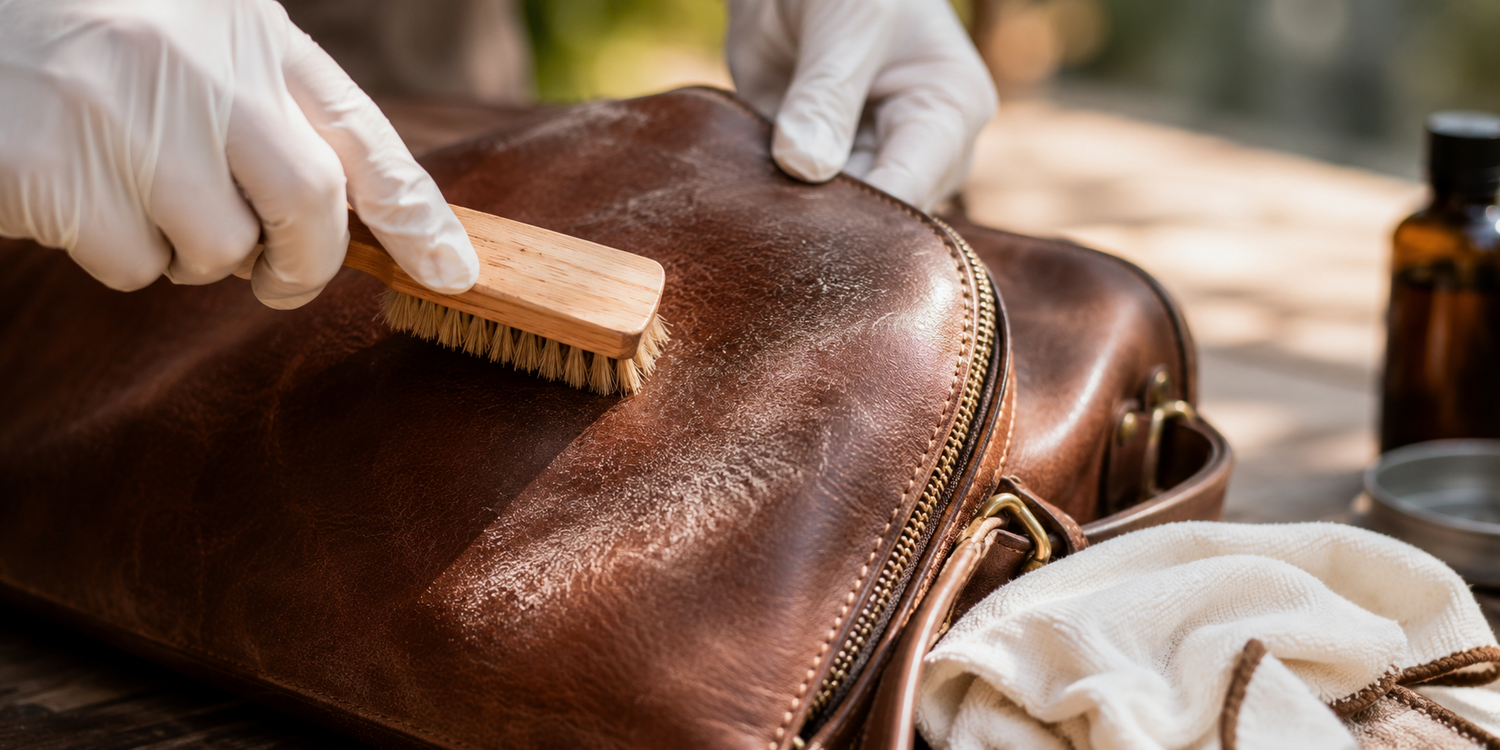
2Brush off the loose mold dryWith a dry soft-bristle brush, sweep the surface mold away from you with light strokes, lifting it off rather than grinding it in. Getting the bulk off while it's dry means far less of it turns to paste when moisture comes next. Brush the seams and stitching, where mold loves to hide.
-
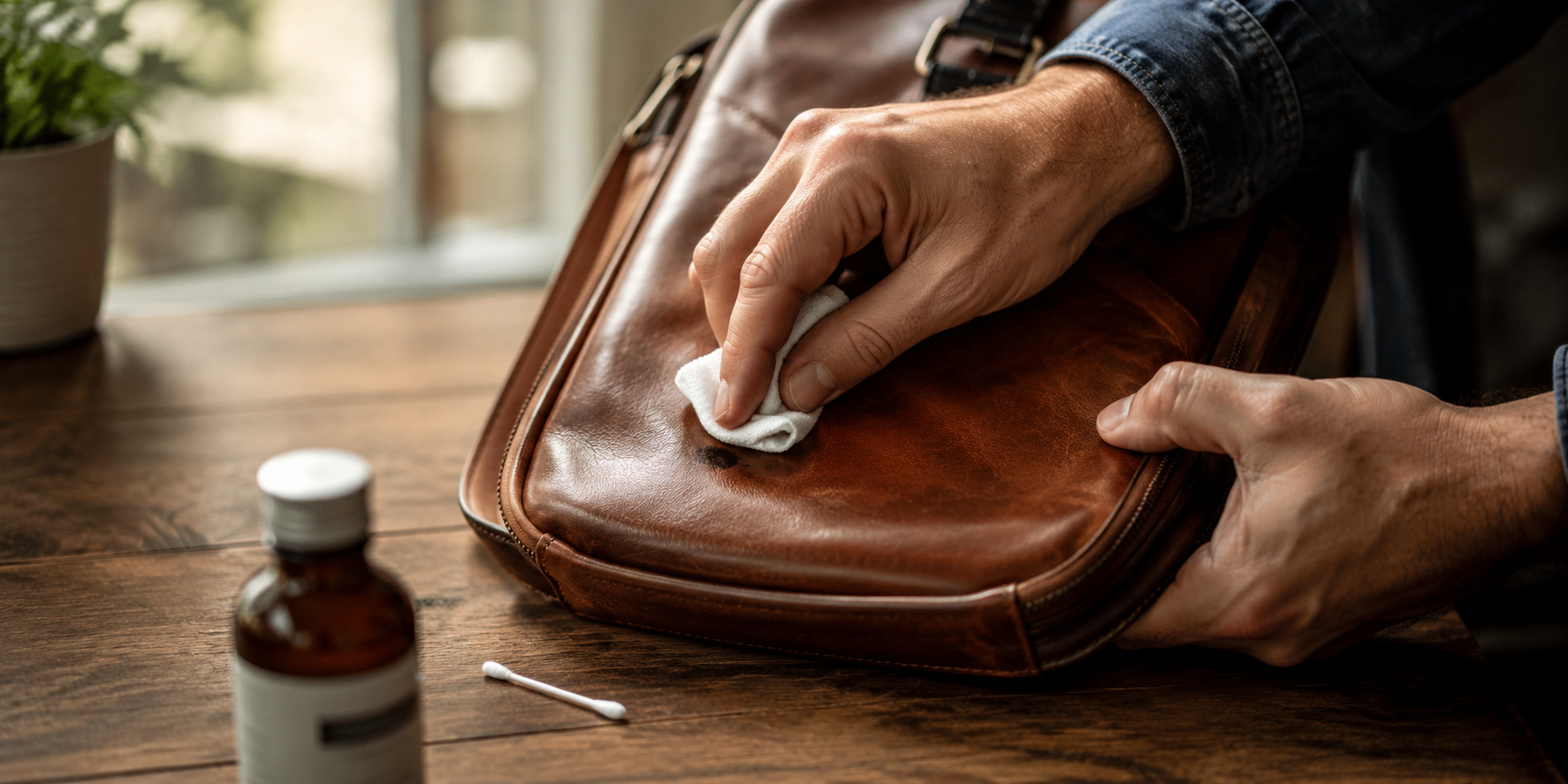
3Wipe with mild soap and waterAdd a little mild soap to lukewarm water, dampen a cloth and wring it almost dry, then wipe the affected areas in gentle sections. Damp, never wet, since soaking the leather causes its own damage. For many bags caught early, this is enough on its own.
-
4Treat stubborn mold with diluted vinegarIf mold remains and your leather is finished, mix equal parts white vinegar and water, dampen a cloth and wipe the area. Vinegar's mild acidity actually kills the spores, which plain soap doesn't. Keep it off unfinished, aniline, suede and waxed crazy horse leather, and always test a hidden spot first.
-
5Dry it slowly in the airPat off the moisture with a dry cloth and let the bag air-dry in a ventilated spot. A short spell of fresh air and indirect light helps, but resist leaving it for hours in direct sun or near any heat source. Fast drying is what stiffens and cracks leather, far more than the mold ever would.
-
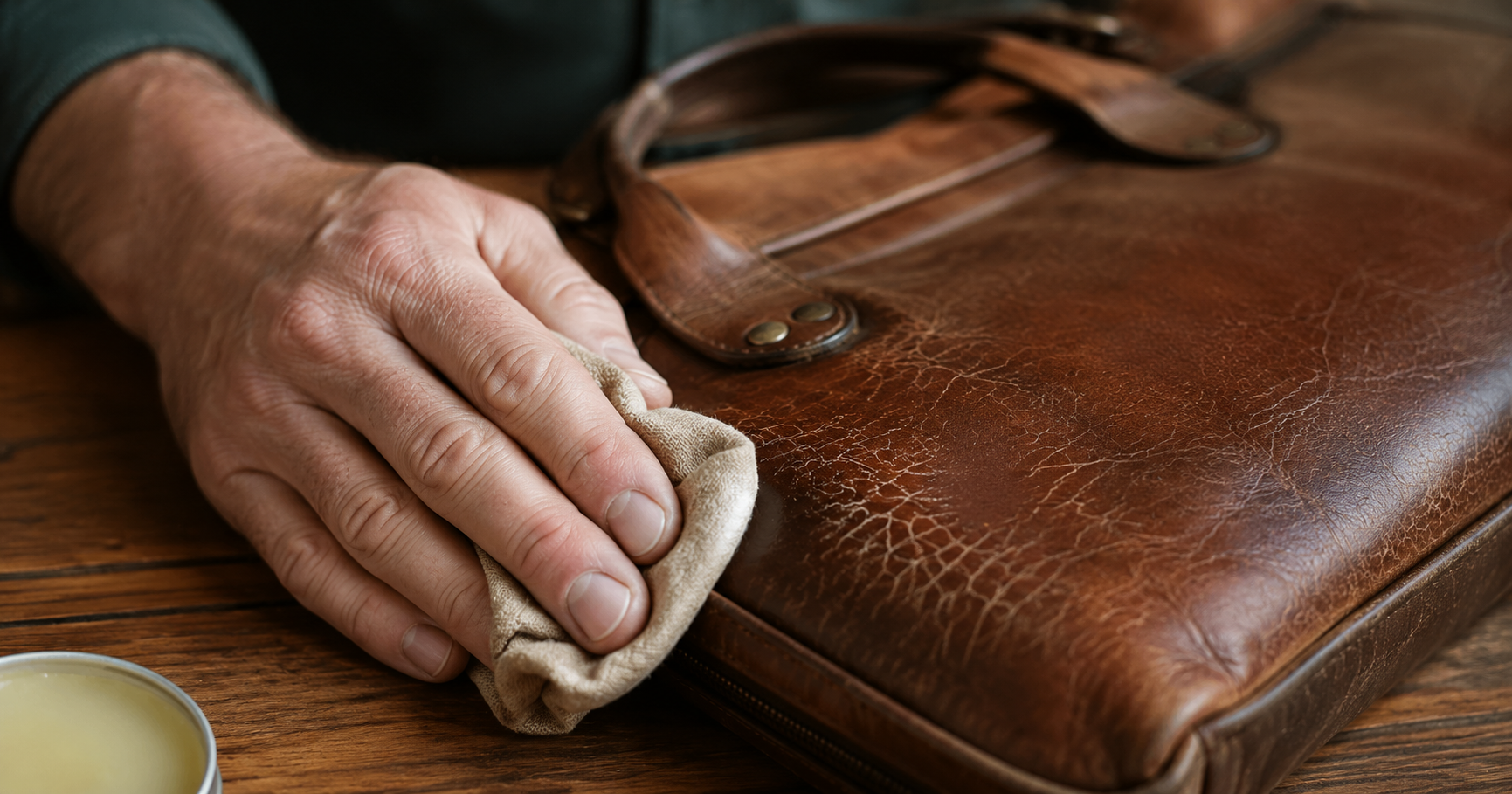
6Condition the leatherOnce fully dry, work a thin layer of leather conditioner into the cleaned area and surrounding leather, then buff off the excess. Cleaning and vinegar both strip natural oils, so conditioning restores suppleness and rebuilds the surface's resistance to the next round of damp.
Two things make the difference between fixing mold and making it worse. First, dry-brush before you ever add moisture: wet mold smears into the grain and into the bag's pores, where it's much harder to remove. Second, patience on the drying: a bag that was moldy is a bag that met too much moisture once already, so the last thing it needs is to be soaked and then baked dry. Slow air-drying is the whole game.

Does vinegar kill mold on leather?
Yes, and this is the one place our advice flips. In our guides to cleaning a leather bag and removing ink, we tell you to keep vinegar away from leather, because it's acidic and dulls dyes. Mold is the exception, and it's worth understanding why rather than just trusting the rule.
The reason is that here you're not trying to clean a stain, you're trying to kill a living organism. White vinegar's mild acetic acid does exactly that: it kills mold and mildew spores, which plain soap and water don't. So the trade-off changes. A little dye-dulling risk is worth it to stop the fungus from coming back, where it wouldn't be worth it for ordinary dirt.
The safe way to use it: dilute white vinegar half-and-half with water, never neat. Use it only on finished leather (the kind that passes the water-drop test), test a hidden spot first, apply with a damp cloth rather than soaking, and always condition afterward since vinegar is drying. Keep it entirely off unfinished, aniline, suede and waxed crazy horse leather, where it will leave a mark worse than the mold.
Watch out
Never mix vinegar with bleach or any other cleaner, and never use bleach on leather at all. Bleach destroys the dye and the leather's structure, and combined with other products it can release dangerous fumes. Vinegar diluted with plain water is the only acidic treatment that belongs anywhere near a leather bag.
White, green and black mold
The color of the mold tells you a little, but it changes the method less than you'd think. The same brush, soap and diluted-vinegar routine handles all three. What the color really signals is how deep and how old the problem is.
White mold is by far the most common on leather, usually the youngest growth, and the easiest to remove if you catch it early. Green mold tends to mean a slightly more established colony, often in a consistently damp spot, but it still cleans off the surface with the same routine. Black mold is the one to respect: it can mean deeper, longer-standing growth that may have penetrated the leather, and it's the most likely to have caused permanent staining or weakening. If black mold covers a large area or the leather underneath feels soft or flaky, that's a job for a professional rather than a kitchen-table fix.
Mold vs wax bloom on crazy horse leather
If your bag is crazy horse leather, read this before you reach for any cleaner, because the single most common "mold" panic on this leather isn't mold at all. Crazy horse is heavily waxed, and that wax naturally migrates to the surface over time, especially in the cold or after the bag sits unused. It shows up as a pale, cloudy haze that looks exactly like white mold to a worried owner.
The difference is easy to confirm. Wax bloom has no musty smell, feels slightly waxy, and buffs away instantly with a dry cloth or just the warmth of your hand smoothing it back into the leather. Real mold smells, smears, and comes back. If it's bloom, you're already done, and there's nothing to treat. If it's genuinely mold on crazy horse, brush it off dry and wipe with a barely damp cloth, but skip the vinegar, which cuts straight through the protective wax and leaves a dull, flat patch. We cover how this leather behaves in depth in our guide to what crazy horse leather is and why it lasts.

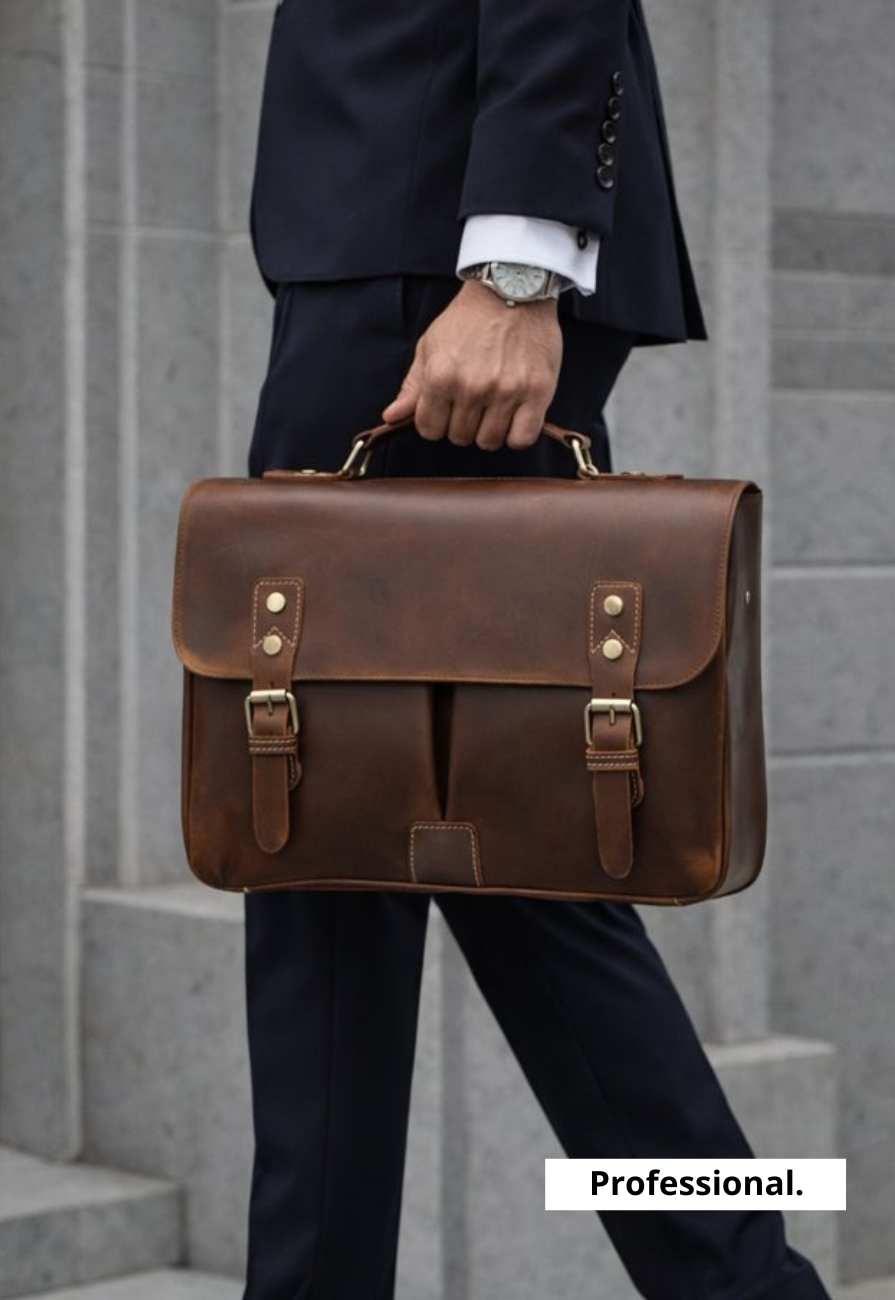
The Ridgeway Case
A structured crazy horse briefcase whose waxed finish naturally develops a light bloom that buffs right back in, the very thing people mistake for mold. Genuine cowhide built to shrug off the marks of daily life rather than be babied.
The mistakes that ruin leather
Mold panic pushes people toward exactly the treatments that cause lasting damage. These are the ones we see most, and several are recommended freely by sites that should know better.
The honest theme: sunlight does kill mold, and bleach does kill mold, which is why they're recommended so often. But "kills the mold" and "safe for the leather" are two different tests, and both fail the second one. The diluted-vinegar route kills the spores too, without sacrificing the bag to do it.
How to prevent mold coming back
Removing mold once is satisfying; never seeing it again is better, and it comes down entirely to storage. Mold needs damp, dark and still air, so prevention is about denying it all three.
Store leather somewhere cool, dry and ventilated, never sealed in a plastic bag or bin, which traps the very humidity mold thrives on. Use a breathable cloth dust bag or an old pillowcase instead. Make sure a bag is completely dry before storing it, especially after rain or a humid trip. In a damp climate, tuck a couple of silica gel packets inside to soak up moisture, and air the bag out every so often rather than leaving it untouched for months. A bag that's used, wiped and properly stored almost never grows mold.

A well-kept bag also recovers from a mold scare better than a neglected one, the same way it develops a richer patina over the years when it's looked after. Good leather rewards a little routine care, and storing it right is the easiest care there is.
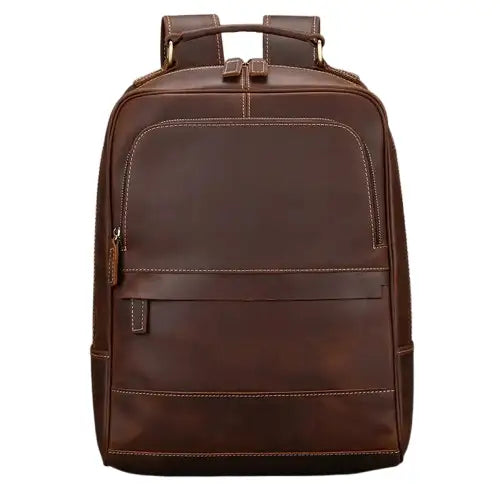
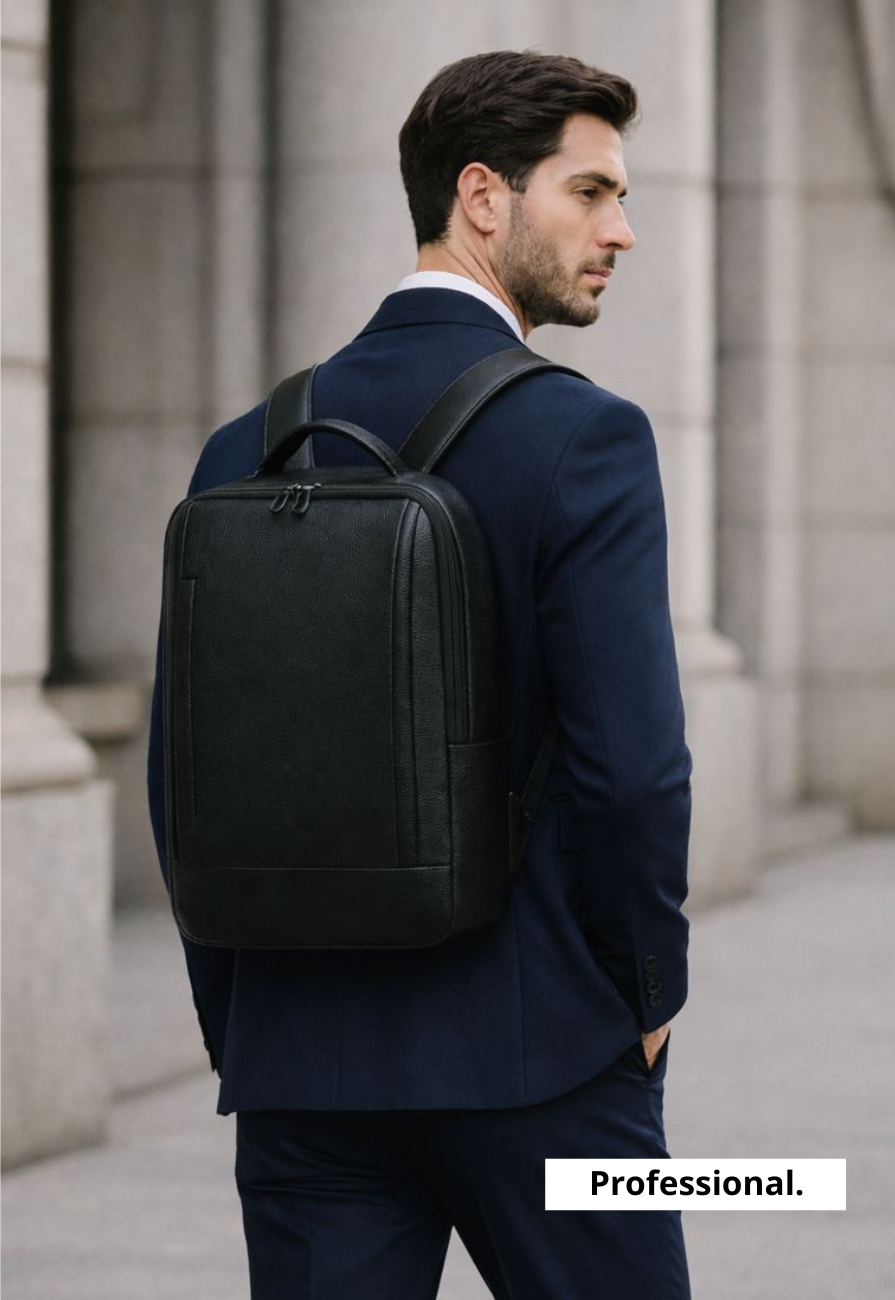
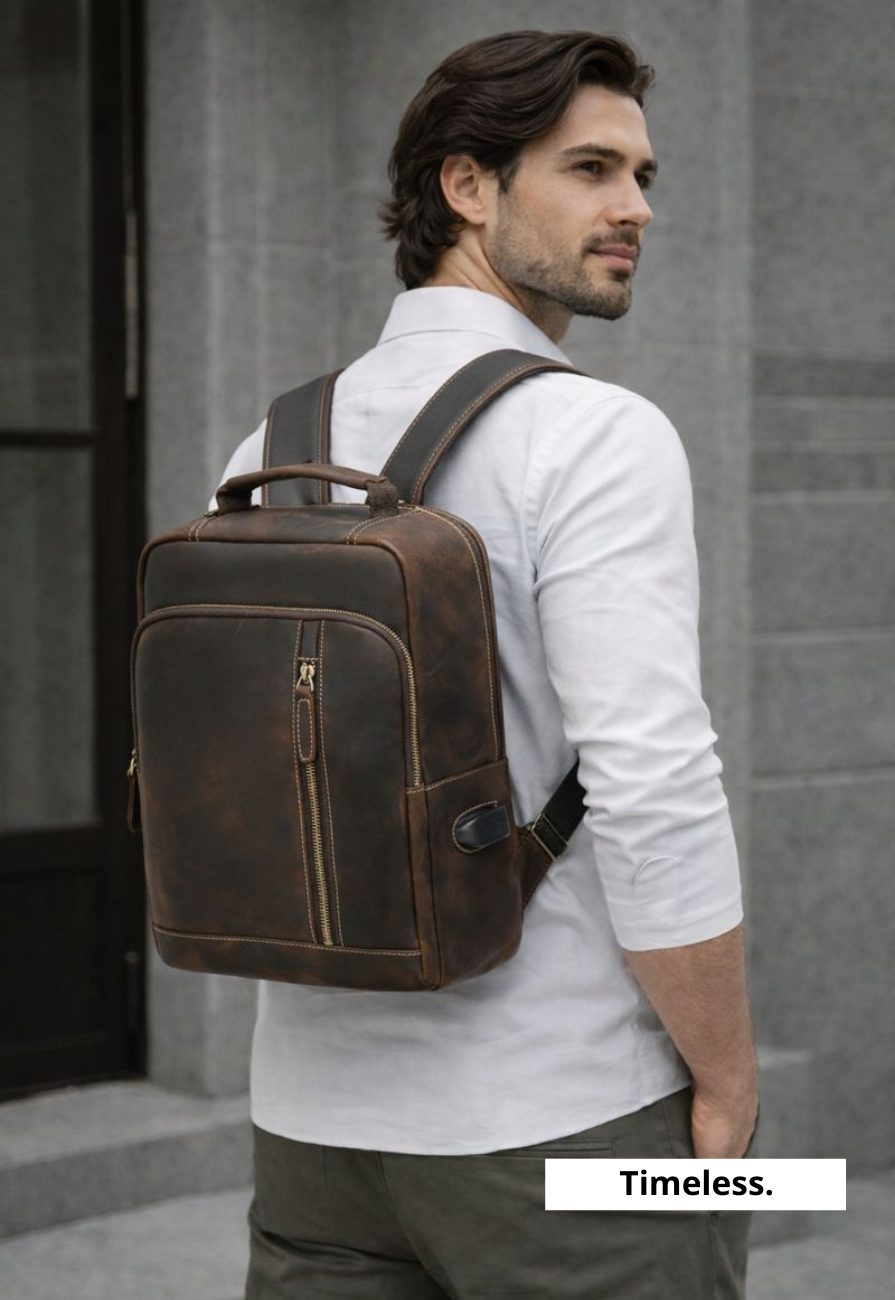
The Heritage Craft Backpack
A refined genuine leather backpack with a finished surface that resists damp and wipes clean easily. The kind of everyday bag that stays in rotation, gets aired out and wiped down, and so rarely gives mold the chance to take hold.
On the conditioner for that final step, a dedicated leather product beats anything from the kitchen. A reliable, widely available US option is Leather Honey, a non-toxic, family-made formula. Apply it thin, test first, and buff off the excess.
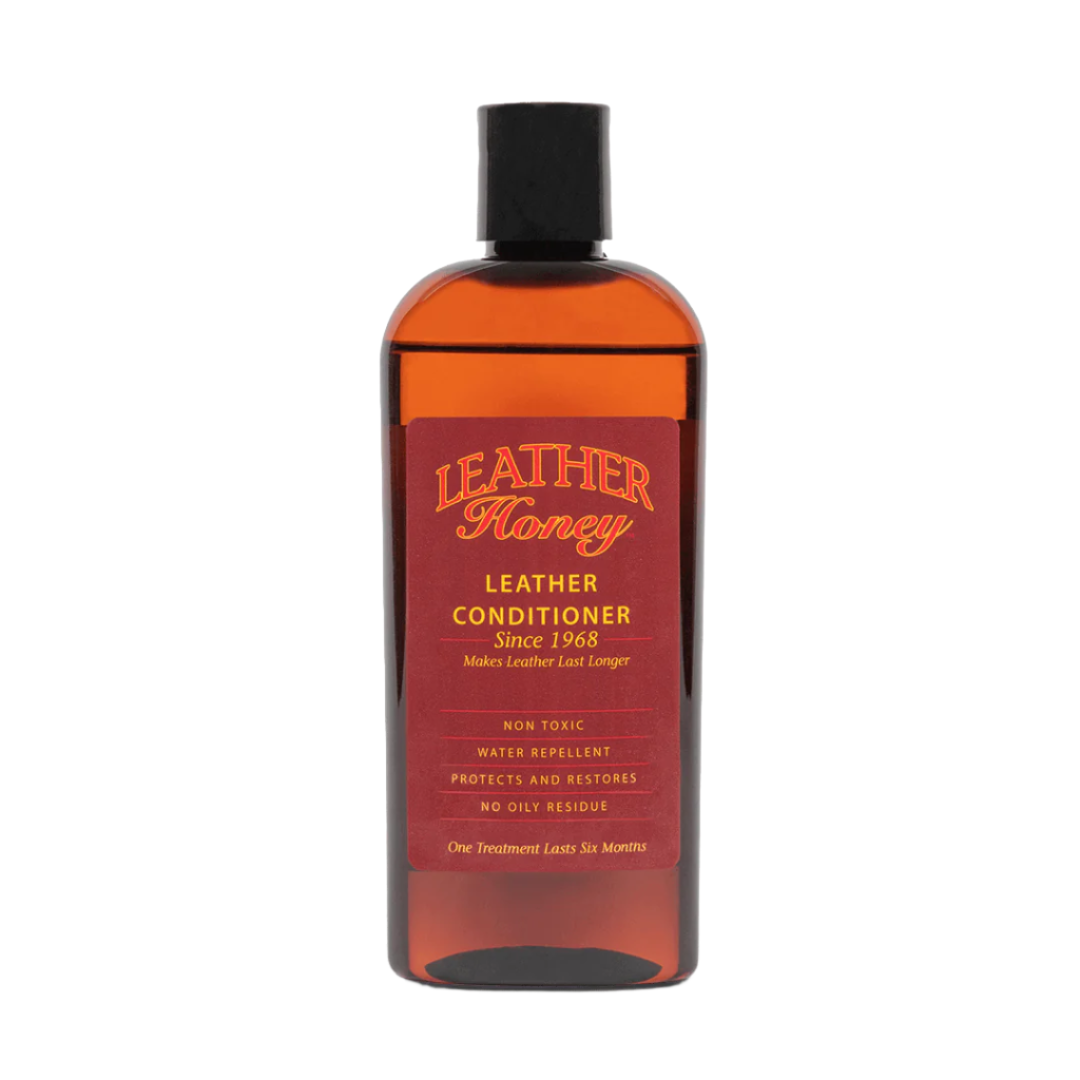
A dedicated leather conditioner
After cleaning mold, a proper conditioner replaces the oils the soap and vinegar stripped and rebuilds the surface's resistance to damp. A non-toxic, US-made option like Leather Honey works on most smooth, finished leathers, applied thin and buffed off.
When to call a professional
Most mold is a surface problem you can handle at home. But some cases are past a kitchen-table fix, and recognizing them saves you from turning a cleanable bag into a ruined one. Hand it to a leather professional when black mold covers a large area, when the leather underneath feels soft, spongy or flaky (a sign the fungus has eaten into the fibers), when the bag is suede, nubuck or unfinished leather that can't take moisture, or when it's a valuable or vintage piece you can't afford to risk.
A specialist has antifungal treatments and restoration methods that don't exist in a home cabinet, and the cost is almost always less than replacing a good bag. There's no failure in it. Knowing the line between surface mold and structural damage is exactly the judgment that protects the bag.
The honest trade-off
Even done right, mold removal isn't always a perfect reversal. Mold feeds on the leather itself, so long-standing growth can leave a faint stain or a slightly rougher patch even after the fungus is gone. Caught early, it cleans up invisibly. Caught late, you may be choosing between a faint mark and an aggressive treatment that risks more. Catching it early is most of the battle, which is why prevention beats any cleaning trick.
What you'll notice
Done right, the difference is immediate: the fuzzy haze is gone, the musty smell lifts as the bag dries and airs out, and after conditioning the leather looks deeper and feels suppler than the dry, neglected state mold left it in. A bag that smelled like a damp basement an hour ago smells like clean leather again. That's the signal it worked.
Once the mold scare is handled, it's worth knowing the everyday routine that keeps leather healthy in the first place: our guide on how to clean a leather bag the right way covers the regular care that makes mold far less likely to return.
 Leather briefcases
Structured work bags with a finished surface that resists damp.
 Leather backpacks
Everyday genuine leather carry that stays in rotation and aired out.
 Messenger bags
Hands-free carry with leather details worth keeping clean and dry.
 Leather duffles
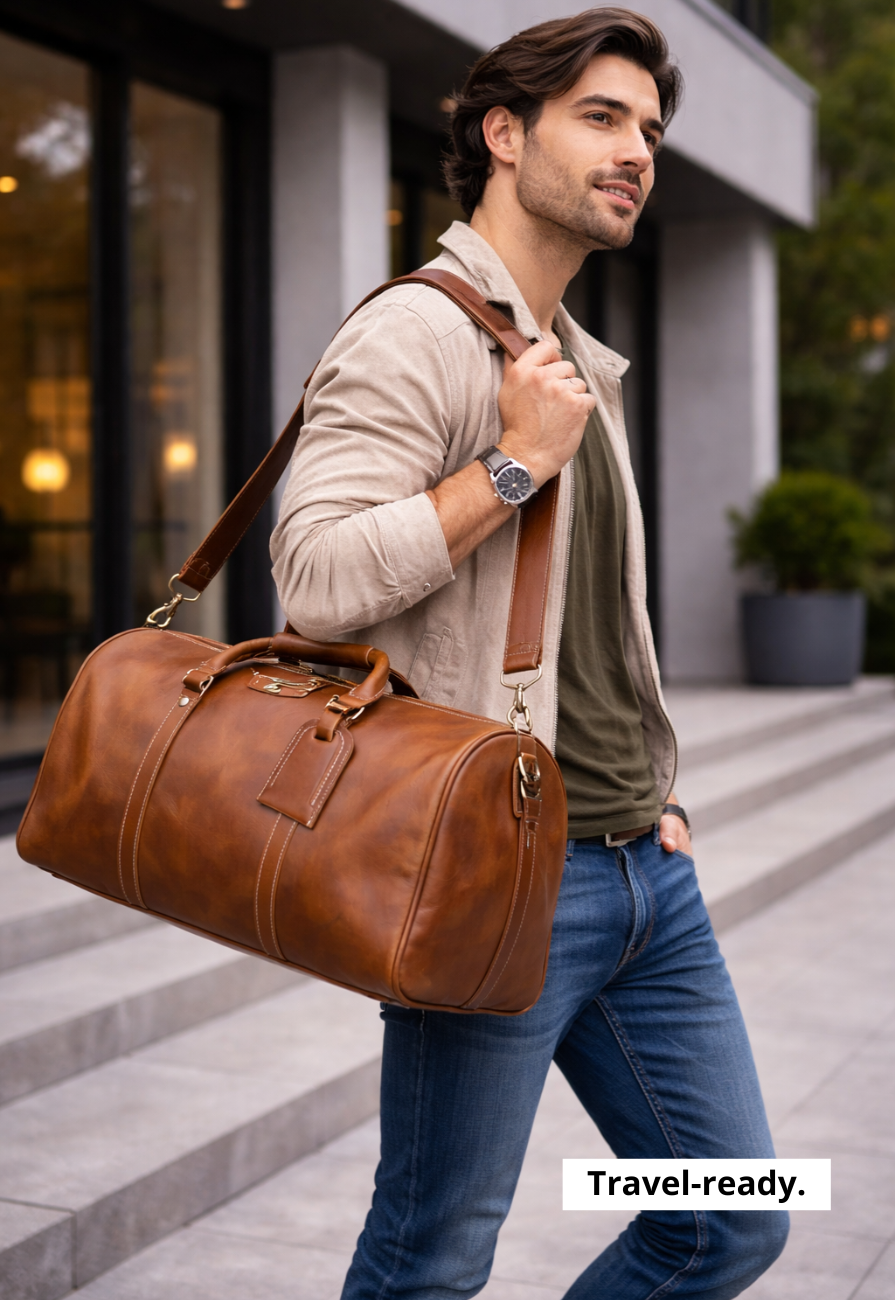
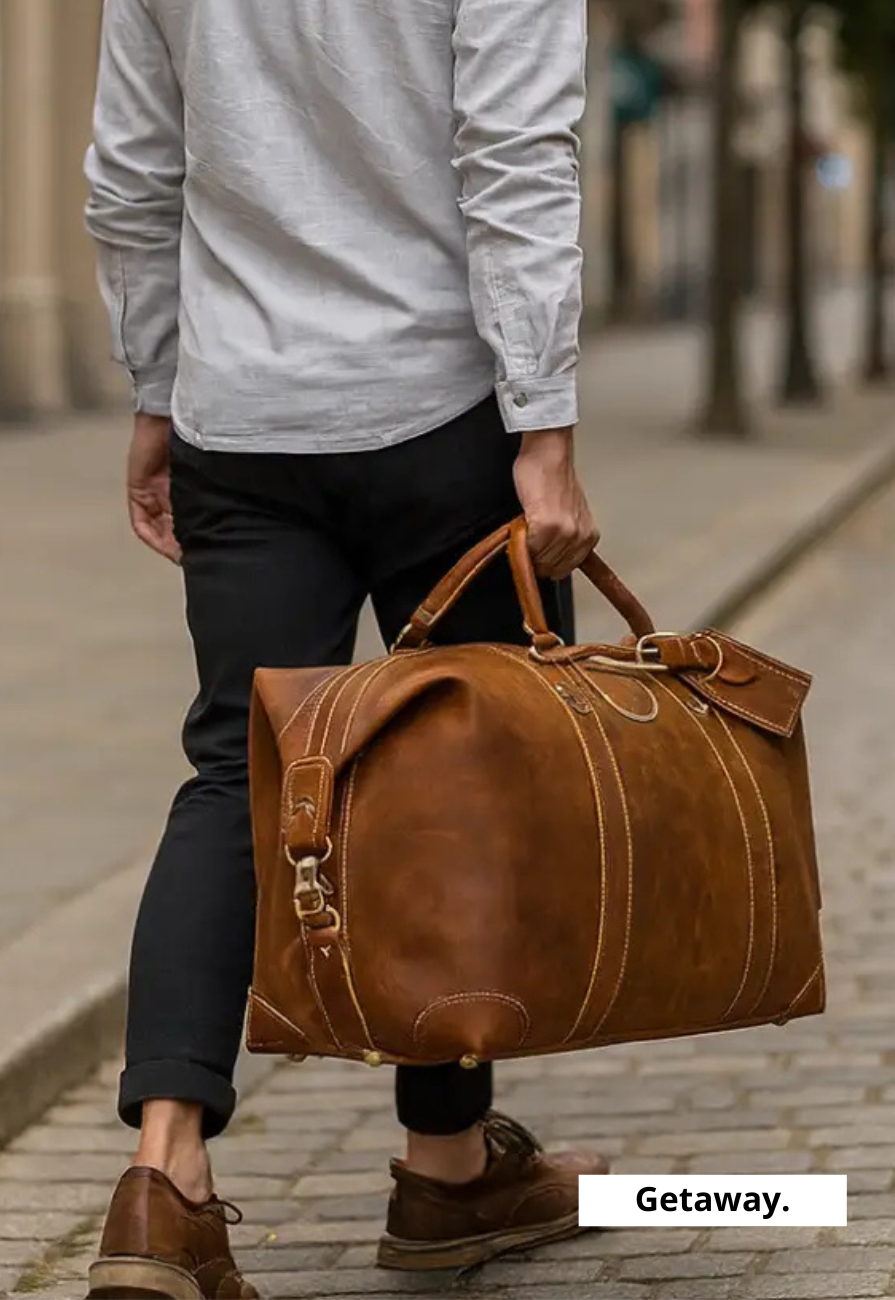
Weekend leather to dry out fully before it goes back in storage.
Frequently asked questions
How do you remove mold from leather?+
Take the bag outside and wear a mask. Brush off the loose mold with a dry soft brush, then wipe the area with a cloth dampened with mild soap and water, wrung nearly dry. For stubborn mold on finished leather, wipe with a half-and-half white vinegar and water mix, which kills the spores. Let it air-dry slowly away from heat, then condition. Test any solution on a hidden spot first.
Does vinegar kill mold on leather?+
Yes. White vinegar is mildly acidic and kills mold and mildew spores, which is why it's the one kitchen item worth using here, unlike for everyday leather cleaning. Dilute it half-and-half with water, use it only on finished leather, test a hidden spot first, and condition afterward since it's drying. Keep it off unfinished, aniline, suede and waxed crazy horse leather.
Is mold on leather dangerous?+
Mold spores can trigger allergies and irritate the lungs, especially for sensitive people, so it's worth taking seriously. Always clean a moldy bag outdoors or in a very well-ventilated room, wear a mask, and avoid brushing dry mold around indoor air. The bag itself is usually salvageable, but your lungs come first.
What causes mold on leather?+
Mold needs moisture, warmth, darkness and the organic oils in leather to feed on. It usually appears after a bag is stored damp, sealed in plastic, or left in a humid, unventilated space like a basement or closet. Body oils and dust on the surface give it more to grow on. Control the humidity and the mold has nothing to live on.
What's the difference between mold and mildew on leather?+
They're closely related fungi and the fix is the same. Mildew tends to be flat, powdery and white or gray; mold is often fuzzier and can be white, green or black. Both feed on damp leather and both clear with the same brush, soap and diluted-vinegar routine. What matters more is telling either of them apart from harmless wax bloom.
How do you get white mold off leather?+
White mold is the most common kind on leather and usually the easiest to remove if caught early. Brush it off dry outdoors, wipe with mild soap and water, and treat any remainder with diluted white vinegar on finished leather. First, make sure it's actually mold and not the harmless waxy bloom that forms on waxed and crazy horse leather, which simply buffs back in with a dry cloth.
Can you save a moldy leather bag?+
Usually, yes, if you catch it before the mold eats into the fibers. Surface mold cleans off and the bag recovers with conditioning. Deep, long-standing mold that has weakened or discolored the leather, or growth on suede and unfinished leather, is harder and sometimes permanent. When the leather feels soft, flaky or the stain won't lift, a professional is the better call.
How do you remove mold from crazy horse leather?+
First make sure it's mold and not wax bloom, which is extremely common on crazy horse and looks like a pale haze. Bloom buffs away with a dry cloth or the warmth of your hand and is harmless. If it's genuinely mold, brush it off dry and wipe with a barely damp cloth, but skip the vinegar, which cuts the wax and dulls the finish. Dry it well and re-warm the wax with a cloth.



Leave a comment
This site is protected by hCaptcha and the hCaptcha Privacy Policy and Terms of Service apply.